Europe wants more control over the chip supply chain, but ASML is warning that political control can quickly become a new bottleneck.
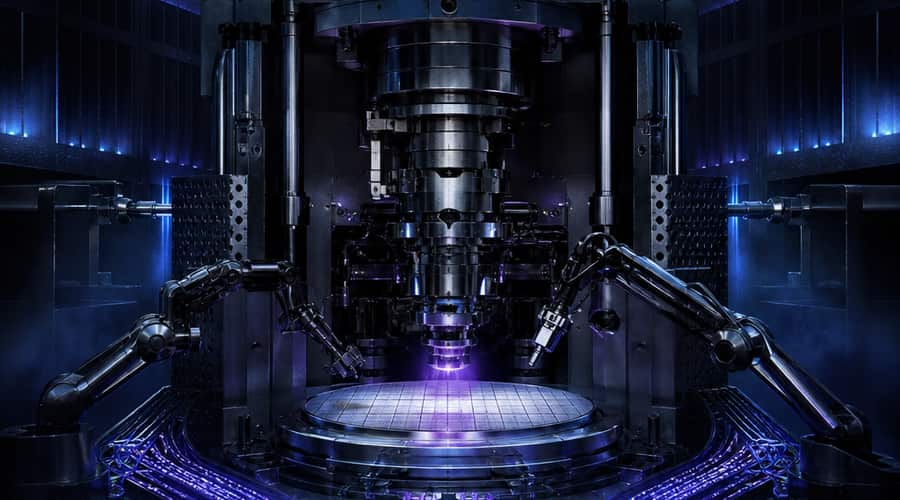
ASML has put a hard question in front of Brussels: does Europe want a faster semiconductor industry, or does it want a more managed one? The answer matters well beyond the Netherlands, because every serious plan for European AI infrastructure eventually runs into the same physical constraint. Advanced chips need advanced lithography, and ASML is the only company that sells the extreme ultraviolet machines used by the leading fabs.
The warning came after the European Commission unveiled its European Technological Sovereignty Package on June 3, including Chips Act 2.0 and the Cloud and AI Development Act. The package is meant to reduce dependence on foreign suppliers in semiconductors, cloud, AI and open source. That goal is easy to understand. Europe has watched the United States dominate AI models and cloud infrastructure while Asia remains central to advanced chip manufacturing. Turning that anxiety into workable policy is the difficult part.
According to a Reuters report, ASML chief executive Christophe Fouquet broadly welcomed the Commission's push for stronger European technology capacity, but cautioned against Brussels steering or monitoring strategic projects that qualify for state aid. That sounds like a narrow policy objection. It is not. It is ASML telling Europe that chip supply is already too complex to be run by committee.
Most European technology companies complain about regulation from a position of weakness. ASML is different. Its machines sit at the center of the advanced semiconductor supply chain, and its customers include the companies that matter most in AI hardware: TSMC, Samsung and Intel. If Europe wants more local chip capacity, it still needs ASML to keep expanding output, servicing tools and coordinating with fabs that operate globally.
That is why Fouquet's comments carry more weight than the usual industry pushback. ASML is not asking to be left alone because it dislikes paperwork. It is warning that the wrong kind of intervention could slow the very investment Europe says it wants. A leading-edge fab is not just a building with subsidies attached. It depends on years of planning, tool allocation, trained engineers, supplier commitments, customer demand and a clear path to utilization.
There is also a practical point Brussels cannot ignore. ASML sells into a global market. Its EUV systems are scarce, expensive and scheduled far in advance. If political officials try to influence where machines go, they may create uncertainty for customers who already face long timelines and huge capital commitments. Chipmakers do not build advanced capacity because a government likes the idea. They build when the economics, supply chain and end demand line up.
The timing makes this more important. Recent market reports noted that ASML briefly became Europe's most valuable company by market capitalization after analysts grew more confident that it could lift EUV output. That investor enthusiasm is built on a simple belief: more ASML machines mean more advanced wafer capacity, and more capacity means fewer limits on the AI chips that cloud providers and model builders need.
Europe's AI ambitions depend on execution, not slogans
The Commission is right about one thing. Europe cannot build a serious AI economy while remaining dependent on outside suppliers for the full stack of compute, chips and cloud services. The Cloud and AI Development Act is aimed at strengthening European cloud and AI infrastructure, while Chips Act 2.0 is meant to support advanced and mainstream chip production in the bloc. Those are not abstract goals. They are directly connected to whether European startups can train, deploy and scale AI products without waiting in line behind American hyperscalers.
But the hard part is matching policy to industrial reality. Europe does not have a domestic Nvidia. It does not have a TSMC equivalent operating at the same scale. Its cloud market is still heavily shaped by Amazon, Microsoft and Google. ASML is the rare European company that genuinely sits at the top of a global technology chain, which makes it tempting for policymakers to treat it as a strategic lever.
That temptation is understandable, but dangerous. If Brussels tries to direct scarce chipmaking equipment as if it were allocating emergency supplies, it risks making Europe look less predictable to the exact companies it needs to attract. Foundries, AI labs and infrastructure investors all care about sovereignty, but they care even more about whether projects can be delivered on time.
For founders, the lesson is blunt. European compute capacity will not be decided only by subsidy announcements or political targets. It will be shaped by whether the region can turn those plans into functioning data centers, reliable chip supply and competitive procurement markets. If regulation adds another approval layer without solving the real bottlenecks, startups will still buy capacity wherever it is available.
For investors, ASML's position is a reminder that the AI boom is not just a software story. It is also a machinery story, a logistics story and a policy story. The companies that control key physical constraints may have more durable power than the applications built on top of them. ASML's warning tells Brussels that sovereignty cannot mean replacing market coordination with administrative control. Europe needs more chips, more cloud capacity and more AI infrastructure. The next test is whether it can move fast enough without getting in its own way.
Also read: Anthropic makes AI chips Wall Street's newest collateral • Anthropic turns to private credit for its $35 billion chip bill • Britain’s AI supercomputer bet still needs American chips