ICEYE has turned sovereign satellite intelligence into one of Europe’s hottest private markets stories, raising fresh capital at a valuation that would have looked aggressive only months ago.
ICEYE is no longer being valued like a promising space startup. It is being priced like critical infrastructure. The Finnish synthetic aperture radar satellite company said on June 9 that it raised EUR 450 million in a Series F round led by General Atlantic, valuing the business at more than EUR 10 billion. Including a secondary placement for existing shareholders, the total transaction is above EUR 1 billion.
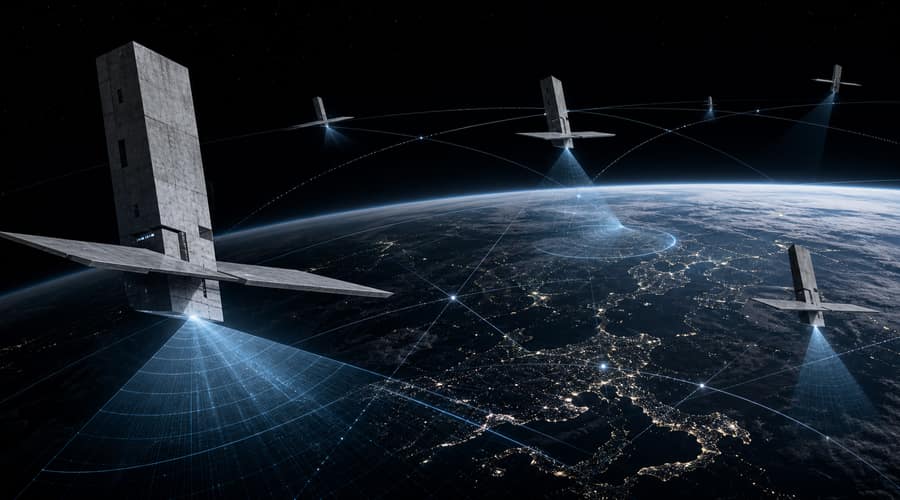
That is the kind of number usually reserved for software companies with giant recurring revenue lines or AI firms riding a global compute buildout. ICEYE is different. Its core product is a constellation of radar satellites that can see through clouds, darkness and bad weather, then deliver intelligence to governments, insurers, emergency responders and commercial customers. In a more unsettled world, that capability has moved from useful to strategic.
In its June 9 announcement, ICEYE said the round brought in new and existing backers including Solidium, Tesi, Varma, Ilmarinen, Lifeline Ventures, Nokia, the Qatar Investment Authority and TCV. That investor mix matters. This is not just venture capital chasing the next private-market markup. It is financial capital, state-linked capital and strategic industrial capital gathering around a company whose customers increasingly include governments themselves.
The sharpest part of the story is the speed of the repricing. ICEYE was valued at EUR 2.4 billion in a Series E round reported by FinSMEs in February, which also noted that the round was led by General Catalyst and included Solidium, Lifeline Ventures and Tesi. Now the company is above EUR 10 billion. That is more than a fourfold jump in about four months.
Some of that reflects private market momentum. But most of it reflects the market deciding that defense technology and dual-use space companies should not be judged by old venture templates alone. For years, startups were rewarded for subscription growth, usage metrics and a clean path to software margins. ICEYE offers a different proof point: sovereign demand, signed programs and contracted backlog.
The company says seven European governments have now procured sovereign satellite systems from it. This is the new anchor customer in defense tech. A government does not buy satellite intelligence the way a mid-market company buys a software seat. The sales cycle is more complicated, but the strategic value is also much deeper. Once a country commits to a sovereign system, the relationship can become a platform for future satellites, data services, upgrades and operational support.
That is why the valuation jump is not just a headline number. It signals that investors are starting to treat state contracts as a kind of growth credential. Not the same as annual recurring revenue, but just as powerful in the right category. In some cases, stronger.
Sovereignty is becoming a customer need
ICEYE sits directly inside a larger European concern: who controls the technology that nations depend on in a crisis. Europe has spent years talking about strategic autonomy in chips, cloud, energy and defense. Space-based intelligence is now part of that list. Governments want visibility without depending entirely on foreign systems, and they want it quickly enough to matter in real operations.
The company has been building for that moment. ICEYE reported more than EUR 250 million in revenue, more than EUR 100 million in EBITDA and more than EUR 1.5 billion in contracted backlog for 2025, based on unaudited results. It also said production is doubling from about 50 satellites a year today to a target of 100 annually by 2028 and beyond. That is not a small operational promise. It means the financing is tied to manufacturing capacity, launch cadence and the ability to deliver national systems at scale.
The Polish Armed Forces example shows why customers are paying attention. ICEYE recently delivered a fully operational sovereign space system to Poland in 12 months, from contract signing to operational capability. For governments used to defense programs that stretch for years, speed can be as important as technical quality. It gives smaller and mid-sized countries a faster route into capabilities that were once limited to the largest powers.
Nokia joining as a strategic investor adds another layer. Modern defense depends on connecting sensors, secure networks and real-time intelligence. Satellites can provide the view, but that view becomes more valuable when it can move through trusted communications infrastructure and reach decision makers quickly. For Europe, the combination is about resilience as much as technology.
There is still execution risk. Building satellites, serving government customers and expanding across regions is more complex than scaling a pure software product. Regulatory approvals, procurement politics and manufacturing discipline all matter. A EUR 10 billion valuation leaves less room for missed deadlines or soft demand.
But the direction is clear. The defense tech market is learning to reward companies that can turn urgency into contracted revenue, not just prototypes and promises. ICEYE has become one of the clearest examples of that shift. What to watch next is whether other dual-use companies can show the same mix of technical depth, government demand and financial performance, because that is where the next big private-market repricing may come from.
Also read: Michael Saylor is only partly right about AI hurting Bitcoin • Singapore gives its AI researchers a much bigger machine to work with • Washington puts Alibaba, BYD and Baidu deeper into its China tech fight