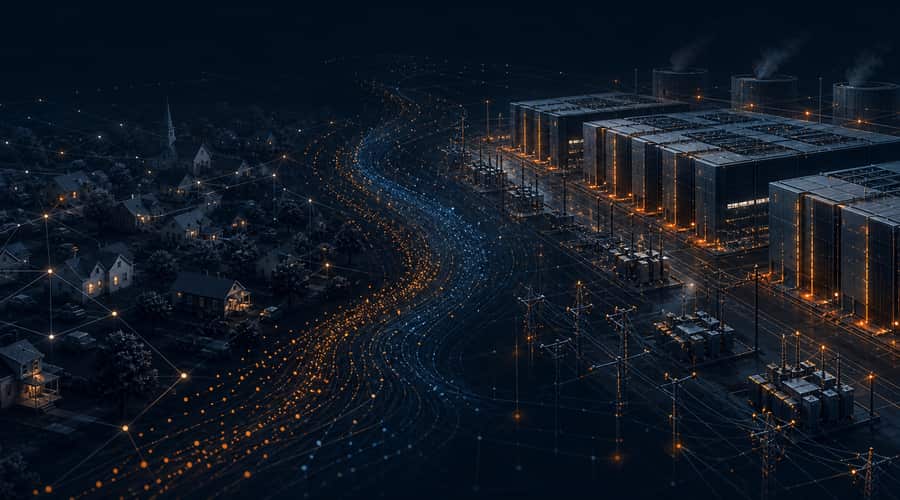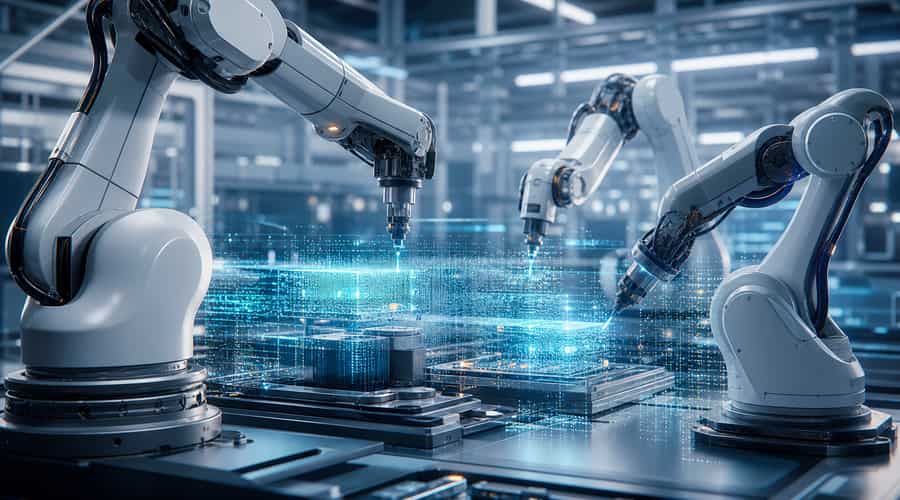
Asia's hottest AI trade is moving from chips into machines that can work, move and make decisions in the real world.
The AI rally is no longer just about the processors that train models or the cloud contracts that run them. This week, investors in Asia chased companies that build robots, actuators, sensors and factory automation systems, betting that the next phase of AI spending will need metal, motors and manufacturing discipline as much as software.
As Bloomberg reported Friday, LG Electronics rose 55% this week in Seoul after reports that it is discussing humanoid robot cooperation with Nvidia. Fanuc, Japan's industrial robotics heavyweight, gained 10% after announcing a collaboration with Alphabet's Google to develop AI systems for industrial robots. Hyundai Motor also moved higher after South Korea's military explored a robotics partnership, while Taiwan's Hiwin Technologies jumped on stronger earnings and Shenzhen LDRobot more than doubled in its Hong Kong debut.
That is a useful signal for founders and investors. The AI market has spent the past three years rewarding the companies closest to compute. Nvidia, TSMC, SK Hynix and server suppliers became the obvious winners because everyone needed chips and memory before they could do anything else. Physical AI changes the question. If intelligence is going to leave the screen and enter warehouses, hospitals, homes and factories, the value chain widens quickly.
It starts to include robot arms, motion systems, cameras, edge chips, cooling, simulation software, safety layers and integration services. That is why old industrial names suddenly look like AI companies again.
Fanuc's Google deal shows why this is more than a stock-market slogan. The Japanese company said on May 13 that its Physical AI Robot System will use Google Cloud technologies including Gemini Enterprise, with demonstrations showing robots that can understand human instructions, recognize objects and operate autonomously inside manufacturing cells. Fanuc also said it has already shipped more than 1,000 robots for physical AI-related applications since introducing the system at a major robotics exhibition last December.
That matters because factories do not buy magic. They buy reliability, uptime and tools that fit existing production lines. A robot that can interpret natural language is interesting. A robot that can work with programmable logic controllers, open robotics frameworks and installed equipment is commercially useful. Fanuc has the factory footprint. Google brings the AI layer. The combination is exactly the kind of bridge investors are now searching for.
LG Electronics is a different case, but the logic is similar. The company has been pushing beyond appliances into robotics, smart factories, AI data-center cooling and mobility. Korean reports said LG CEO Ryu Jae-chul recently met Nvidia executive Madison Huang to discuss physical AI cooperation, including Nvidia's Isaac robotics platform, smart factory systems and AI infrastructure. That gives investors a reason to reprice LG as more than a consumer electronics name.
LDRobot's debut adds another piece. The Shenzhen company makes visual perception technology for robots, and its Hong Kong shares surged after an IPO that raised about HK$807 million in net proceeds. Its revenue rose 60% last year to 748 million yuan, although it still posted a wider loss. That is the trade-off in miniature: strong demand for robotics components, but business models still being tested.
The opportunity is bigger than one rally
MarketsandMarkets projects the physical AI market will grow from $1.50 billion in 2026 to $15.24 billion by 2032, a compound annual growth rate of 47.2%. The firm also expects Asia Pacific to hold a 50.4% share in 2026, helped by manufacturing depth, automation demand and robotics investment. Those numbers should be treated as forecasts, not destiny, but they explain why investors are looking past semiconductors.
For startups, the important opening may not be the humanoid robot itself. Building a general-purpose humanoid is expensive, slow and brutally difficult. The better near-term opportunities may sit around the edges: machine vision, robot safety software, synthetic training data, warehouse workflow tools, predictive maintenance, component testing, fleet management and specialized robots for narrow jobs.
This is where physical AI could create a different kind of startup cycle. Generative AI lowered the cost of building software features, which made distribution and data harder to defend. Robotics does not work that way. Hardware supply chains, customer trust, field data and integration knowledge can become real barriers. A company that proves its system works inside a factory or logistics center has something more durable than a demo.
But investors should keep their heads. A 55% weekly move in LG Electronics and a doubled IPO debut for LDRobot tell us enthusiasm is running hot. Some of that is justified by real partnerships and real demand. Some of it is narrative rotation, the market looking for the next AI lane after chips have already delivered enormous gains.
The bottlenecks are not small. Robots operating around people must clear safety expectations that software companies rarely face. Regulators will move carefully in defense, healthcare and public spaces. Supply chains for sensors, actuators and high-performance edge processors can tighten quickly if demand accelerates. Customers will also need proof that these systems reduce labor strain or raise productivity without creating new operational risk.
That is the next test. The physical AI trade will become durable only if robot makers can turn investor excitement into repeat orders, lower failure rates and measurable savings for customers. For now, Asia's rally is telling us where the market wants AI to go next. The companies that matter will be the ones that can make it work outside the lab.
Also read: xAI brings Grok Build into the coding agent fight • Tokyo researchers show a faster route around AI hardware's power wall • AI hacking is turning DeFi security into a balance sheet risk