China has moved an invasive brain-computer interface out of the lab and into regulated medical use, giving its neurotechnology startups a lead that rivals in the United States have not yet matched.
The important thing about Neuracle Technology's NEO implant is not that it sounds futuristic. It is that China has approved it for real patients beyond clinical trials. That changes the brain-computer interface race from a contest of demos into a contest of hospitals, regulators, reimbursement and manufacturing.
The device, developed by Shanghai-based Neuracle Technology with researchers at Tsinghua University, was cleared by China's National Medical Products Administration in March 2026 for certain patients with limb paralysis caused by spinal cord injury. It is widely described as the world's first invasive BCI product approved for commercial medical use, a milestone that puts China ahead of better-known names such as Neuralink and Synchron on one narrow but meaningful measure: getting an implantable system into the market.
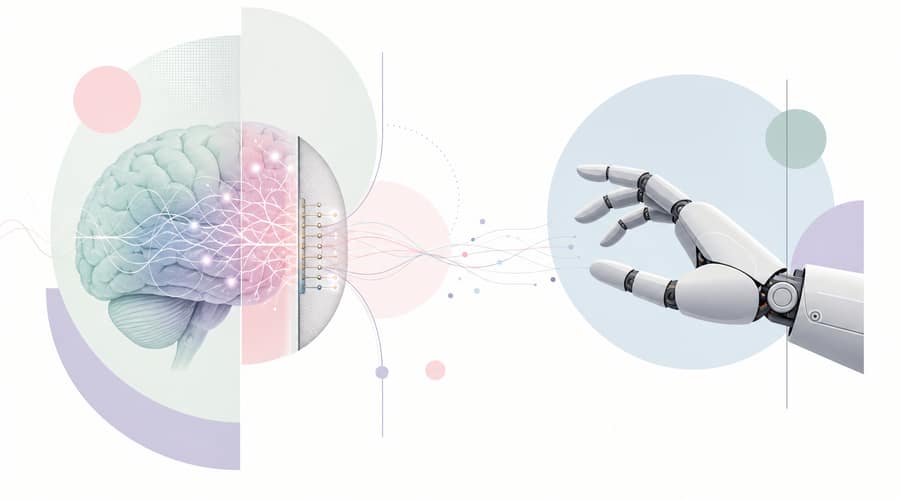
This is not a chip for typing essays by thought or controlling every device in a room. NEO is focused on hand motor function. The coin-sized wireless implant is placed near the brain's motor area, with electrodes positioned on the dura mater rather than inserted deep into brain tissue. When a patient imagines moving a hand, the system reads the neural signal and sends it to external equipment, including a robotic glove, that helps turn intention into movement.
That narrower design matters. A product that helps a paralyzed person grasp, write, or handle objects has an obvious medical purpose and a clearer path through regulators than a broad consumer brain interface. It also carries less surgical ambition than devices that penetrate the cortex. In a field where safety questions can slow everything down, being less invasive can be a commercial advantage.
MIT Technology Review recently reported the story of Dong Hui, a 39-year-old man from Henan province who received the NEO implant in November 2024 after a car accident left him paralyzed from the neck down six years earlier. After months of rehabilitation, he was able to write his name, write a short thank-you message and grasp objects with assistance from the system.
That kind of result is easy to overstate, so it is worth being precise. Dong was not cured. He still needed training, equipment and clinical support. But the difference between having no usable finger function and being able to complete deliberate hand tasks is not small. For patients with spinal cord injuries, independence often comes down to exactly these movements.
Neuracle's approval reportedly applies to adults with paralysis from spinal cord injuries who retain some arm function but have lost useful hand control. That distinction is important because it shows where the first market is likely to be. The initial customers are not healthy people looking for enhanced cognition. They are patients with a defined medical need, doctors who can measure function, and hospitals that can build a repeatable care pathway.
The startup lesson is straightforward. The first commercial brain implant does not have to be the most spectacular one. It has to solve a painful problem, reduce enough risk for regulators, and fit into an existing medical system. That is how difficult technologies usually enter the world.
China is building the system around the chip
The approval also says something about China's broader technology strategy. Brain-computer interfaces have been named in national and local policy plans as a strategic industry, alongside areas such as artificial intelligence, robotics and advanced computing. Shanghai and other regions have been trying to cluster research labs, hospitals, startups and manufacturers around the same goal.
Government support can move this market faster. It can help with clinical recruitment, hospital adoption, procurement, insurance discussions and the kind of patient follow-up that invasive medical devices require. That does not remove the hard science. It does mean a startup like Neuracle is not trying to build the entire ecosystem alone.
For the United States, the comparison is uncomfortable but not simple. Neuralink has made faster progress in public imagination and is pursuing broader capabilities, while Synchron has taken a less invasive route through blood vessels. Both remain in trials rather than commercial medical use. The U.S. regulatory process is slower, partly because long-term safety standards for implanted neural devices are demanding. That caution has value. It also creates room for China to gather more real-world experience first.
The next phase will be less glamorous than the approval itself. Hospitals will need trained surgeons and rehabilitation teams. Patients will need months of therapy, not a single dramatic procedure. Regulators will need to watch for infection, device failure, signal degradation and privacy risks around neural data. A brain implant is not just another wearable.
Still, the direction is clear. China has taken brain-computer interfaces from a laboratory race into an early commercial market, and that gives its startups something every frontier technology company wants: feedback from real deployment. The companies that learn fastest from patients, surgeons and regulators will shape the next generation of devices. For now, Neuracle has given China the first move.
Also read: Ramp's $44 billion valuation puts AI finance at center stage • Anthropic turns its safety reputation into enterprise leverage • Reve 2.0 shows image generation is still open for startups