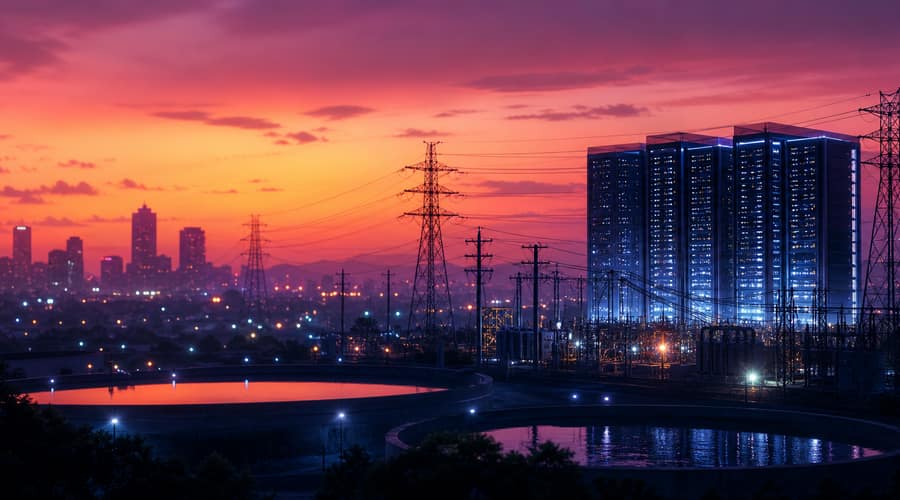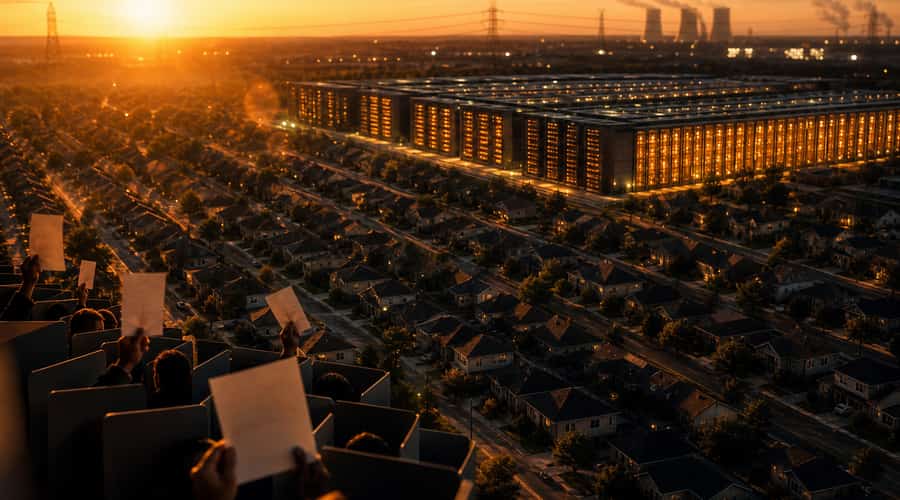
Monterey Park voters have sent a clear warning to the AI industry: data centers are no longer just a permitting problem. They are becoming a local democracy problem.
The AI boom has been sold as software, models and productivity. Monterey Park just reminded the market that it also needs land, power, water, cooling systems, substations and neighbors willing to live near all of it.
According to Los Angeles County Registrar-Recorder results posted June 5, Measure NDC was ahead with 7,524 yes votes, or 87.08%, against 1,116 no votes. The results are still part of the official canvass, but the margin is not close. For founders, cloud providers and data center investors, that is the part that matters most. This was not a narrow protest vote. It was a decisive rejection.
The measure amends Monterey Park's general plan to prohibit data centers citywide. The ballot language pointed directly to air quality, drinking water resources, public health, electricity rates and water rates. That framing matters because it gives other communities a ready-made political script. The argument is no longer just about whether a project meets zoning rules. It is about whether residents believe AI infrastructure should compete with households for local resources.
Monterey Park sits in the San Gabriel Valley east of Los Angeles, not in some remote industrial corridor. That is why the fight landed so hard. Residents were looking at a proposed large data center project near homes, local roads and existing community life. As The Guardian recently noted, HMC StratCap had been pushing a project that would have covered nearly 250,000 square feet before the developers withdrew the application.
For years, data center battles have mostly played out in planning commissions, state legislatures and utility proceedings. Those forums still matter, but Monterey Park shows that the next phase may be more direct. If a city council can put the issue on the ballot, residents can turn a technical land use dispute into a simple yes or no question.
That is a serious shift for the AI supply chain. Model companies can raise billions. Chipmakers can sell every GPU they can manufacture. Cloud platforms can promise new capacity years in advance. But a local vote can still slow the physical buildout if residents decide the benefits are too vague and the costs are too close to home.
The opposition is not hard to understand. Data centers are quiet in the way finance is quiet: a lot happens behind walls, but the local footprint is real. They need electricity at a scale that can trigger utility upgrades. They often raise worries about water use, diesel backup generators, noise, heat and pressure on local infrastructure. Even when operators say the risks are manageable, residents may not trust the promise if they feel the project was presented as a done deal.
That is where the industry has a communication problem. Many data center proposals lead with investment, tax revenue and jobs. Those points matter, but they do not answer the household question: what happens to my neighborhood, my power bill, my air and my water? If residents do not hear a convincing answer early, they may choose the bluntest tool available.
Ballot risk is now infrastructure risk
The Monterey Park measure is especially important because it is not just a moratorium. Local moratoriums can pause applications while officials study impacts. A voter-backed general plan change is harder to unwind because the measure says the prohibition continues until ended by voters. In practice, that means any reversal would likely need another political campaign, not just another council meeting.
For operators already in California permitting pipelines, the lesson is practical. A pending application is not the same thing as a secure path to construction. Projects without final approvals can run into new zoning rules, public pressure and litigation risk. Projects with stronger existing entitlements may have a better legal position, but even there, a hostile local environment can make financing, utility coordination and construction schedules harder.
This is why Monterey Park will travel beyond Monterey Park. The Guardian reported that voters in Augusta Township, Michigan, are expected to weigh a data center rezoning question in August, while Janesville, Wisconsin, is expected to vote in November on a measure tied to voter approval for large data center projects. Neighboring Southern California cities, including Montebello and El Monte, have also used moratoriums while they study the issue.
There is a market implication here that AI companies should take seriously. Compute capacity is becoming political infrastructure. If companies want more of it, they will need to do more than win over utilities and landlords. They will need to win over communities before opposition hardens into ballot language.
The next thing to watch is whether Monterey Park becomes a one-off local revolt or the first clear template. If similar measures begin appearing in suburbs, small cities and power-constrained regions, AI's bottleneck will not just be chips. It will be permission.
Also read: Kevin O'Leary's Utah data center retreat puts AI infrastructure on notice • Marvell enters the S&P 500 as AI infrastructure becomes a core holding • Amazon's AI spending is becoming a harder sell inside the company