China is turning AI-linked layoffs into a legal and political test, and the message to employers is clear: automation may improve productivity, but it does not erase labor obligations.
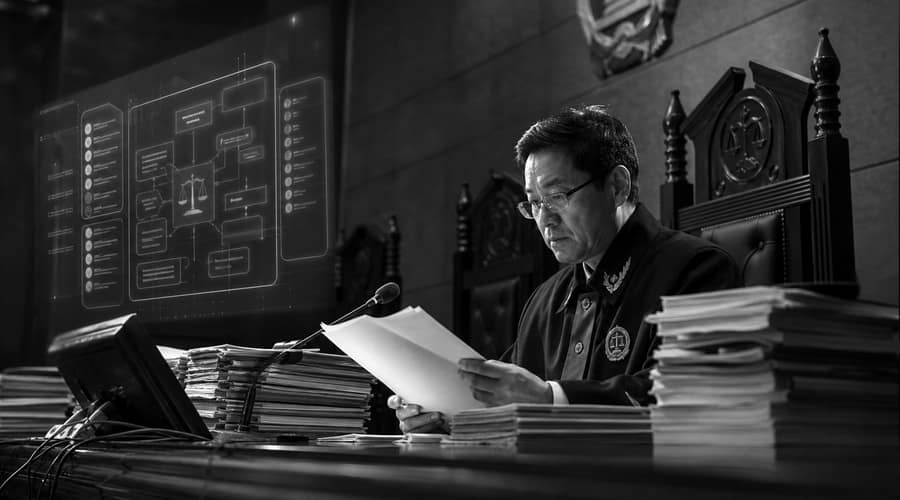
The case that crystallized China's new posture sounds deceptively simple. A quality assurance supervisor at a tech company in Hangzhou, surnamed Zhou, joined his employer in 2022 earning 25,000 yuan a month, roughly $3,640, doing work that involved checking large language model outputs for accuracy and filtering problematic content. When AI absorbed more of those tasks, his employer tried to move him into a lower paid role at 15,000 yuan. He refused. The company fired him. In April 2026, the Hangzhou Intermediate People's Court ruled that the dismissal was unlawful and ordered the company to pay 260,000 yuan in compensation.
As the Guardian reported in May, the ruling attracted national attention because it put a legal boundary around one of the most sensitive questions in the AI economy: when software can do part of a worker's job, who carries the cost of that transition? The court's answer was not that companies must stop adopting AI. It was that AI adoption, by itself, does not automatically make an employment contract impossible to perform under China's labor rules.
That distinction matters. The Hangzhou court treated the company's decision as a business strategy, not an unavoidable external shock. In practical terms, that means an employer cannot simply point to a model, a workflow tool, or an automated system and declare a job legally obsolete. The court also objected to the proposed reassignment because the pay cut was so steep that it could not reasonably be treated as a fair continuation of Zhou's role.
The ruling did not arrive in a vacuum. Chinese state media and legal commentators have pointed to a similar Beijing arbitration case involving a long serving map data collection worker whose employer said an automated tool could take over her duties. The arbitration panel accepted that companies may update their technology, but rejected the idea that a voluntary upgrade lets management pass the entire cost of restructuring onto the employee. Two decisions do not make a complete legal code. They do, however, show the direction of travel.
The courts are only one layer. China's Ministry of Human Resources and Social Security has already signaled that AI's effect on employment is becoming a policy issue, not just a company level dispute. That fits with the broader direction of the 15th Five Year Plan, covering 2026 through 2030, which puts technology self reliance, productivity and employment stability inside the same national planning frame. Beijing is trying to do two things at once: accelerate AI deployment and prevent the resulting labor shock from becoming a social stability problem.
The urgency behind all of this becomes clearer when you look at the labor market. China has been dealing with stubborn youth unemployment for years, and the latest official data cited in May put unemployment among 16 to 24 year olds at 17%. That is not the same as an economy wide job crisis, but it is enough to make white collar automation politically sensitive. The workers most exposed to AI are not only factory employees. They include data labelers, content reviewers, customer service staff, analysts, junior software workers and the early career employees who normally use those first jobs to build bargaining power.
What makes this politically charged is that China's economic model still depends on a basic social compact: growth should translate into rising opportunity. Beijing is not trying to slow AI development. Quite the opposite. A Bloomberg report cited by Cinco Dias this week said China is preparing a roughly $295 billion national data center plan over the next five years, with an emphasis on domestic suppliers such as Huawei and state backed telecom operators including China Mobile and China Telecom. The goal is to build the infrastructure for a more independent AI economy while keeping the social cost of that buildout from landing entirely on individual workers.
What Founders Building AI Products Need to Understand
For global founders and enterprise AI vendors selling into China, the Hangzhou ruling changes the sales conversation. A pitch built mainly around headcount reduction now carries more legal risk than it might in the United States. Buyers will still want efficiency, but they may need implementation plans that include retraining, redeployment, phased role changes, or salary protections. The product does not exist outside the employment system around it.
That could make some enterprise deployments slower. It may also make them easier to defend. Governments and workforces tend to accept disruptive technologies faster when the downside looks managed. If Chinese workers believe they have some legal recourse, and if regulators can see where displacement is happening before it turns into public anger, AI adoption may gain a more durable social license. That is not the same as worker control, but it is more structured than leaving every layoff to corporate discretion.
The contrast with the United States is sharp. America has no comparable federal doctrine on AI related terminations, no national workforce impact review for enterprise automation, and no serious congressional framework requiring companies to assess displacement before large AI rollouts. The U.S. approach is still largely market led. China's is becoming state managed. Both models have costs.
For founders, the lesson is straightforward. AI products that touch labor will be judged not only by accuracy, cost and speed, but by the employment consequences they create. The next phase of enterprise AI will not be fought only in procurement meetings. It will be fought in courts, labor ministries and planning agencies, and China has moved early to write its rules.
Also read: How a viral resignation essay forced Alibaba's most powerful governing body to publicly reckon with the failure inside its flagship AI transformation • Microsoft cuts Claude Code from its engineers because the bill came due before the budget year did • A federal court's finding that AI is not required for search reshapes the competitive battlefield for Google and its would-be disruptors