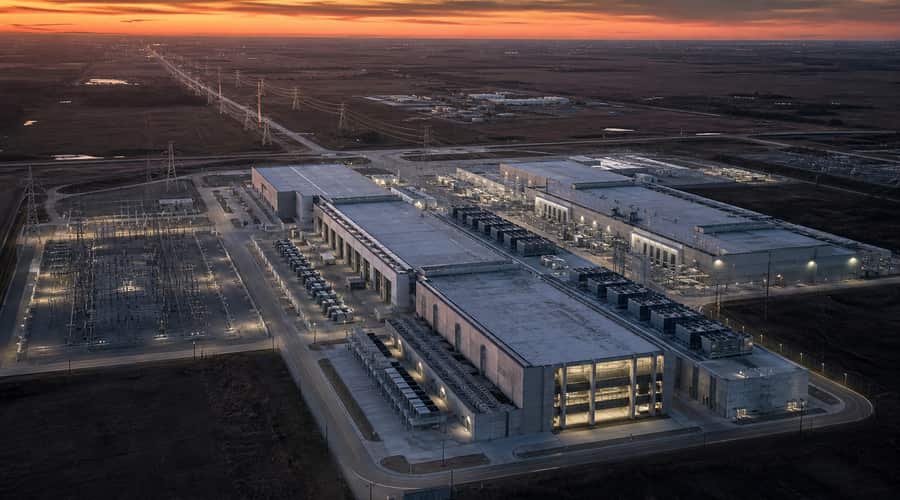
Abbott's June 10 directive tells Texas regulators to make data centers pay for the grid upgrades they require, a sharp turn for a state that has spent years courting hyperscale compute.
For years, Texas made itself one of the easiest places in America to build a data center. Cheap land, a deregulated grid, friendly politics, and a generous sales tax exemption helped turn the state into a major hub for cloud and AI infrastructure. That calculation changed on June 10, 2026, when Governor Greg Abbott directed the Public Utility Commission of Texas and ERCOT to make sure ordinary Texans are not left paying for the electrical infrastructure needed by data centers.
The order is current and consequential. As the Houston Chronicle reported, Abbott told the PUC and ERCOT to ensure new data centers do not pass the cost of new electrical infrastructure to ratepayers. He also asked the agencies to review what they can do under existing authority and send a joint memorandum to his office by July 17. That is not a full regulatory regime yet, but it is a clear instruction to start moving the cost burden away from households and small businesses.
The politics are just as important as the paperwork. Abbott has long pitched Texas as a home for technology investment, and he stood with Google last year as the company announced a $40 billion Texas investment that included new data centers. Now he is saying the industry can keep building, but not on terms that push grid costs onto everyone else. That matters because ERCOT has more than 480 large data centers seeking to connect to the Texas grid by 2032, according to reporting on the state's interconnection queue.
Abbott also said he will work with lawmakers in the next legislative session on a broader package. That includes requiring new data centers to use water-efficient cooling systems, file annual reports on electricity and water consumption, and repeal tax incentives that have made the sector especially attractive in Texas. Business Insider noted that the state's data center sales tax break has been worth more than $1 billion a year, making it one of the clearest subsidies behind the buildout.
The cost-allocation shift is the most immediate issue for developers. When a hyperscale facility connects to the ERCOT grid and requires new transmission or distribution infrastructure, the cost can end up spread across the wider customer base. Abbott's directive is aimed at stopping that. If regulators follow through, the capital cost of a major Texas deployment gets higher because an expense once treated as a shared grid cost becomes a direct project cost.
That does not make Texas uncompetitive overnight. Land is still available, the political climate is still friendlier than in many states, and the size of the local energy market remains a serious advantage. But it does change the spreadsheet. Data center operators that modeled projects around cheap land, tax exemptions, and broadly shared infrastructure costs will now have to account for a less generous environment.
For companies such as Google, Microsoft, Amazon, Meta, and Oracle, the biggest exposure is not necessarily existing commitments. Large projects already announced are hard to unwind quickly. The more interesting question is what happens to the next tranche of investment. If a planned campus has not yet locked in interconnection terms, power procurement, water systems, and local incentives, Abbott's move could force a second look at the economics.
Texas Becomes A Test Case
Texas is not acting in isolation. Across the country, lawmakers are trying to answer the same question: who pays when AI infrastructure demands more power than the existing grid can comfortably provide? The White House's Ratepayer Protection Pledge, signed in March by several major technology companies, pushed the same principle at the federal level, even though it remains voluntary. States including Illinois, New York, and Arizona have also been weighing or advancing measures that would make data center developers shoulder more of their energy and infrastructure costs.
Texas matters because of scale. The state has the second-largest data center footprint in the country behind Virginia, and ERCOT operates largely outside federal grid jurisdiction. A move from Austin can therefore become a practical template for other states, especially Republican-led states that want the jobs and investment without giving Big Tech an open-ended claim on public infrastructure.
The next step is regulatory execution. Utility commissions move carefully, and turning Abbott's directive into binding cost rules will involve technical filings, industry comments, and likely resistance from operators with large sums at stake. The July 17 memorandum should show how much the PUC and ERCOT believe they can do now, and what will require legislative action later.
For the AI industry, the message is already clear. Texas still wants the buildout, but the old bargain is narrowing. The next wave of data center investment will have to arrive with more of its own power plan, more water discipline, and fewer assumptions that the public will absorb the hidden costs.
Also read: China is building a legal wall around AI-displaced workers while America watches from the sidelines • How a viral resignation essay forced Alibaba's most powerful governing body to publicly reckon with the failure inside its flagship AI transformation • Microsoft cuts Claude Code from its engineers because the bill came due before the budget year did