The Philippines may have a serious opening in the US-led Pax Silica buildout, but the strongest verified story is broader than one proposed site: Washington is trying to turn AI supply chains into an allied investment system.
Pax Silica is moving from diplomatic language into industrial policy, and that matters for any country hoping to win the next wave of AI infrastructure. The initiative, launched by the US State Department in December 2025, is designed to coordinate trusted supply chains across semiconductors, AI compute, critical minerals, energy, logistics, and advanced manufacturing. For the Philippines, the opportunity is obvious. If Manila can convert interest in New Clark City and the Luzon Economic Corridor into signed leases, power commitments, and anchor tenants, it could move from being a services and assembly economy into a more central position in the AI hardware map.
The caution is just as obvious. Several specific claims attached to the proposed Philippine hub, including the exact scale of the site, the number of interested firms, and the details of any jurisdictional dispute, were not clearly supported by available public records in a live search. That does not make the broader strategic story unimportant. It does mean the article needs to separate verified facts from claims that still require official confirmation.
What can be verified is that Pax Silica has become one of Washington's main economic security tools for the AI era. As Tom's Hardware reported, citing details from the US initiative, the program has expanded into a proposed investment consortium targeting energy, critical minerals, and semiconductor supply chains, with the US putting forward an initial $250 million contribution and officials discussing a much larger allied capital pool. The member network has also widened beyond the first launch group, with countries such as Japan, South Korea, Israel, the United Kingdom, Australia, India, and others tied to the framework.
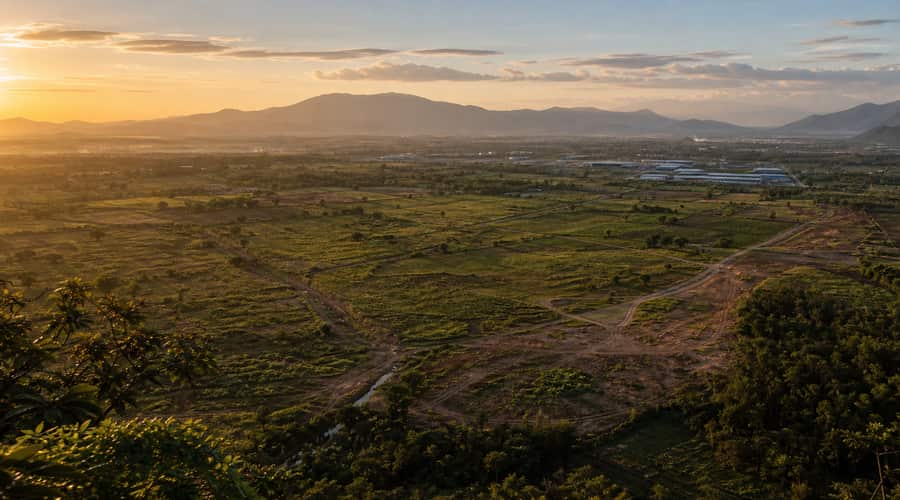
That is the real context for the Philippines. AI is no longer just a software race. Training models and running inference at scale require chips, data centers, reliable power, cooling systems, fiber connectivity, and secure logistics. Countries that can package those pieces together have a better chance of attracting long-term capital than countries offering only tax incentives or cheap land. New Clark City was built with exactly that kind of ambition in mind: a planned growth zone with room for industrial development outside the congestion of Metro Manila.
Why the supply chain math still points to Southeast Asia
Since 2022, US export controls have made advanced semiconductor access a strategic question for companies and governments. Restrictions on high-end chips to China have not reduced global demand for AI infrastructure. They have redirected it. Hyperscalers, chip firms, cloud providers, and electronics manufacturers are looking for locations inside politically aligned markets where they can build without creating new compliance risks.
The Philippines is competing against neighbors that are already moving quickly. Vietnam has absorbed a large share of manufacturing redirected from China. Malaysia has deep semiconductor back-end and packaging capacity, supported by companies such as Intel and Infineon. Indonesia is using nickel to pull battery and electric vehicle supply chains into its orbit. The Philippines has a different pitch: English-speaking talent, a strategic location, a large services workforce, and economic zones that can be positioned around AI-enabled industry rather than traditional assembly alone.
That pitch will only work if infrastructure catches up with ambition. Large AI and semiconductor projects are unforgiving. They need dependable electricity, fast permitting, clean governance, water access, telecom redundancy, and predictable regulation. High power costs and uneven provincial infrastructure remain serious constraints. Any company building a data center or advanced manufacturing site will measure those risks before it signs a long lease.
This is where the Pax Silica framework could help, if it becomes more than a diplomatic label. A US-backed network can make it easier for allied investors, hardware suppliers, and governments to coordinate projects that would be difficult for one country to finance alone. But the framework cannot substitute for local execution. Manila still has to make the site investable on normal commercial terms, with clear law, stable incentives, and no ambiguity over who controls the ground.
The next test is not whether officials can describe the hub as strategic. That part is easy. The test is whether named companies commit capital, whether the Philippine government publishes clear terms, and whether construction milestones begin before the political window closes. If those pieces come together, the Philippines could claim a meaningful place in the allied AI supply chain. If they do not, Pax Silica will remain another ambitious framework whose value was easier to announce than to build.
Also read: Deezer turns its internal AI music detector into a free public tool that works on Spotify, Apple Music, and 18 other platforms • Satispay Is Raising €120 Million as It Bets Italy's Favorite Payments App Can Become a Financial Superapp • Meta is now physically dismantling its $2 billion Manus deal and the cleanup is proving harder than the deal ever was