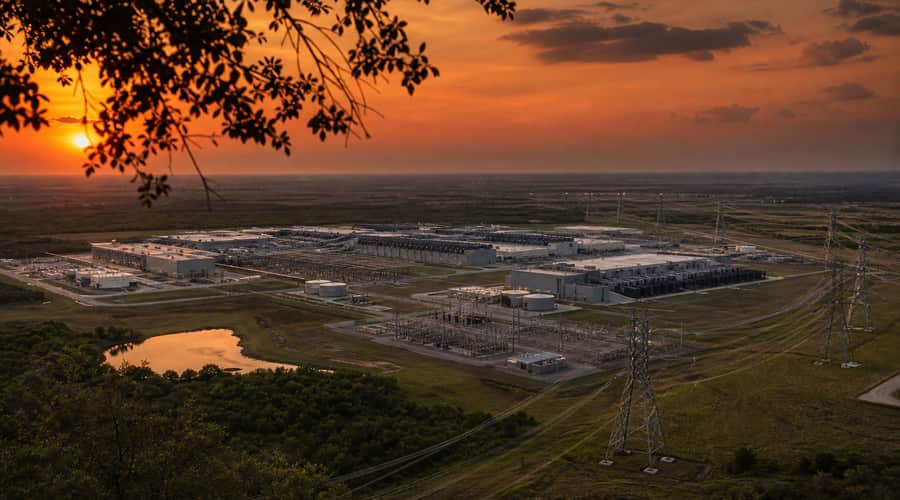
Texas's grid regulator is trying to force order onto a data center power rush that has already outgrown the old queue. If you're building AI infrastructure in the state, speed of filing is no longer enough.
The numbers tell you why Texas had to move. ERCOT's all-time peak demand is about 85.5 GW. According to data reported by the Houston Chronicle, more than 480 large data centers have asked to connect to the state's main grid through 2032, seeking more than 418 GW of electricity. Nearly five times the record. That isn't a pipeline. It's a warning sign.
On June 18, the Public Utility Commission of Texas approved ERCOT's Batch Zero framework, the grid operator's attempt to sort real projects from speculative ones. Instead of processing every large interconnection request in the order it arrived, ERCOT will study big loads in coordinated groups. Projects above 75 MW have to prove more than ambition. They need site control, nonrefundable fees, and evidence that the financing is actually there.
That is the right fight. A first-come-first-served queue works when requests are scarce and mostly real. It breaks when developers can treat grid capacity like an option on land they may never build on. The San Antonio Express-News reported earlier this year that ERCOT's old process was built for roughly eight to 15 large requests every quarter and was receiving as many as 100 in the same period. No grid operator can plan transmission around that kind of paper demand.
ERCOT expects only a slice of the queue to survive the first screen. The article's original figure of 438 GW was too high against the latest Chronicle data, but the corrected number doesn't change the point. More than 418 GW is still absurd next to an 85.5 GW peak. You don't solve that by adding another spreadsheet column. You make developers show they can actually build.
The timeline is the part hyperscalers won't like. Applicants are expected to learn their Batch Zero status in August 2026, with a final transmission plan targeted for fall 2027. For Amazon, Microsoft, Google, Meta, Oracle, you name it, that is a long wait when AI server plans are being written in quarters, not decades. A model training campus can be announced in a press release this year. The substation, line upgrades, transformers and permitting do not care about the press release.
Frankly, Texas is late to a basic solvency check. The state spent years selling itself as a place where power, land and permitting could move faster than coastal markets. That pitch worked. Now the bill has arrived in the form of interconnection studies, local opposition, water concerns and political pressure over who pays for the wires. Business Insider reported last week that Governor Greg Abbott asked regulators to make sure data centers pay for their own electric infrastructure rather than shifting those costs to everyday Texans.
That cost question is not a side issue. If a server farm needs new transmission, residential ratepayers in Houston, Dallas or rural counties should not quietly pick up the tab because a developer filed early. Batch Zero makes readiness and financial commitment part of the gate. It won't make electricity appear, but it should make the queue less dishonest.
Bisnow's coverage put the risk plainly: billions of dollars in Texas data center projects could be affected by the new rules. The projects most exposed are the ones that filed before they had land, capital or a credible build schedule. If you're a smaller AI infrastructure company without those pieces locked down, August is not a paperwork deadline. It's a stress test.
Crypto miners have a head start
One group may handle the shift better than expected: bitcoin miners that already control power sites in Texas and have been trying to turn mining campuses into AI data center campuses. The Block has reported on that conversion trend, and the logic is simple. If you already have land, interconnection work and power infrastructure, you aren't starting at the back of the same line as a developer with a slide deck.
That does not make every mining site fit for AI workloads. High-performance computing needs different cooling, networking and tenant standards than bitcoin mining. But being inside the fence matters. In a state where the queue is now being filtered for readiness, a half-built power position is worth more than a clean rendering of a future campus.
Batch Zero will not close the gap between Texas's AI appetite and its physical grid. Between 2024 and 2025, the state added about 23 GW of new generation capacity, with more expected in 2026. Against more than 418 GW of requested data center load, that still does not come close.
But it changes the conversation. Developers now have to prove they are customers, not just claimants. For a grid that has been asked to reserve power for almost five Texas peaks at once, that is not bureaucracy. It is the minimum standard.
Also read: Elastic's $85 million bet on DeductiveAI is a signal that AI-native ops tooling is now acquisition currency • The U.S. government just told ASML one of its most restricted machines may be inside China • Congress wants to put a GPS tracker on every Nvidia chip that leaves the country