Amazon is testing how far it can push employee silence just as Seattle is testing how far it can slow the AI data center boom.
Seattle's data center fight has moved from City Hall into Amazon's HR department. Three software engineers, Patrick Schloesser, Darius Irani, and Liesel Wigand, say the company opened internal investigations after they testified in favor of a one-year moratorium on large data center projects. They have now filed a complaint with the Seattle Office for Civil Rights, and the timing is the story.
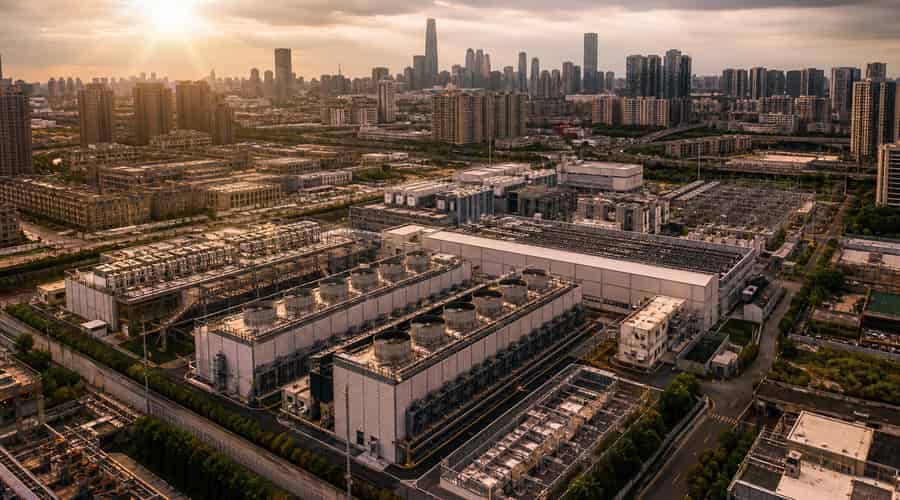
On June 9, 2026, the Seattle City Council voted 9-0 to pause new large-scale data center applications for one year. The measure applies to projects above 20 megavolt-amperes, after four companies approached Seattle City Light about five facilities that could together draw roughly 369 megawatts, about a third of the city's average electricity use, according to reports cited by TechRadar and The Verge. Residents talked about grid strain, water use, utility bills, noise, land use and the thin number of permanent jobs these server farms often create. You don't need to be anti-technology to ask who pays when a private computing boom lands on a public grid.
The city also gave itself homework. Seattle City Light is expected to study power impacts, while Seattle Public Utilities is expected to study water use, with the moratorium creating room for new zoning and operating rules. That is not a ban on AI. It is a city buying time before the next round of concrete, transformers and cooling equipment gets locked into place.
Then came the calls. According to The Verge, the three engineers were contacted by Amazon Employee Relations on June 10, one day after the council vote, and told the company was investigating whether they had violated its communications policy. Schloesser told The Verge he understood the process could lead to discipline up to and including termination. Amazon spokesperson Margaret Callahan told the outlet that employees are free to talk about their working environment, but that the company has policies against speaking as an Amazon representative without following the proper procedures. She also said Amazon may or may not take action and denied that the company had plans to terminate the workers.
That distinction is doing a lot of work. The engineers say they spoke as residents and as members of Amazon Employees for Climate Justice, not as official company spokespeople. Wired reported that five Amazon employees spoke at council meetings, while the three who filed the complaint say they were singled out after criticizing the industry's AI data center build-out. If Amazon's position is that simply naming your employer while discussing public infrastructure can trigger an HR probe, then tech workers should pay attention. That line would chill a lot more than one Seattle hearing.
Amazon has reason to care. Business Insider reported earlier this year that Amazon planned about $200 billion in capital expenditures for 2026, with CEO Andy Jassy arguing that AI capacity is being monetized quickly as customers move more work to the cloud. Across Amazon, Microsoft, Meta and Alphabet, AI infrastructure spending has become one of the largest capital races in corporate America. The buildings are physical, the power contracts are physical, and the local politics are physical too. A unanimous vote in Amazon and Microsoft's home city is not just symbolism. It tells other councils that slowing the build-out is now politically possible.
Frankly, the HR investigation makes Amazon look smaller than the infrastructure it wants to build. The company can argue process all it wants, but the complaint is not about whether Amazon has a communications policy. It is about whether a private employer can pressure workers after they speak at a public meeting about public resources. Seattle's civil rights law is unusually broad because it protects workers from discrimination tied to political ideology. A city council hearing on data center regulation sits close to the center of that protection, not out on the edge of it.
There are facts Amazon can point to in its own defense. The company told the New York Post that it has no current plans to build data centers within Seattle city limits. It has also said most of its North American data centers do not use water for cooling on a daily basis and that it is using reclaimed wastewater at some facilities. Those claims deserve to be part of the record. But they do not answer the question raised by the complaint: why did these workers get pulled into HR after speaking politically on their own time?
The answer now sits with the Seattle Office for Civil Rights. The office will have to decide whether Amazon's investigation was a neutral policy review or retaliation dressed in corporate language. That decision matters beyond these three engineers. If you work in tech, your job increasingly touches public questions: electricity demand, water use, housing pressure, climate targets, labor cuts and automation. Companies want employees to build the systems. They should not be shocked when some of those employees also ask what the systems cost.
Also read: OpenAI is racing to go public while its CEO openly admits he doesn't want to • Britain's top data regulator quits over misconduct findings just as its AI enforcement credibility is on the line • Harvey AI's 12x token surge reveals that legal AI has crossed from experiment to infrastructure