BlackRock's $12 billion bond sale for Meta's El Paso data center shows you where the AI arms race has moved: out of product demos and into the credit market.
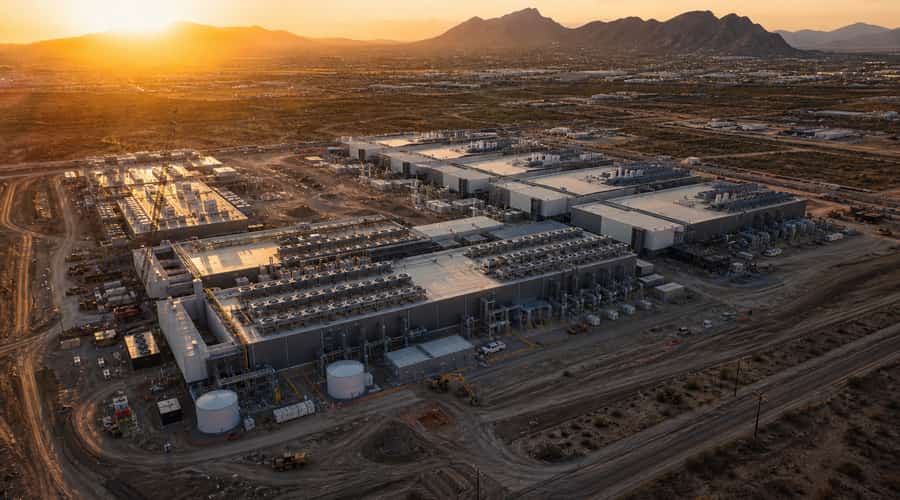
The El Paso deal is not just another data center announcement. It is a financing test. According to Bloomberg reporting republished by The Business Times, bonds are being sold by the company that owns BlackRock's 80% stake in Project Sopaipilla Holdings, the data center venture that is also 20% owned by Meta. JPMorgan Chase and Morgan Stanley are arranging the investor calls. The campus is expected to reach roughly 1 gigawatt of capacity and come online in 2028.
That is the physical project. The debt is the story.
Meta confirmed in March that its El Paso data center investment had grown to more than $10 billion, up from the $1.5 billion figure it gave when it announced the site in October 2025. The company said the project would support more than 300 operational jobs once completed, with more than 4,000 construction workers on site at the peak. Those are big local numbers for El Paso. But they are small beside the financing machine now being built around AI infrastructure.
The price is the point
Here's the thing: investors are no longer treating these deals as automatic gifts from the biggest technology companies. The Financial Times reported that the new El Paso bonds are being offered at yields above 7%, about 0.4 percentage points higher than Meta's earlier Hyperion project bond deal in Louisiana. That is real money at this scale. On $12 billion of debt, small changes in yield stop being small.
Bloomberg has already shown the wider fatigue. After roughly $300 billion of AI-related debt issuance, bankers have had to offer more compensation to buyers who now have plenty of choice. Meta's April corporate bond sale also priced at wider risk premiums than its October deal. Demand is still there. It just costs more.
Forbes reported on July 17 that Morgan Stanley expects global AI-related debt issuance to reach about $570 billion in 2026. Apollo data cited in that same piece showed order books for hyperscaler bonds covering nearly five times the amount offered in February, then slipping below two times by July. That is not a crash. It is a warning.
The market is saying something plain. Supply has weight.
CryptoBriefing reported that Amazon, Microsoft, Alphabet, Meta and Oracle sold $159 billion of bonds in the first five months of 2026, 47% more than in the same period last year. The same report said those companies averaged about $28 billion a year in U.S. corporate bond issuance from 2020 through 2024. You do not need to dress that up. The line has gone nearly vertical.
Why startups should care
It is tempting to treat this as a Wall Street problem, safely removed from your cloud bill. Don't. The path from a wider bond spread to a higher GPU invoice is not mysterious: debt finances the data center, the data center houses the compute, and the provider has to earn back its cost of capital. If financing gets more expensive, someone eventually pays.
Startups already know the pain in a less theoretical way. Training runs, inference loads, storage, managed databases, logging tools, you name it, the meter keeps running. If AWS, Azure, Google Cloud or Meta-backed infrastructure has to price capacity against more expensive financing, smaller companies will not be magically protected. They will meet it in the bill.
The BlackRock structure also tells you how this next phase will be financed. Off-balance-sheet project vehicles used to feel like the language of utilities, toll roads and pipelines. Now they are part of the hyperscaler playbook. Keep the project debt outside the technology company's main balance sheet, use long-term commitments from that company to support the credit, and let institutional bond buyers fund the physical build-out.
BlackRock gets long-duration infrastructure yield. Meta gets capacity without placing the full liability directly on its own books. Bond investors get exposure to assets linked to one of the most profitable advertising businesses in the world. On paper, everyone gets what they want.
Frankly, that is exactly why the saturation question matters. A structure can be clever and still become crowded. If every major AI builder reaches for the same bond buyers at the same time, spreads can widen even when the underlying companies remain strong. You do not need a credit crisis for borrowing costs to rise. You just need too much paper.
The El Paso pricing will now become a marker for the next round. If Project Sopaipilla debt comes wider than comparable Meta corporate debt, future AI project finance deals will have to answer to that number. Banks will point to it. Investors will point to it. CFOs will pretend not to mind, then build it into the model.
There have been larger bond deals. That is not the point. As a single infrastructure financing tied to one AI data center campus, this one shows how far the build-out has already moved from engineering ambition into balance-sheet engineering. The cheap-money part of the AI infrastructure cycle is over. Now you find out who can still build when the debt market asks to be paid properly.
Also read: The five biggest cloud builders are spending every dollar they earn on AI and then some, Alphabet's century bond just lost 10% of its face value and bond markets are pricing in the AI debt reckoning, and SpaceX's record Nasdaq debut anchors a $106 billion IPO quarter and signals the widest public exit window in years