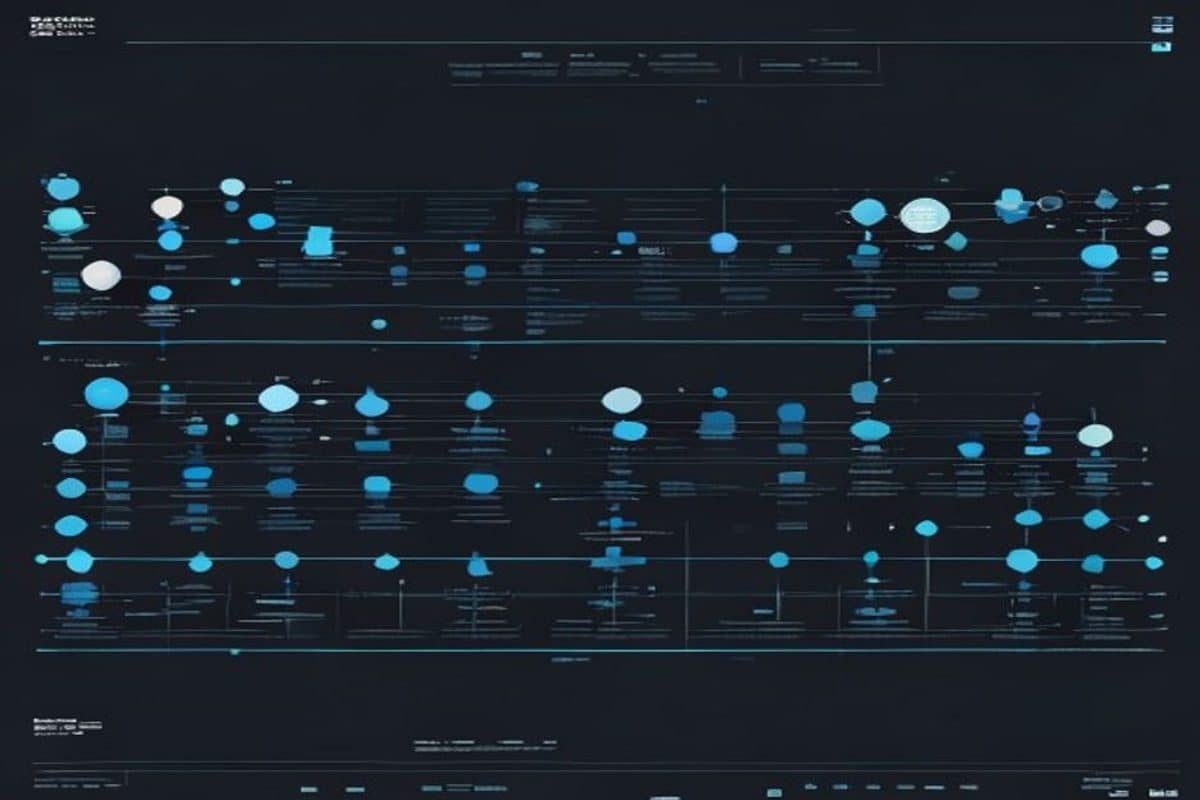
A newly viral infographic mapping OpenAI's full model history from 2018 to April 2026 has reignited debate on whether the company's release cadence reflects research breakthroughs or strategic timing tied to compute availability.
The chart has been spreading fast on Reddit and X this week, and it's easy to see why. Laid out in sequence, OpenAI's release history tells a story that's harder to spot in real time: a company that started by publishing research papers with attached language models has quietly become the most aggressive product-shipping organisation in AI, dropping meaningful model updates at a pace that now measures in weeks rather than years. GPT-5.5, the company's smartest model yet, landed on April 23. GPT-5.4 Pro had arrived just weeks earlier. GPT-5.3 Instant came in February. Before all of that, in mid-2025, GPT-5 itself launched as the company's flagship reasoning model. The rhythm is relentless.
The original timeline data driving the current discussion spans back to June 2018, when GPT-1 was released as a research paper with little commercial fanfare. GPT-2 followed in February 2019, initially withheld in stages by OpenAI on the basis that the model was too dangerous to release in full. GPT-3 arrived in June 2020, a 780-day gap that felt enormous at the time. GPT-4 launched on March 14, 2023, and then GPT-4o followed 416 days later in May 2024, the first model to put multimodal capability directly into the hands of free users. The compression of those gaps is what catches people's attention. What took years in the early era now takes months, and what took months now takes weeks.
Mira Murati's departure from OpenAI in September 2024 marks a pivot point that many threads cite in this context. As TechCrunch reported at the time, her exit came alongside other senior departures and coincided with a shift in the company's internal culture toward faster commercialisation. Whether that change accelerated the release schedule or simply reflected it is still debated, but the cadence data is unambiguous.
From Scaling to Inference
The more substantive argument circulating in these threads isn't about release frequency. It's about what the releases signal. A LinkedIn visual tracking 85-plus models across 11 companies between late 2022 and early 2026 shows OpenAI leading with 14 distinct model drops, but the nature of those drops has changed. The GPT-4.1 family, released to the API in April 2025, was explicitly positioned around coding efficiency and long-context performance rather than raw benchmark maximalism. By the time GPT-5.4 arrived in March 2026 with native computer-use capabilities, the product was no longer a chatbot being evaluated on academic tests. It was an agent designed to operate software.
This shift matters commercially. API pricing for GPT-4o-class models dropped significantly over 18 months, and the o3 reasoning model saw an 80% price cut in June 2025 alone, per OpenAI's own release notes. The business logic is straightforward: cheaper inference at higher capability allows OpenAI to compete not just against Anthropic and Google but against open-weight models like Meta's Llama series, which have attracted enterprise buyers on cost grounds. Sam Altman's October 2025 roadmap announcement, in which he and Chief Scientist Jakub Pachocki committed to AI research interns by September 2026 and fully autonomous AI researchers by March 2028, makes clear the endgame is not better chatbots. It is automated scientific labour.
What Comes Next
The compute-cap theory circulating in these threads, which holds that release gaps were historically constrained by chip manufacturing rather than research cycles, has gained credibility following Nvidia's recent earnings. OpenAI's Stargate infrastructure project, coming online in late 2025, gives the company substantially more training and inference capacity than it had during the GPT-4 era. The practical consequence is that the pace visible in this timeline is not slowing. With 800 million weekly active ChatGPT users now on record and model subscriptions spanning from the $8 ChatGPT Go tier to the $200 Pro plan, OpenAI has built a distribution engine that turns each model drop into immediate commercial return. For investors and competitors alike, the timeline isn't just a history lesson. It's a forecast.
Also read: OpenAI's release timeline sparks fresh debate on AI strategy • OpenAI is unbundling its AI stack and the pricing fallout is reshaping the entire industry • Google I/O 2026 is about to happen and the AI announcements could change how startups build