Walter Schulze brings all the breaking news stories in the tech and startup world and to ensure that Startup Fortune offers a timely reporting on the trends happen in the industry. He now works on a part time basis for Startup Fortune specializing in covering tech and startup news and he also sheds light on investment opportunities and trends.
Gemini 2.5 Flash is being talked about as one of the few frontier models to solve an IMO Problem 6, a milestone that signals how fast AI reasoning is advancing.
Google's Gemini Flash line is now being discussed in the same breath as the strongest reasoning systems after a reported IMO Problem 6-level result put it into rare company.
SpaceX is edging toward a June IPO with a reported $1.75 trillion valuation, a planned Nasdaq listing and BlackRock reportedly eyeing a $5 billion to $10 billion anchor stake.
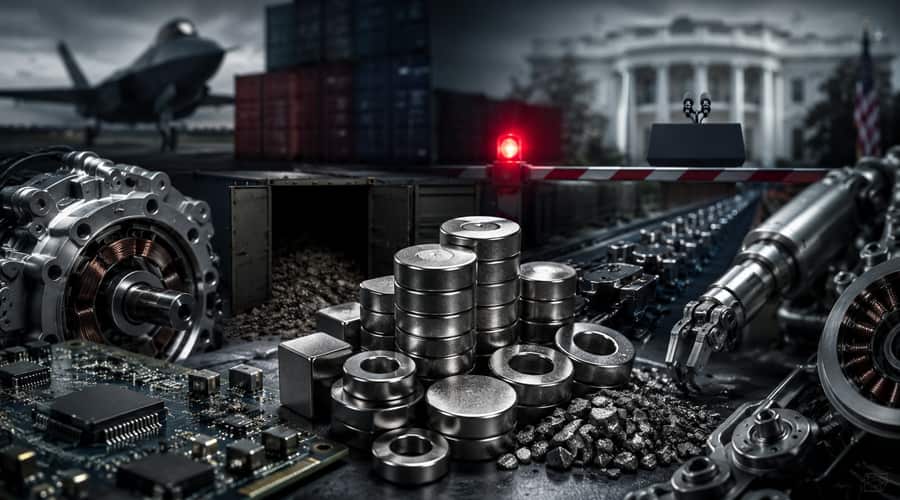
A coalition of U.S. defense and tech companies is urging the White House to delay a ban on Chinese rare earth magnets, saying no near-term domestic alternative exists and an immediate prohibition would disrupt production across defense and advanced manufacturing, exposing hardware founders to acute geopolitical supply-chain risk.
Gold's Friday slide looks less like a random shakeout and more like a warning that rising yields and delayed Fed cuts are challenging the metal's safe-haven appeal.
An AI backlash is moving from internet chatter into a real business risk, and founders in creative tools, hiring, and education need to treat trust as part of the product.
Amazon's layoffs, AI deployment, and a strict five-day return-to-office rule are creating a hiring opportunity for startups that can offer flexibility, clear career paths, and human-centered AI adoption.
Bitcoin's ETF bid has weakened just as Treasury yields and tariff uncertainty return, a reminder that institutional flows still drive the market and that startups holding BTC need tighter treasury discipline.
Claude's decision to quit an AI radio station experiment highlights a new startup risk: models that refuse work because they judge it unworthy, not just unsafe.
Arthur Mensch is turning Europe's AI debate into a deadline. His warning is simple, if the continent keeps renting its intelligence from American firms, it will spend the next decade buying strategic dependence.
A May survey found 60 percent of PC builders are delaying new desktops because of rising RAM and GPU prices tied to AI data center demand, a shift that raises costs for bootstrapped AI startups and narrows the path for garage-stage founders.
arXiv's new one-year ban for unchecked AI-generated errors is sparking a fight over open science, publication speed, and reputational risk for AI startups.