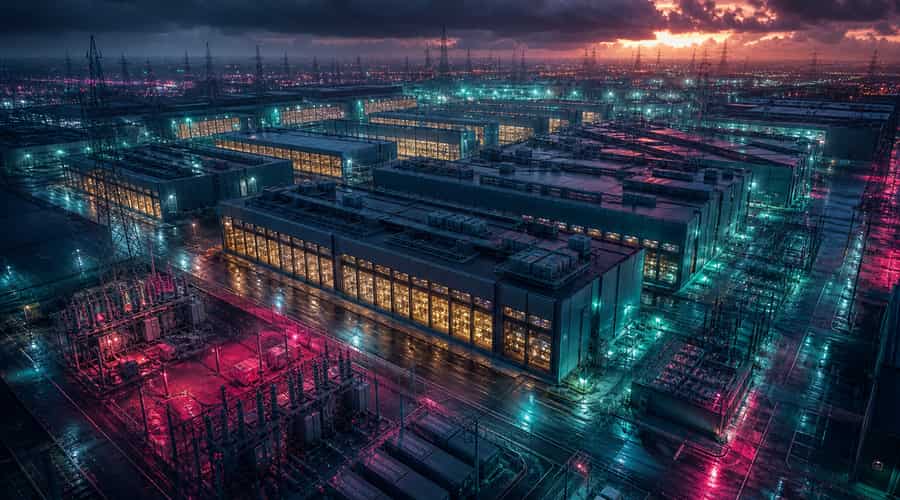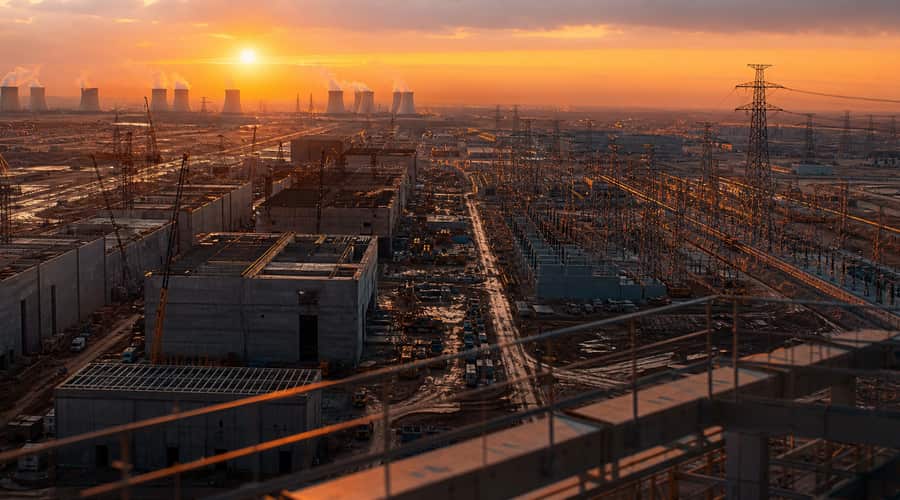
Crusoe can still find investors for a multibillion-dollar pre-IPO round, but its Wyoming setback makes the price harder to swallow.
Crusoe is asking investors to believe two things at once. Axios reported that the AI data center company has been seeking as much as $2 billion in a pre-IPO round at a $30 billion to $40 billion valuation, while Bloomberg reported in June that Crusoe was pushed aside from a planned 1.8 gigawatt Wyoming campus after Google raised concerns about cost and timing.
You do not need a spreadsheet to see the tension there. A company that was valued above $10 billion in October 2025 is now being discussed at three to four times that price, even after one of its named flagship projects near Cheyenne moved ahead without it. That is the AI infrastructure market in miniature: capital is still chasing power, land and construction capacity, even when the project record is messy.
Crusoe's last major round was already large by any normal standard. The company said in October 2025 that it had raised an oversubscribed $1.375 billion Series E, co-led by Valor Equity Partners and Mubadala Capital, with Nvidia, Fidelity Management & Research, T. Rowe Price and Tiger Global among the investors. The round put Crusoe above a $10 billion valuation. If the new price lands anywhere near the reported range, early investors will have watched the paper value of their stake triple or better in less than a year.
That kind of markup usually belongs to software companies with explosive margins. Crusoe is playing a heavier game. It began by capturing flared natural gas at oil wells and using that power for bitcoin mining, an origin that still explains how it talks about data centers today. The company says it builds power first, then puts AI compute on top of it. Its public pitch now includes a power pipeline of more than 45 gigawatts, a 1.2 gigawatt campus in Abilene, Texas, and other large sites around the country.
The Abilene project is the cleanest part of the story for Crusoe. It is tied to the AI infrastructure race that OpenAI, Oracle and other big buyers have made unavoidable. It also gives Crusoe the kind of physical proof investors like: land, power plans, buildings and customers, not just a deck about future demand. Redwood Materials has added another concrete detail, with a 12 megawatt, 63 megawatt-hour second-life battery system at its Nevada campus supporting Crusoe's GPU data center. The Verge reported that Redwood calls it the largest second-life battery project in the world.
Wyoming is the harder fact. The planned Cheyenne-area site, announced with Tallgrass in July 2025, was supposed to start at 1.8 gigawatts and scale as high as 10 gigawatts. The Associated Press reported at the time that the first phase alone would use more electricity than all homes in Wyoming combined. That was the point of the project. It was enormous enough to make Crusoe look like one of the few companies that could actually feed the AI buildout.
Then the customer problem arrived. Bloomberg reported on June 11 that Google had raised concerns about Crusoe's cost and construction timeline, and that Crusoe had demobilized from the site months before the news became public. TechRadar, summarizing Bloomberg's reporting, said Black Hills Energy expected the project to continue without Crusoe, working directly with the prospective customer and other parties. Crusoe said the development pause came at its customer's request.
Frankly, that explanation only gets you so far. If you are selling investors on the idea that you can assemble power, construction and hyperscale customers faster than almost anyone else, losing the lead role on a 1.8 gigawatt campus is not a small operational footnote. It is exactly the sort of event public-market investors will circle later and ask you to explain in plain English.
The market around Crusoe is not relaxed either. Reuters has reported on investor concern over Oracle's rising AI infrastructure commitments, and Oracle's stock has been under pressure as the company borrows heavily to build data center capacity for OpenAI and other customers. Investors Business Daily reported last week that Oracle shares were down sharply from their September 2025 high, with the stock sensitive to any sign that OpenAI's funding or timing could slip. When the customer, the cloud provider and the data center builder all need capital at once, the system starts to look less like a boom and more like a chain of promises.
Crusoe has also made a public-market move. In December, the company hired Michael Gordon, MongoDB's former chief financial officer and chief operating officer, as its own CFO and COO. Gordon helped take MongoDB public in 2017, and that is not the resume you hire casually if an IPO is still a distant thought. A $30 billion to $40 billion valuation would make any listing one of the most closely watched AI infrastructure debuts.
Whether Crusoe deserves that price is a different question from whether investors will pay it. Right now, the money still seems willing to chase anything with power access and a credible route to GPUs. But if you are looking at Crusoe as more than a symbol of the AI buildout, Wyoming is the detail you should not skip. The project is still moving. Crusoe is not the one leading it.
Also read: Alibaba Cloud Offers $5,000 in AI Credits as Qwen3.7 Max Challenges Rivals • Alibaba Times Its Qwen Price Cuts to Catch American Coders at Work • Kling AI nears a $3 billion round as Tencent buys into a rival's video bet