Google's latest AI push is not about a nonexistent Gemini 3.5 Flash release. The real story is how Gemini 3 Flash and Google's newer I/O announcements show the company trying to make agentic AI cheaper, faster, and harder for developers to ignore.
Google's Flash strategy now looks less like a side product for quick chatbot replies and more like a foundation for the next wave of AI agents. That matters for startups because the fight is moving from who has the most impressive demo to who can give developers reliable models, tools, and cloud infrastructure at a price that works in production.
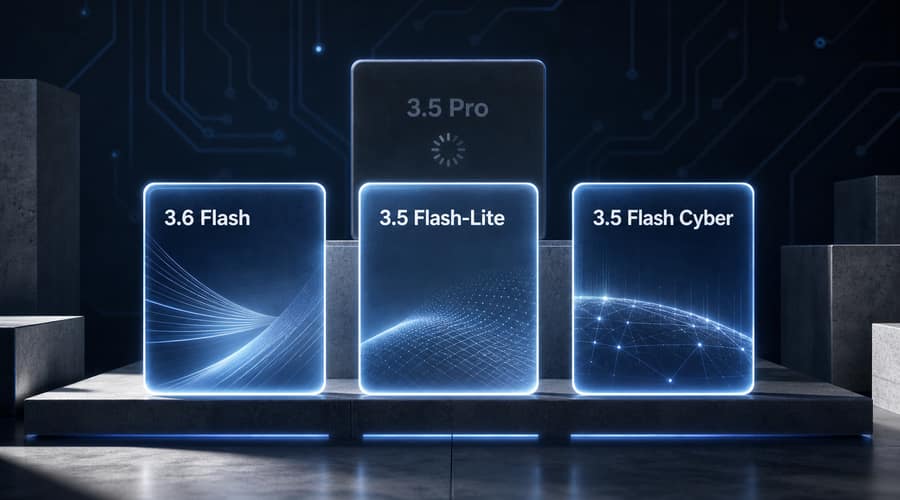
The published version of this story overstated one important point: Google has not announced Gemini 3.5 Flash as an official model. The verified model at the center of this shift is Gemini 3 Flash, which Google introduced in December 2025 as a faster and cheaper version of Gemini 3 with stronger reasoning than earlier Flash models. According to Google's launch post, Gemini 3 Flash became available in preview through the Gemini API in Google AI Studio, Google Antigravity, Vertex AI, and Gemini Enterprise, which put it directly in front of both independent developers and cloud customers.
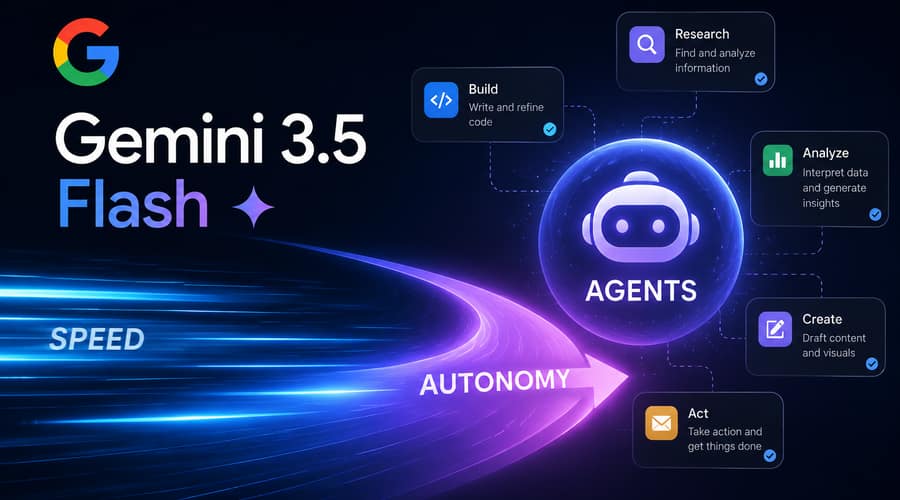
That availability is the business story. Flash used to be easy to understand as the practical model: lower latency, lower cost, and good enough for high-volume use cases. Gemini 3 Flash keeps that role, but Google has been framing the model around reasoning, coding, and agentic execution, not just quick answers. In plain terms, Flash is being pulled closer to the workflows where software does things on behalf of users, rather than only explaining things to them.
Why Flash matters more now
The timing gives the shift more weight. Google I/O 2026 opened on May 19 with the company again putting AI across Search, YouTube, Android, Gemini, and developer tools, as Axios noted in its live coverage of the event. Even where Google is showing consumer features, the developer message is clear: Gemini is becoming a layer that sits across products and workflows, not a single chatbot destination.
For startups, that changes the calculation. A founder building customer support automation, internal operations agents, sales workflow tools, or code assistants does not only compare model intelligence anymore. They compare latency, tool calling, context handling, cloud integration, monitoring, safety controls, and total cost per task. A Flash-tier model with stronger reasoning is useful because many agentic jobs do not need the most expensive frontier model for every step. They need a model that can route work, call tools, check state, and hand off harder tasks when necessary.
That is where Google has an advantage. Vertex AI already sits inside many enterprise procurement paths, and Google AI Studio gives smaller teams a faster route to experimentation. If a startup can prototype in AI Studio and then move the same family of models into Vertex AI for production, Google reduces the friction that often pushes teams toward more flexible but fragmented stacks.
The competitive pressure is real
Google is not making this move in isolation. OpenAI has been pushing agents through ChatGPT, APIs, and workplace integrations, while Anthropic has leaned into high-stakes reasoning and controlled releases, including the recent attention around Claude Mythos in cybersecurity. Those products are not identical competitors to Gemini 3 Flash, but they shape buyer expectations. Customers now ask whether an AI system can plan, use tools, respect permissions, and recover from mistakes. Chat quality is only one part of the purchase decision.
This is why the Flash positioning matters. If Google can make capable agentic execution cheap enough for everyday workflows, it pressures rivals at the bottom and middle of the market. A startup that once needed a premium model for every agent step may be able to reserve more expensive models for escalation while using Flash for routine planning and orchestration. That can change margins quickly, especially in products where each customer action triggers several model calls behind the scenes.
There is also a defensive angle. Google's own products produce enormous volumes of user intent, from Search to Gmail to Maps to YouTube. If Gemini becomes more capable at acting across those surfaces, third-party startups will have to be clearer about where they add value. A generic scheduling agent, research assistant, or shopping workflow becomes harder to sell when Google can bundle similar behavior into products people already use.
What remains unresolved
The practical questions are still the ones that matter most. Developers need stable pricing, predictable rate limits, clear enterprise service terms, and evidence that agentic workflows can be controlled in messy real-world environments. Tool use is powerful, but it also raises the cost of mistakes. A model that can call APIs, touch customer records, or trigger business processes needs guardrails that are more serious than a polite system prompt.
Independent benchmarks will also matter. Vendor demos are useful, but startups need to know how Gemini 3 Flash performs on multi-step tasks with real integrations, incomplete data, and changing user instructions. The model's value will be proven less by leaderboard claims than by whether teams can ship agents that save time without creating new operational risk.
The corrected takeaway is straightforward. Google has not unveiled Gemini 3.5 Flash, but it is clearly using the Flash line to make agentic AI more accessible through its developer and cloud ecosystem. Watch the next wave of I/O follow-through, especially pricing, Vertex AI features, and case studies from early enterprise users. That is where we will see whether Flash becomes a cheap model for simple tasks or a serious building block for autonomous software.
Also read: Google's Gemini Omni Flash pushes harder into agentic AI • ICE moves to list futures on GPU compute, putting AI infrastructure on the trading floor • Google turns Gemini into its latest bet on a unified AI stack