Nvidia is trying to turn a sharp tech selloff into a statement of confidence. Jensen Huang’s message in Seoul was simple: AI infrastructure is still being built, and the pullback does not change that.
Jensen Huang walked into one of the ugliest sessions for AI-linked stocks in months and told investors to look at the other side of the trade. The Nvidia chief executive used his Seoul visit on June 8 to argue that the global tech selloff had created a buying opportunity, even as South Korea’s market was being hit by a rush out of semiconductor names.
That matters because Huang was not speaking from a quiet conference room after the damage was done. He was in Korea while the Kospi sank as much as 8.8% in early trading, triggering a circuit breaker, with Samsung Electronics and SK Hynix both hit hard before trimming losses. The fall followed a rough Friday in the United States, where the Nasdaq dropped 4.2% after a strong May jobs report pushed bond yields higher and revived fears that the Federal Reserve could raise rates again this year.
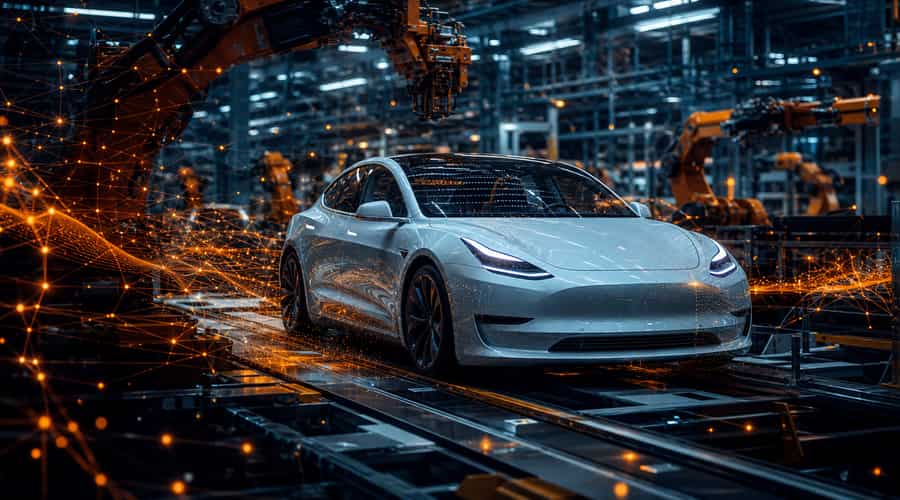
For Nvidia, the timing was uncomfortable but useful. A stock market rally built around AI can look unstoppable until higher rates make future earnings less valuable and investors start questioning how much of tomorrow has already been priced into today’s shares. Huang’s answer was to pull the discussion back to infrastructure. His argument is that the market is not looking at a completed cycle, but at the early construction of the computing base that will support AI services, robotics, digital twins and industrial software.
According to Reuters, Nvidia announced a series of South Korean agreements during Huang’s trip with SK Hynix, SK Telecom, Naver and Doosan Group, with the companies not disclosing deal values. The most important piece is the multiyear technology partnership with SK Hynix, which is designed to support future generations of high-bandwidth memory for AI data centers.
That is not a side issue. High-bandwidth memory has become one of the tightest parts of the AI supply chain. Nvidia can design faster accelerators, but those chips need advanced memory to move data quickly enough for large models and complex inference workloads. SK Hynix has been a critical supplier in that market, competing with Samsung Electronics and Micron Technology as demand for HBM3E and next-generation HBM4 rises.
Huang also made the relationship plain by saying SK Hynix had been Nvidia’s largest memory partner and would continue in that role. He said the new arrangement runs for more than two years and can be extended, while Nvidia’s annual purchases from SK Hynix already run into billions of dollars and are expected to grow substantially. That is the kind of detail investors watch closely, because it suggests Nvidia is not only selling into the AI buildout, it is also securing the components needed to keep that buildout moving.
The broader package reaches beyond memory. SK Telecom plans to build a gigawatt-scale AI cloud in South Korea using Nvidia technology, with its first AI data center expected to come online in 2027. Nvidia also said Naver and Doosan would use its technology to build AI data centers, while Doosan expects its energy technology to be used in Nvidia data center platforms and plans to use Nvidia’s physical AI tools.
Rate fears still matter
None of this removes the pressure from the market. The problem for investors is not whether AI demand exists. The problem is how much they should pay for it when capital gets more expensive. The AP reported that US employers added 172,000 jobs in May, roughly double what forecasters expected, helping push yields higher and making growth stocks look more vulnerable. Nvidia and Broadcom were among the biggest weights on the US market that day.
Korea was exposed because its own rally had become deeply tied to the same AI trade. The Kospi had doubled in six months, helped by memory and semiconductor optimism. When the trade turned, the selling was sharper because the gains had been sharper. Foreign investors had already been pulling money from Korean shares, and pressure on the won added another layer of risk for a market that depends heavily on global capital flows.
That is why Huang’s buying-opportunity line should be read as both market commentary and corporate strategy. He is not a neutral observer. Nvidia benefits when customers, suppliers and investors believe the AI buildout has years left to run. But the Korean agreements give that optimism substance. They show Nvidia tying itself more tightly to the companies that can provide memory, cloud capacity, manufacturing know-how and industrial customers.
The next test is whether those commitments turn into revenue fast enough to satisfy a market now asking harder questions. AI spending has been treated as a near-certain growth engine, but high valuations leave little room for disappointment. If cloud operators keep ordering, memory suppliers keep scaling and industrial customers begin using Nvidia systems beyond the biggest internet companies, the selloff may look like a reset. If rates keep rising and AI budgets start to slow, even Huang’s confidence will not be enough.
For now, the practical takeaway is clear. Nvidia is using the downturn to reinforce the story that AI is an infrastructure cycle, not just a stock market theme. Investors will decide whether that story deserves another premium, but Korea shows how Nvidia intends to defend it: by locking in supply, deepening national partnerships and making itself harder to replace before the next chip cycle arrives.
Also read: AI fears are choking the software buyout machine • Microsoft is making OpenAI optional inside its AI stack • xAI’s Claude workaround puts Grok’s coding race under scrutiny