A viral claim about OpenAI paying New Yorkers to record household chores remains unverified. The bigger story is why so many people believed it immediately.
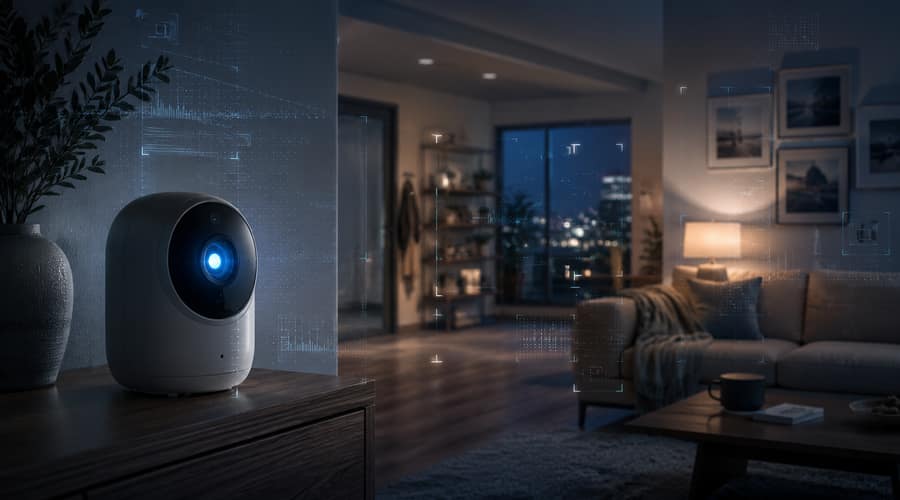
The latest AI privacy fight did not start with a product demo or a regulatory filing. It started with a claim spreading across Reddit and social media that OpenAI was paying people in New York City to install 360-degree cameras in their homes and record ordinary tasks such as vacuuming, washing dishes and cooking.
There is no solid public evidence confirming that specific OpenAI program. That matters. A secondhand post is not the same thing as a company announcement, a contract, or credible reporting. But the reaction tells us something important about where the AI market is heading. The idea sounded plausible because the industry is already moving from text scraped from the web to video captured inside the physical world.
This is the new data frontier. Chatbots learned from documents, code, articles and conversations. Robots and embodied AI systems need something different. They need to understand how people reach for a cup, open a drawer, wipe a counter, fold a shirt, move around a cramped kitchen and recover when an object slips. The internet does not contain enough clean, useful examples of that. Homes do.
According to a recent Los Angeles Times report, workers in Los Angeles have been paid to wear cameras while doing household chores so robotics companies can train systems on real human movement. That is not a distant research idea. It is already gig work. People record themselves making coffee, washing dishes, cleaning bathrooms and folding laundry because those simple routines are exactly the kind of actions machines still struggle to perform reliably.
Other examples point in the same direction. Dobb-E, a household robotics research project, collected demonstrations across New York City homes to train robots on domestic tasks. Meta's Ego4D project gathered thousands of hours of first-person daily-life video with consent and privacy procedures around the collection process. Job listings from data vendors now openly ask contributors to record everyday activities such as cooking, organizing rooms and doing laundry for AI and robotics training.
So the OpenAI claim sits in an awkward place. It is unverified, but it is not absurd. OpenAI has also been expanding around robotics talent, including roles connected to robotics data systems. Once a major AI lab starts thinking seriously about machines that act in the world, the demand for real-world video becomes obvious. A model cannot learn domestic work from a spreadsheet. It needs messy rooms, bad lighting, awkward corners and human hands doing human things.
Consent is not the whole privacy problem
The easy answer is to say that paid participants can choose to opt in. That is true, but it is incomplete. A camera inside a home does not only capture the person who signed the agreement. It may record children, guests, roommates, neighbors passing a window, prescription bottles, bills on a table, religious objects, family photos and conversations from people who never agreed to become training data.
This is why household video is different from a public web page. It carries context that cannot be neatly separated from the task being performed. A person washing dishes is also revealing the layout of a kitchen, the products they buy, their income signals, their routines and sometimes the private life of everyone else who lives there. Even if faces are blurred later, the raw recording still existed somewhere first.
For AI companies, that creates a trust problem before it becomes a legal problem. Users will want direct answers. Who stores the footage? How long is it kept? Can humans review it? Is audio captured? Are bystanders removed? Can participants delete the data later? Is the footage used only for robotics, or can it train broader multimodal models? A vague consent form will not be enough when the collection site is someone's home.
The business incentive is clear. Real-world video could become one of the most valuable training assets in AI because it is scarce, expensive and hard to replicate. The companies that build strong pipelines for physical-world data may gain an advantage in robotics, smart home automation, augmented reality and AI assistants that understand what is happening around them. That is why the pressure to collect more of it will not go away.
But the companies that get this wrong will create a backlash larger than the one around web scraping. People may accept that public text was absorbed into AI systems, even if reluctantly. They will be far less forgiving if they believe private homes are becoming training labs without clear boundaries.
The practical takeaway is simple. Whether or not OpenAI is behind the New York camera claim, AI firms now need to treat household data as a high-risk asset, not just another input. The next competitive edge in AI may come from watching the physical world, but the next major trust crisis may come from watching too much of it.
Also read: Gold is rising as Iran deal hopes reshape the hedge trade • AI Guardrails Are Proving Easier To Remove Than Enterprises Expected • Europe's startup surge is becoming harder for investors to ignore