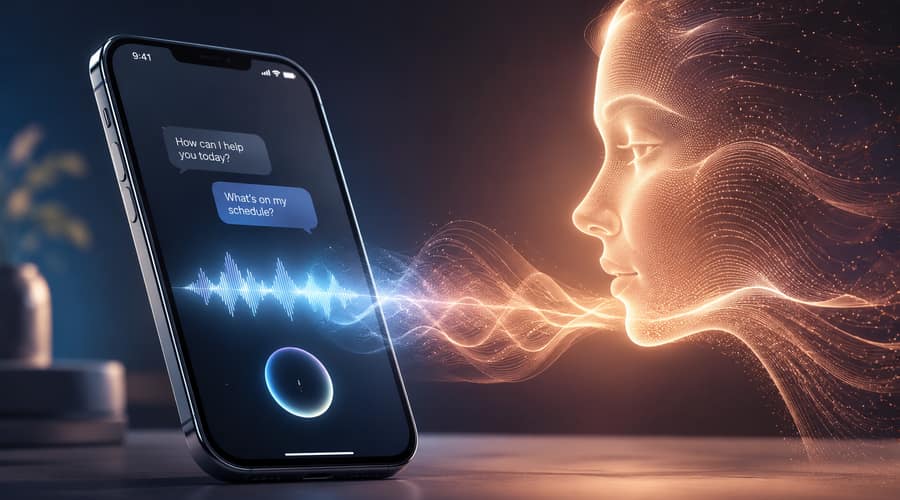
Sesame has moved from an invite-only experiment to a public iPhone app, and that is the real test. The startup now has to prove that its voice-first AI can stand out in a market already crowded with polished demos.
Sesame's launch matters because the company is no longer selling a promise to a small group of early testers. It is asking a much wider audience to spend time with a product built around natural conversation, memory, and personality, which is a harder challenge than simply showing off a polished demo.
According to TechCrunch, Sesame opened a public preview of its conversational AI agents on iOS on Thursday, May 28, 2026, after more than a year of development. The app is available in 39 countries and is currently free, though users may encounter a short waitlist during sign-up. An Android preview is expected later. That puts the startup in a different phase of its life, because consumer AI products tend to look impressive in limited access and far more ordinary once they reach the open market.
The founding story is part of the appeal. Sesame was co-founded by Brendan Iribe, the Oculus co-founder and former CEO, and Ankit Kumar, the former CTO of AR startup Ubiquity6, with other Oculus veterans also tied to the company. That background gives the startup a clear identity in a market that often feels interchangeable. These are people who spent years thinking about immersion, presence, and how to make digital experiences feel less mechanical.
That matters here. Voice is unforgiving, and most AI products still sound like software pretending to be helpful. Sesame is trying to make the interaction feel closer to a live conversation, with agents that have distinct voices, personalities, points of view, and memory. Its iOS preview includes Maya, Miles, Simone, and Charlie, which makes the product feel less like a single chatbot with a microphone and more like a set of characters competing for daily use.
The Oculus connection also explains why Sesame keeps circling back to the same idea, a persistent assistant that eventually lives in smart eyewear. The company has said it expects intelligent eyewear to launch in 2027, with the AI acting as a companion that can observe and respond to the world around the user. The iPhone app is not the end state, it is the first broad distribution step on the way there.
That gives the launch a slightly unusual shape. Sesame is using a consumer app to validate an interface it ultimately wants to move onto hardware. If the conversation feels good on a phone, the company may have a stronger case that it can survive the jump into wearables, where the margin for bad UX is much smaller.
The market is getting crowded
Sesame is entering a category that is already packed with serious money and serious expectations. OpenAI has pushed voice deeper into mainstream AI use, ElevenLabs has become synonymous with synthetic speech quality, and a growing wave of AI companion startups is competing for the same emotional real estate. That makes differentiation difficult, because the barrier is no longer access to a model, it is whether the product feels memorable enough to keep people coming back.
This is where the retention question becomes important. Consumer AI apps have learned the hard way that novelty fades quickly. Users may try a clever voice product once, but keeping them engaged requires something deeper than technical flair. It needs utility, personality, and a reason to return when the initial curiosity wears off.
Sesame's broader funding position suggests it understands that pressure. In October 2025, the company raised $250 million in Series B financing from investors including Sequoia and Spark, bringing its total funding to roughly $307.6 million, according to Crunchbase data cited by Road to VR. That is a meaningful war chest for a startup still shaping its category, but it also raises the stakes. Well-capitalized backing gives Sesame time, not certainty.
There is also a strategic question underneath the launch. Is Sesame building a consumer product that can stand on its own, or is it really using the consumer layer to refine an eventual hardware business? The public iOS release suggests the company wants feedback at scale, but the smart-glasses roadmap points to a longer play. In practice, that may be the right answer. Many AI companies are discovering that pure consumer distribution is expensive, fickle, and difficult to monetize unless the product becomes part of daily routine.
Sesame's bet is that voice can become that routine. The launch of the iOS app is the first chance to see whether the company can turn a strong founding pedigree and a well-funded strategy into something people actually use, not just admire. If the product feels genuinely different, it could carve out room in a crowded field. If not, it will become another reminder that in AI, the interface is often the easy part.
Also read: FBI gold bust puts physical bullion back in the spotlight • Cash App makes USDC transfers fee free and rewrites the consumer on-ramp • Russia's gold selloff signals a deeper strain in sanctions-hit reserves