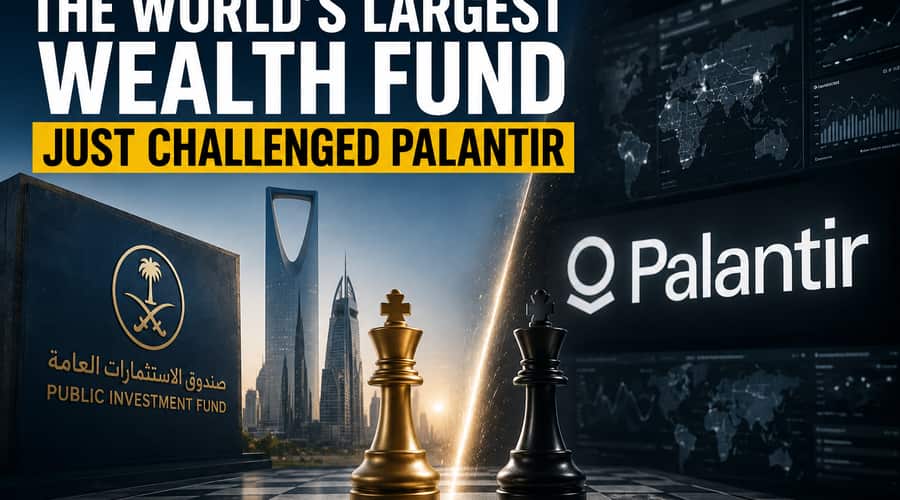
Norway's 2.3 trillion sovereign wealth fund is backing a human rights review at Palantir, a remarkable break from its usual management-friendly voting record that signals mounting institutional unease with defense-AI contractors.
The world's largest sovereign wealth fund doesn't pick a fight often. When it does, people notice.
Norges Bank Investment Management, which runs Norway's 2.3 trillion Government Pension Fund Global, announced it will vote for shareholder proposals demanding a human rights impact assessment and disclosure of political contributions at Palantir Technologies. The vote happens June 3 at Palantir's annual general meeting. The proposals, filed by an unexpected activist, the Congregation of the Sisters of St Joseph of Peace, cite concern over Palantir's software use amid an 84% rise in US immigration detentions and record deaths in custody since early 2025.
Here's the thing: these measures stand little chance of passing. Palantir's co-founders Peter Thiel, Alex Karp, and Stephen Cohen control the board in perpetuity. The Norwegian fund holds just 1.22% of the company's shares. So why does this matter?
Because Norges isn't some fringe activist with a PowerPoint deck. It owns stakes in about 7,200 companies and votes on 110,000 resolutions annually. Last year, it followed management's recommendations 94% of the time. When it breaks ranks, other institutional investors watch. And then they often follow.
Why the fund is speaking up now
Norges is under pressure at home. Amnesty International and Norwegian political parties have criticized the fund's Palantir investment. The company has become one of the highest-profile beneficiaries of rising spending on AI and military technology, with deep ties to surveillance and defense work including contracts with the CIA, Pentagon, US immigration agencies, and Israel's military.
The Pentagon just made Palantir's Maven artificial intelligence system an official program of record, locking in long-term use of the weapons-targeting technology across the US military. Maven can rapidly analyze satellite, drone, and sensor data and automatically identify potential threats, a system that Deputy Secretary of Defense Steve Feinberg says provides warfighters "with the latest tools necessary to detect, deter, and dominate our adversaries in all domains."
But that military embrace creates headline risk. The UK is scrutinizing Palantir's £330 million NHS data contract, with MPs warning that granting Palantir access to identifiable patient information is "dangerous" and will fuel public distrust. Critics note Palantir's software shares the same architecture across both defense and civilian solutions, raising questions about whether promises to keep data segregated can be verified.
A signal sharper than divestment
Here's what makes this moment different: Norges isn't divesting. It's voting. Divestment means you've given up. Voting says you're still in the room, and you expect change.
Norway's own Storebrand Asset Management sold its Palantir stake in October 2024 over sales to Israel for use in occupied Palestinian territory. The New York City Comptroller pressed Palantir in February for an independent human-rights assessment tied to its Department of Homeland Security work. ABP, the largest Dutch pension fund, has divested.
But Norges is taking a different route. Backing the shareholder proposals lets the fund register concern through the ballot rather than the blunter instrument of divestment. There is a sharper edge to this position. Norway moved last year to suspend or rework parts of its wealth-fund ethics rules in ways that critics said were designed to protect holdings in technology firms with ties to Israel, even as the fund kept building positions in companies like Palantir. This vote allows Norges to acknowledge the controversy without triggering a wholesale exit.
The question now is whether this is a one-off gesture or the beginning of a broader shift. If a mainstream investor of this scale is willing to publicly back a human rights review at a company whose commercial AI business is exploding, which other defense-AI firms might be next?
Palantir's management now faces an awkward choice. The company is on a commercial tear. First-quarter revenue grew 85% year-over-year to $1.63 billion, marking the 10th consecutive quarter of accelerating revenue growth. US commercial revenue jumped 133%. Full-year 2026 guidance was raised to $7.65 billion to $7.66 billion, implying 71% annual growth. The stock has surged in recent years, and the bull case remains intact: governments are spending, AI is embedding, and Palantir's ontology layer is genuinely hard to replicate.
But the shareholder vote almost certainly fails. That's not the point. When one of the world's largest sovereign funds says publicly that it wants a human rights review, the question stops being whether activists are uncomfortable. It becomes whether one of your largest owners is.
Palantir's response will tell us everything about how defense-AI companies navigate the tension between explosive growth and institutional accountability. The market is watching.
Also read: Lenovo shares double in their best month since 1999 as AI server demand rewrites the company's earnings story • Brussels opens a hard test for JD.com's 2.2 billion Ceconomy bid • Polymarket's latest drain exposes a trust problem beyond the stolen funds