Kioxia Holdings has pushed past Toyota in market value, but not past SoftBank, making the real story less about Japan's new number one and more about how AI demand is lifting the companies that supply memory infrastructure.
The memory chipmaker's shares surged 7.6% on June 12, pushing its market capitalization above ¥44 trillion ($274 billion), past Toyota's ¥43.8 trillion close and into the top tier of Japan's public market. Kioxia's stock has risen more than 660% since January, making it the top performer on the MSCI World Index, all from a company that only held its IPO on the Tokyo Stock Exchange in December 2024. In eighteen months, a NAND flash manufacturer displaced the automaker that had held Japan's corporate top spot for more than two decades before SoftBank's AI-fueled rally changed the ranking earlier this year.
The earnings behind the share price are harder to argue away. Bloomberg reported Kioxia is forecasting net profit of ¥869 billion for the April-June quarter, a 48-fold year-on-year increase that blew past the QUICK analyst consensus of ¥405.6 billion by more than ¥300 billion. Operating profit for the same period is projected at ¥1.298 trillion, up 29 times on last year, and revenue is forecast to hit ¥1.75 trillion, a 5.1-fold increase. The company has already sold out its entire 2026 NAND production capacity. Gartner estimates NAND flash prices will rise 234% this year, with no meaningful supply relief expected before late 2027.
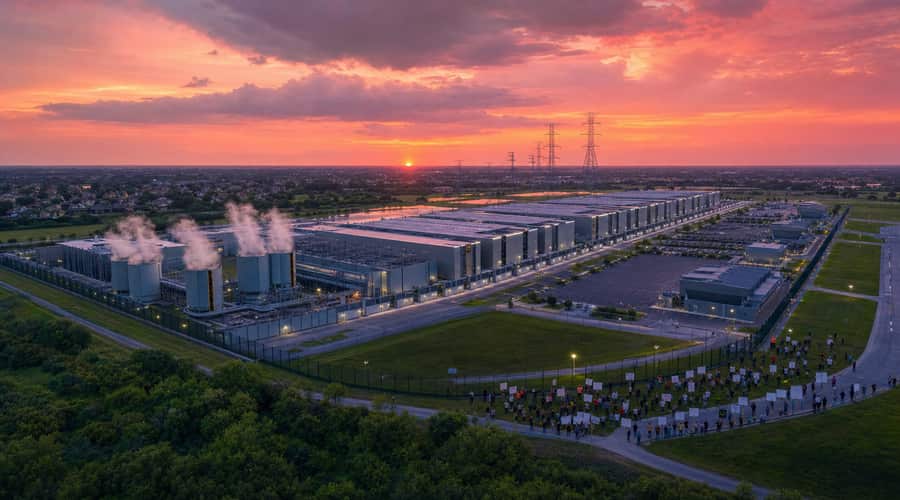
The supply picture is where the structural argument lives. New NAND fabrication capacity takes years and tens of billions of dollars to bring online, and the AI data center build is consuming flash storage at rates the industry failed to anticipate. The assumption two years ago was that AI infrastructure meant compute first and everything else later. What is now on the record, in Kioxia's quarterly numbers, is that training and inference at scale require massive fast storage, and the handful of manufacturers with enterprise-grade NAND capacity are extracting significant pricing power from a shortage that shows no sign of easing soon. The company refrained from providing full-year guidance for fiscal 2027, citing geopolitical risks, a notable hedge given the scale of the profit projections sitting beneath it.
Kioxia is not alone in reordering Japan's corporate rankings. SoftBank Group surpassed Toyota earlier in 2026, lifted by its AI investment portfolio and its exposure to companies such as Arm and OpenAI. But the distinction matters: SoftBank's valuation rests substantially on the marked value of its holdings, while Kioxia's surge is backed by chips shipping to customers at record prices. A ¥869 billion quarterly profit forecast does not leave much room for the argument that this is purely enthusiasm driving the stock higher.
The cyclical risk is real and worth stating plainly. NAND markets have historically been among the most volatile in all of semiconductors, and Kioxia itself was caught in the last major oversupply, which ran from roughly 2022 into 2023, severely enough that the company delayed its IPO by years. Samsung, SK Hynix, and Micron have all been through the same pattern. A 660% gain since January already prices in a sustained shortage, and Gartner's 234% price increase covers the current fiscal year, not what follows. The question the market is answering right now is whether AI data center demand is structurally different from the consumer and PC-driven NAND cycles that preceded it, and whether that demand holds long enough for pricing to outlast new capacity arriving in late 2027.
Kioxia is also preparing an American Depositary Share listing on the New York Stock Exchange, a move that would open its stock to a wider pool of capital. Whether or not that listing closes this year, the market has already settled a more immediate point. Japan's corporate hierarchy is no longer defined only by cars and banks. It is increasingly being shaped by the memory chips running inside AI data centers, and Kioxia's quarterly net profit forecast, ¥869 billion for three months, is the figure that explains how that change happened so fast.
Also read: Pokémon Go players trained a military drone navigation system and never knew it • Prime brokers tightened SK Hynix leverage while the AI memory thesis held firm • Britain bets on state equity to stop its best startups from decamping to America