
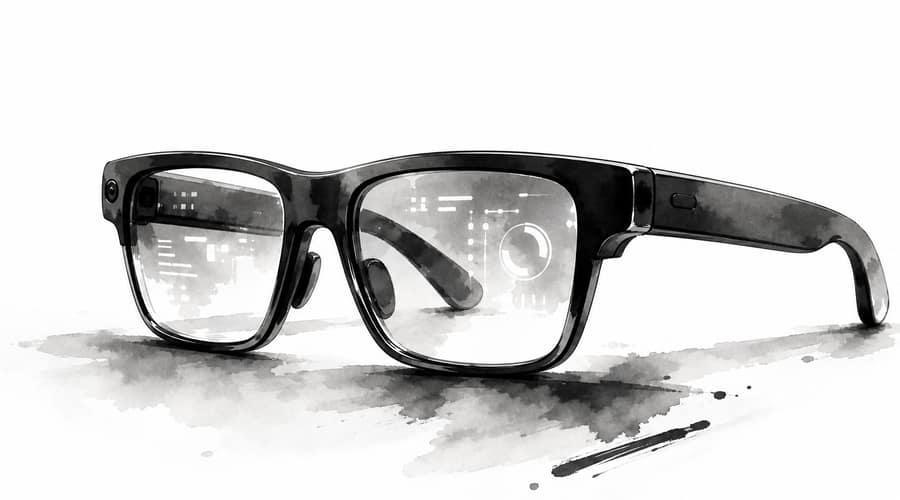
Meta’s new glasses start at $299 and drop the Ray-Ban name, which tells you exactly what the company thinks it has learned: smart glasses no longer need to hide behind eyewear nostalgia.
Meta has spent years trying to make computers on your face look ordinary. On Tuesday, June 23, 2026, it took the next step and launched Meta Glasses, a cheaper line of AI smart glasses made with EssilorLuxottica but sold without the Ray-Ban or Oakley name on the frame. According to WIRED, the new models go on sale today and start at $299, which is below the Ray-Ban Meta Gen 2 line Meta launched last year.
That price is the story. A company does not remove a famous eyewear badge and cut the entry price unless it believes the device itself can carry more of the sale. Ray-Ban gave Meta cover when the category was still awkward. Now Meta wants the credit, the customer relationship, and the habit.
The lineup is simple enough. Meta Adventurer has a rectangular shape and comes in standard and large sizes. Meta Fury is similar but less boxy. Starfire, designed with Kylie Jenner, costs $399 and adds a small gemstone, a metal nose pad meant to avoid absorbing makeup, a mirrored case, and an AI-generated version of Jenner’s voice for the assistant. You may find that charming or faintly strange. Either way, it is not accidental. Meta is trying to make these things feel less like developer hardware and more like something someone would actually choose before leaving the house.
The hardware stays close to the Ray-Ban Meta Gen 2 formula. WIRED reported that the glasses capture 12-megapixel photos and 3K video, use a six-microphone array, include speakers in the arms, and last around eight hours on a charge, with the case adding another 40 hours. They still have no display. That keeps the product from being full augmented reality, but it also keeps the weight, price, and social awkwardness lower than the heavier AR devices now coming to market.
Meta also added the kind of comfort work that sounds dull until you have to wear the product for four hours. The nose pads can be adjusted slightly, the temple tips can be bent in or out, and the overextension hinges give wider heads more room. This is where smart glasses will be won or lost. Nobody needs a lecture about ambient computing if the frames pinch behind the ear.
Meta wants the brand now
The Ray-Ban partnership did its job. It made Meta’s camera glasses look familiar, put them inside real eyewear retail channels, and gave shoppers a name they already understood. But a licensing arrangement has a ceiling. If you believe glasses will become the next everyday computing device, you do not want the most valuable name on the product to belong to someone else.
Meta is still working with EssilorLuxottica, so it has not walked away from the manufacturing and distribution muscle behind Ray-Ban, Oakley, LensCrafters, and Sunglass Hut. It has changed who gets the brand lift. Every person who buys these glasses and likes them is now building Meta’s identity as an eyewear company, not just as the software sitting inside another company’s frames.
The AI piece is important, but it needs to be described carefully. WIRED reported that the glasses run Meta’s latest Muse Spark multimodal model, though that software has already reached some existing devices through updates in select markets. The new glasses add smarter Meta AI responses, broader translation support including languages such as Japanese, Chinese, Hindi, and Korean, and a Dynamic Photo feature that captures multiple frames and recommends the best shot. Turn-by-turn audio directions are also coming for glasses without displays.
Here’s the thing: a camera on your face still makes people nervous. Meta knows that. WIRED reported that the glasses use tamper-detection technology that can block camera access if someone interferes with the recording LED. The company also said there are no plans for facial recognition after WIRED found, and Meta later deleted, code in the public Meta AI app suggesting such a feature had been in development. Keep that dry detail in the story. It is the difference between a product launch and the real trust problem sitting underneath it.
Snap chose the expensive road
Meta’s move also lands a week after Snap showed how different the other path looks. Business Insider reported that Snap unveiled its new Specs AR glasses at AWE 2026 in Long Beach, priced at $2,195, with preorders beginning June 16 and shipping expected this fall in the US, UK, and France. These are not the same kind of product. Snap is selling true AR with digital overlays in your field of view, internet browsing, gaming, first-person capture, and shared experiences such as EyeConnect.
That ambition costs money and weight. Business Insider put Specs at about 132 grams, nearly twice the weight of Meta’s Ray-Ban glasses. You can respect the technical reach and still see the commercial problem. A $2,195 pair of glasses asks for a different kind of buyer than a $299 Meta frame sitting in an optical shop.
Frankly, that split may help both companies for now. Snap can chase developers, creators, and early AR believers who want spatial computing on their face. Meta can chase everyone else: the person who wants photos, translation, music, voice commands, and a device that looks close enough to normal eyewear to survive a commute.
What you are watching is Meta showing unusual patience in hardware. The company burned years and billions trying to make the metaverse feel inevitable. Smart glasses are a quieter bet, but a more practical one. They live where people already carry cameras, speakers, and assistants: right beside their eyes and ears.
Dropping Ray-Ban does not prove Meta has won the category. It proves Meta thinks the category is real enough to put its own name on the front.
Also read: Berlin drone startup Stark is raising €300 million after failing every military strike test eight months ago • Allium raises $40 million to become the Bloomberg terminal of blockchain data as regulators close in • The global tech sell-off is a reckoning with AI valuations that were always going to come