Singapore's passport can get you into 192 countries without a visa. Try telling that to a Singaporean paying 628,000 Singapore dollars for a four room flat.
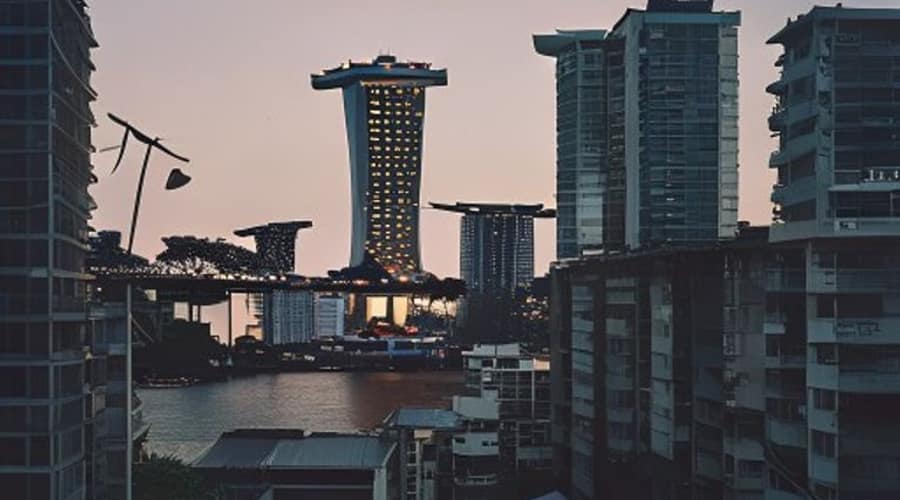
For the third year running, Singapore holds the top spot on the Henley Passport Index, with its citizens able to enter 192 destinations visa free or with a visa on arrival, more than any other passport on earth. That fact gets repeated every year like clockwork, usually with a photo of Marina Bay Sands attached. What gets repeated far less is what a separate, broader index found just this month: on quality of life, Singapore doesn't even crack the top hundred.
Henley's ranking measures one thing, how many borders will let you in without asking permission first. The Global Passport Index published by Global Citizen Solutions measures something closer to how a passport, and the country behind it, actually functions for the person holding it day to day. That index gave Singapore a top ten finish overall for 2026, built on a first place score in mobility of 114.2 and another first place finish in its investment pillar at 84.0, which weighs tax rates, income per capita and market opportunity. Then comes the third pillar, quality of life, worth a quarter of the total score. There Singapore lands around 115th out of roughly 199 countries ranked.
Global Citizen Solutions names two specific culprits: a high cost of living and a low score on migrant acceptance. Singapore still scores well on sustainable development, happiness and environmental performance, the other components of that pillar. Cost of living does the real damage, and you don't need an index to see why.
Housing carries most of the weight. According to Singapore's Housing and Development Board, the median resale price for a four room flat, the kind of apartment roughly 80% of citizens actually live in, hit S$628,000 in the first quarter of 2026. Four hundred and twelve HDB resale flats sold for more than a million Singapore dollars in that same quarter. Numbeo puts the country's price to income ratio at 21.10 and its cost of living index at 87.7 against New York's 100, with rent running 84% higher than the American average. None of that is a tourist's problem. It's every citizen's mortgage.
Here's the thing a global index can't quite capture. In most countries, someone priced out of the capital can retreat. A Londoner moves to Yorkshire. A Parisian moves to the Dordogne. Singapore is a city state of about 734 square kilometers with no countryside behind it, no cheaper province, no rural alternative. The housing market you see downtown is the housing market, full stop, for the entire country. There's nowhere else to go.
The same problem shows up in green space. Gardens by the Bay draws tourists paying $30 or $40 for a meal near the Supertree Grove, and that experience gets mistaken online for what daily life in Singapore looks like. It isn't. A local eating out at those prices 365 days a year would be broke inside a month. What most residents actually get are small, well tended neighborhood parks, not the kind of national park system a country the size of Malaysia or Australia can offer as a genuine escape from the city. A two acre park bordered by an expressway is not wilderness, no matter how many design awards it collects.
None of this makes Singapore a bad place to live. Its healthcare system and its safety record are genuinely strong, and its government has spent decades building infrastructure that works, on time, without excuses. But an index built on happiness, migrant acceptance and cost of living was never going to reward a country that is safe and efficient while also being one of the most expensive and land constrained places on the planet to actually put down roots.
That's the gap the rankings expose. A passport tells you how easily you can leave. A quality of life score tells you what happens when you stay. For Singapore in 2026, those two numbers are moving in opposite directions, and no amount of visa free travel changes what a four room flat costs in Toa Payoh.
Also read: UK startups raise $17 billion in H1 2026, their strongest half since 2022 • Kling AI's New Funding Priced It Below the Number Investors Floated in May • SK Hynix files to raise $28 billion in a Nasdaq listing built entirely on AI memory demand