Chai Discovery's $400 million Series C is a clean signal about where serious AI money is moving. If you want to know what investors think comes after chatbots, look at molecules.
Chai Discovery has raised $400 million at a $3.8 billion valuation, less than a year after the OpenAI-backed drug discovery startup was valued at about $550 million in a Financial Times report last August. That is not a normal startup markup. It is venture capital saying that the next valuable AI companies may not be the ones trying to answer your emails, but the ones trying to design an antibody before a scientist has to make it in a lab.
The San Francisco company announced the Series C on July 13 through Business Wire. Index Ventures led the round, with Kleiner Perkins, Sequoia Capital and Dimension alongside it. Bain Capital Ventures, Battery Ventures, Baillie Gifford, BDT & MSD, Sapphire Ventures and Avra Capital joined as new investors, while OpenAI, Thrive Capital, Oak HC/FT, Menlo Ventures, General Catalyst, Glade Brook, Avenir, Lachy Groom and Yosemite came back in.
That list is long. It also says something. Repeat investors usually do not pile into a round like this unless they think the company has moved from a clever model to a product that customers are actually using.
The Check Is About Deployment
Chai is not building a general-purpose assistant. Josh Meier, Jack Dent, Matthew McPartlon and Jacques Boitreaud founded the company in 2024 to build AI models for molecular design, with backgrounds that include OpenAI, Meta FAIR, Stripe, molecular design and academic research. Meier worked on protein language models before Chai, including at Meta, where ESM helped prove that transformer models could learn biological structure rather than just human language.
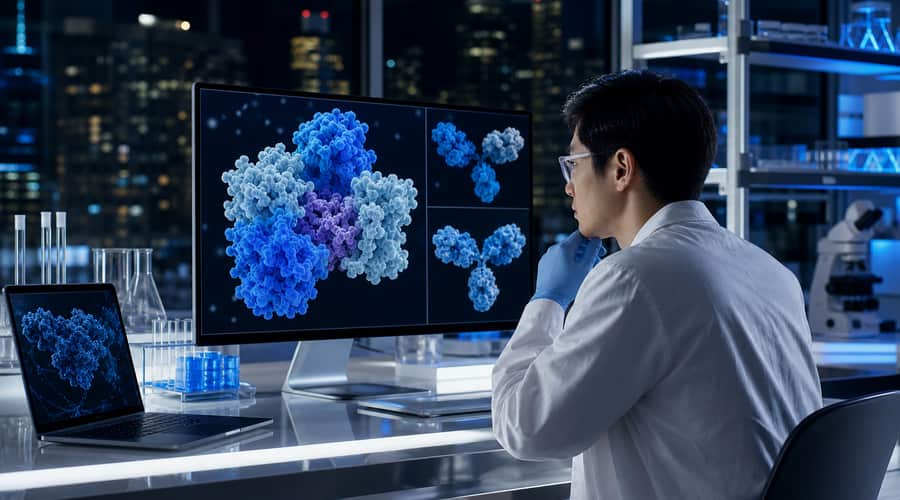
That history matters because Chai's pitch is narrow by design. Its models predict and reprogram interactions between molecules, so scientists can design proteins and antibodies on a computer before deciding what to actually synthesize in a lab. Chai-3, the newest model, is meant to beat Chai-2 on target success rates and binding affinity. Chai-2 already achieved double-digit experimental success rates in zero-shot de novo antibody design.
Here's the thing: in drug discovery, picking better candidates to test can matter more than any flashy demo. Look at the numbers. Chai's November research update said it tested 88 Chai-2-designed IgGs across 28 target antigens, with 86% showing zero or one flagged developability issue under published antibody criteria. And 24 of the 28 antigens yielded at least one design with a clean developability profile. Early days. These are research numbers, still a long way short of an approved medicine, but they're real, and that's why this round reads differently from another AI funding announcement built on usage charts and screenshots.
Pfizer has already signed a license agreement to use Chai's platform, including early access to Chai-3 and a custom model using Pfizer's own data. Chai's site also points to work with Novartis and Lilly TuneLab, while the Series C announcement names Eli Lilly and Pfizer as partners using its models. You can see why investors like that. Big pharma is not paying for another abstract AI promise. It is testing whether these systems can sit inside actual discovery workflows.
The Hard Part Starts After The Round
OpenAI's presence is the more interesting part of the story. Sam Altman's company backed Chai before and came back again here, which tells you that OpenAI's startup bets are not only about consumer software or bigger model labs. They are also about vertical companies built on deep technical talent, proprietary data and one expensive problem.
Frankly, that is a better signal than another giant round for a company buying more GPUs. Chai's value does not come from sounding more human in a chat window. It comes from whether its models can help a pharma team choose better molecules earlier, cut dead-end lab work and get credible candidates into the long grind of development.
The grind still wins until proven otherwise. No funding round can make a drug pass toxicology, clear human trials or satisfy regulators. The Financial Times noted last year that AI-discovered drugs had reached early-stage trials but none had yet been approved. Chai's $3.8 billion valuation now sits on the other side of that gap: investors are paying for the chance that molecular design becomes software-like, while medicine remains stubbornly physical.
That is why this round is worth watching. The money is not just chasing AI. It is chasing a specific claim, that antibodies and other biomolecules can be designed with enough accuracy to change the economics of early drug discovery. If Chai is right, you will see the proof in pharma pipelines before you see it in a public market filing. If it is wrong, the valuation will have moved much faster than the science.
Also read: Chamath Palihapitiya Returns to Running a Company With a $135 Million AI Coding Bet • StepFun Unveils the First Agentic AI Phone Ahead of Apple and OpenAI • Reflection AI Secures Over $1 Billion in Nvidia Compute From Nebius