Nvidia's Korea push no longer needs a neat $1 billion rumor to look serious. The verified story is more useful: Naver, SK Telecom, SK Hynix, Doosan and LG are being pulled into Nvidia's AI factory stack, while Naver looks for outside capital to pay for the buildout.
Jensen Huang left South Korea with more than a photo album. Reuters reported on June 8 that Nvidia announced a run of Korean deals with SK Hynix, Naver, SK Telecom and Doosan, while Huang also said Nvidia was working with LG Group on electronics, mechanical systems, humanoid robot AI and more. The companies did not disclose the value of those deals. That part matters, because you should be careful with any clean investment figure that isn't backed by a named filing or confirmed company statement.
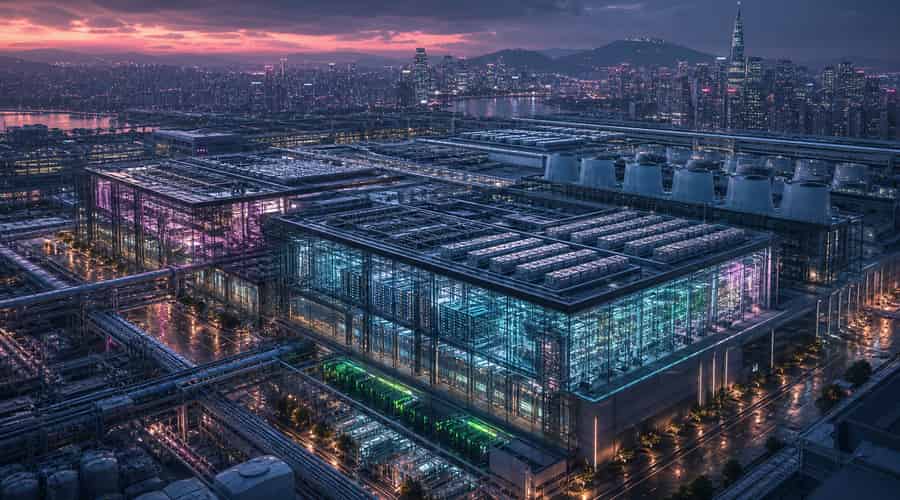
The clearest number is not a cheque. It is 55 megawatts. Naver said its Gak Sejong data centre in Sejong will be the first physical base for the Nvidia DSX partnership, starting with 55 megawatts of AI infrastructure in the first half of 2027. Naver's own roadmap then moves to 100 megawatts by the end of 2027 and 200 megawatts in 2028, with a longer-term plan to reach gigawatt scale. That is not small. It is the kind of power and capital plan that turns an AI partnership from a press release into an operating problem.
Naver still has to pay for the factory
Korea JoongAng Daily reported on July 20 that Naver founder and board chair Lee Hae-jin was set to visit Brookfield in Canada before heading to Silicon Valley, where another meeting with Huang was expected. The same report said an investment under discussion with Brookfield could exceed 10 trillion won, while also noting that the precise structure had not been confirmed and that Naver declined to comment. Keep that caveat. It is the difference between writing what has been reported and pretending the deal is already done.
Naver needs that kind of capital because an AI factory is not a normal cloud expansion with a better label. Nvidia's DSX pitch bundles accelerated computing, networking, systems software and operating tools into a reference architecture for building AI capacity at lower token cost per megawatt. You don't have to love the phrase AI factory to see why Nvidia loves the model. Once the facility and customer workloads are built around DSX, Nvidia is no longer just selling GPUs into Korea. It is helping define the shape of the infrastructure.
SK Telecom is the second anchor. The company said it plans to build a gigawatt-scale AI cloud in Korea using Nvidia DSX, with the first AI factory planned to come online in 2027. A later SK Telecom filing with the SEC clarified that the first 2027 site itself is not gigawatt-scale, and that any move to gigawatt capacity would happen in phases. That is a useful correction. The ambition is large, but the first build still has to arrive rack by rack, power feed by power feed.
The SK Hynix piece is just as important. Nvidia and SK Hynix announced a multiyear technology partnership to develop advanced memory for Nvidia's AI infrastructure roadmap, including Vera Rubin AI supercomputers, Vera CPUs, RTX Spark PCs and Jetson Thor robotics platforms. Reuters reported that Huang said SK Hynix would continue to be Nvidia's largest memory partner and that Nvidia already buys billions of dollars from the company each year. That is the pressure point. AI factories do not scale on GPUs alone. They scale on memory supply, power, cooling and the boring parts that break first.
AMD is present, but Nvidia is writing the pattern
AMD is not absent from Korea's AI infrastructure race. Its MI300 line has won real deployments elsewhere, and Korean buyers are not going to ignore a second supplier when every serious AI customer is fighting for capacity. But Nvidia has something AMD does not yet match in Korea: a national stack story. Naver gives it cloud and search infrastructure. SK Telecom gives it telecom distribution and enterprise reach. SK Hynix gives it memory. Doosan and LG bring energy, robotics, industrial systems and data-centre hardware into the same orbit.
Frankly, that is the moat. A faster accelerator can win a benchmark, but a country building sovereign AI capacity wants an answer to a messier question: who can help us put the whole thing together? Nvidia is answering that with DSX, with Huang in the room, and with Korean companies that already sit inside the country's industrial base.
Doosan said its collaboration with Nvidia covers physical AI, robotics, power infrastructure and advanced electronics materials for AI data centres. LG said it is building an AI factory with Nvidia to support robotics, autonomous driving, data-centre technologies and GPU cloud services. These are not side decorations. They show where Nvidia wants the AI factory idea to go next - out of model training rooms and into manufacturing, industrial automation and the rest of the physical world.
The safest conclusion is also the plainest one. The unverified $1 billion figure should come out. The verified Korea story is already strong: Nvidia has turned one June visit into a linked set of AI infrastructure agreements, and Naver is now looking for the money to make its part of that plan real.
Also read: AI designed gene-editing enzymes that outperform everything evolution built • Sam Altman's World raises $52.5 million selling iris-scan tokens as AI deepfakes rewrite the identity problem • Meta and Microsoft walk into earnings week with $145 billion question marks hanging over them