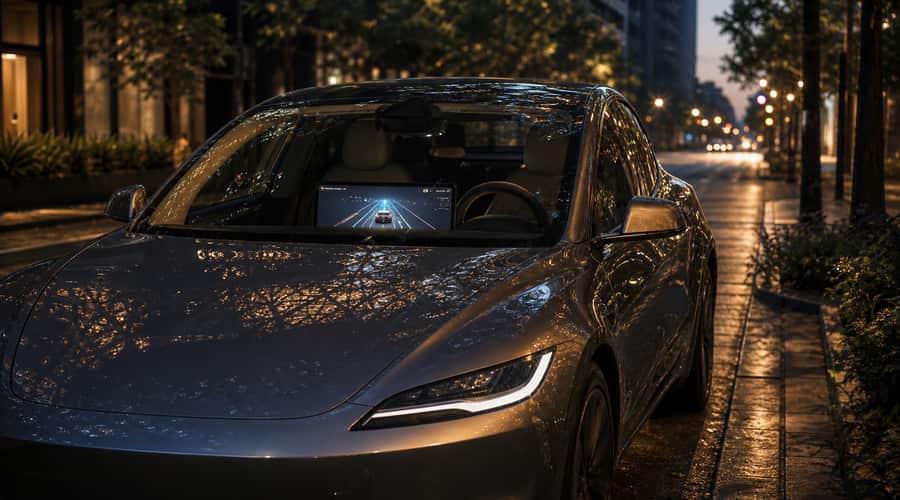
Japan's AI story is not only about chips or chatbots. The stronger bet is physical AI, and the country's industrial base gives it a head start Western investors are still underpricing.
The money coming out of Tokyo is too large to treat as another policy slogan. Japan's Ministry of Economy, Trade and Industry has put about ¥1.23 trillion into AI and semiconductor support for fiscal 2026, roughly four times the previous level, with ¥387.3 billion aimed at domestic foundation models, data infrastructure, physical AI and the computing layer underneath all of it. That is the real story. Not the headline budget, but the part of AI Japan wants to own.
According to Forbes, METI formally commissioned Noetra on June 30 to build a homegrown foundation model for physical AI, backed by SoftBank, Sony, NEC and Honda, with up to ¥1 trillion in government support over five years. Industry Minister Ryosei Akazawa wants 10 million AI-equipped robots deployed across 18 sectors by 2040. You can argue with the target. You can't miss the direction.
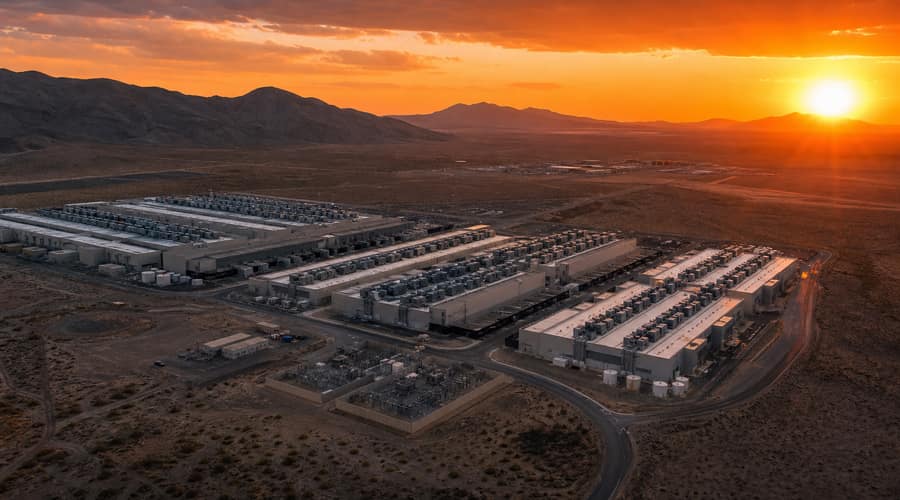
Nvidia's role makes the ambition harder to dismiss. The planned Noetra AI factory is expected to use 13,750 Vera CPUs and 27,500 Rubin GPUs, a 140-megawatt system built for multimodal models that understand factories, warehouses and machines rather than only text prompts. Japan isn't trying to win the same AI race as everyone else. It is trying to move the race onto the factory floor, where its companies already have customers and decades of habits embedded in production lines.
The direction matters. TechCrunch reported in April that METI wants Japan to capture 30% of the global physical AI market by 2040, and that Japanese manufacturers accounted for about 70% of the global industrial robotics market in 2022. This is where the country's demographic problem becomes industrial strategy. A shrinking workforce is painful, but it also gives companies a blunt reason to pay for automation that works. Not in a lab. On a shift.
The machinery names are already earning it
Fanuc and Keyence don't trend the way OpenAI, Nvidia or Anthropic do. They should be harder for you to ignore. Fanuc's results for the fiscal year ended March 2026 showed net sales of ¥857.8 billion, up 7.6%, with operating income rising 15.7% to ¥183.8 billion. The company also approved a share buyback of up to ¥50 billion. The earnings already show it.
Keyence is even cleaner as a signal. The sensor and factory automation group posted about ¥1.169 trillion in net sales for the year ended March 2026, with operating profit around ¥595.7 billion and an operating margin near 51%. Investing.com reported in January that Bernstein kept an Outperform rating on Keyence with a ¥81,000 target, citing a factory automation recovery and the company's unchanged fundamentals. That is not hype multiple stuff. It is pricing power in components factories actually buy.
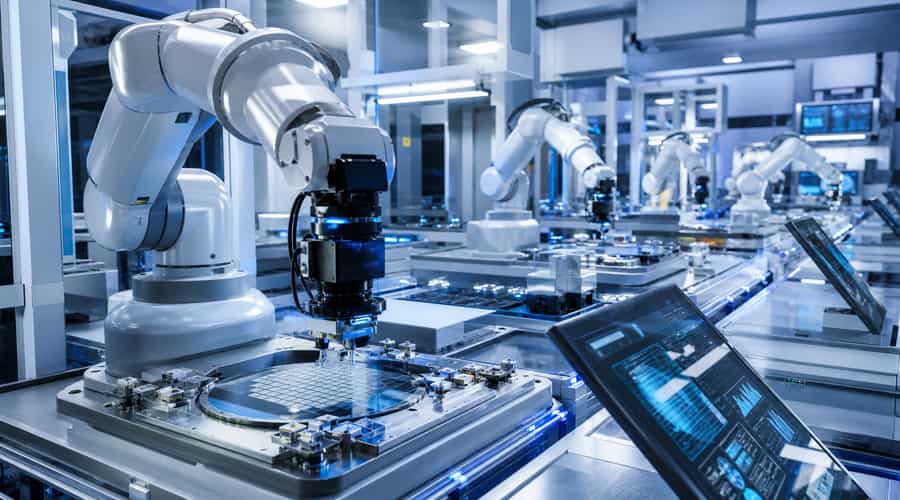
Fanuc's AI work is not theoretical either. The company has worked with Nvidia's Isaac Sim platform to train robots in simulated environments before deployment, cutting the time and risk involved in reprogramming production lines. That is physical AI in practice: sensors, motion control and simulation - robots learning the job before they touch a customer site. If you run a factory, you don't care whether the demo looks impressive on stage. You care whether the line stops less often.
Rapidus gives the story a second layer. Reuters reported in April that Japan approved another ¥631.5 billion for the state-backed chipmaker, bringing total research and development assistance to ¥2.354 trillion. Rapidus is targeting 2-nanometer mass production in fiscal 2027 at its Chitose project in Hokkaido, while TrendForce reported that its back-end prototype line has moved into full-scale operation. That is a hard job. It is also the sort of job Japan has decided not to outsource completely.
Western capital is late
IDC's March data shows Japan's domestic AI infrastructure spending is expected to exceed $5.5 billion in 2026, up at least 18% year over year after a sevenfold expansion between 2022 and 2025. Much of the Western AI trade still runs through hyperscaler capital expenditure and GPU allocation - software revenue follows from there. Japan's version is less fashionable. It is racks, sensors, machine tools, robot arms, control systems and data from physical operations.
Humanoid forecasts are noisy, so don't build the whole case on them. Omdia data cited by Forbes put 2025 global humanoid robot shipments at 13,317 units, while other industry trackers expect shipments to exceed 50,000 units in 2026. The exact number will move around. The useful point is narrower: more robots mean more demand for actuators, reducers, machine vision, sensors and production software. Japanese companies sit in those layers already.
Frankly, that is the opportunity. Western investors still tend to price Fanuc, Keyence, Yaskawa and their smaller peers as mature industrial exporters, not as picks-and-shovels companies for physical AI. But if AI keeps moving from screens into machines, those labels start to look stale. The market does not need every Japanese robotics supplier to become a software company. It needs them to be the hardware layer that software cannot fake.
The next test is execution. Noetra has to produce usable models. Rapidus has to prove it can manufacture at 2nm on schedule. Japan's big industrial groups have to share enough data to make the national strategy more than a subsidy map. Still, you should not confuse those risks with absence of substance. Japan has the factories and the component makers - and the labour pressure to use them. Now it has the budget to match.
Also read: Guillermo Rauch says AI agents now trigger more than half of all Vercel deployments • Bankr bot's return to X after suspension exposes how fragile crypto's social layer really is • A Chinese AI model just turned a routine training trick into a Washington national-security crisis