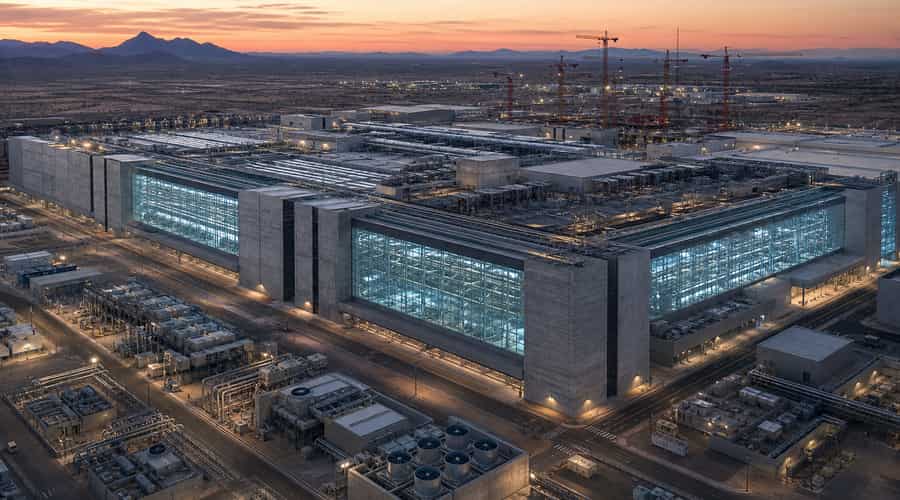
The best-performing stock in the S&P 500 all year lost nearly 11% in a single session on July 24, dragging the entire memory chip sector into a bear market and forcing investors to decide whether AI infrastructure demand is real or a trade that has simply run out of road.
For most of 2026, SanDisk was the kind of stock that made people feel foolish for not owning it. Then the numbers arrived. Revenue came in at $5.95 billion against guidance of $4.4 to $4.8 billion, up 251% year-over-year. Non-GAAP gross margins reached 78.4%. Shares had surged as much as 720% year-to-date, propelled by a genuine shortage of the memory chips powering AI data centres. Bernstein analyst Mark Newman hiked his price target from $1,700 to $3,000. Goldman Sachs was bullish. The company disclosed $42 billion in multi-year supply contracts, some running through 2030. The fundamentals, at least on paper, looked almost absurdly strong.
Then came July 24.
The selloff, from Seoul to Philadelphia
The trouble started in Seoul, where the KOSPI dropped 5.42% and the tech-heavy KOSDAQ fell nearly 5%. Samsung Electronics and SK Hynix each sank more than 7%, a decline severe enough that the Korea Exchange activated a sell-side sidecar, temporarily halting program selling to slow the cascade. The trigger was a combination of factors: overnight weakness from U.S. chipmakers, rising Middle East tensions reducing appetite for risk, and the looming market debut of a Chinese memory competitor that investors have spent months trying to price into their worst-case scenarios. YMTC, the Chinese NAND maker that Goldman had flagged as a key downside risk for SanDisk, was part of that unease.
By the time U.S. markets opened, the pressure had already crossed the Pacific. SK Hynix fell 6% on American depositary receipts, Micron dropped around 7%, Western Digital closed down 6.9%, Seagate gave up 6.75%, and SanDisk, the stock that had been untouchable for six months, plunged nearly 11%. The Philadelphia Semiconductor Index, which had already entered bear market territory on July 17 after dropping more than 20% from its June 22 record, absorbed another blow. In under four weeks, roughly two trillion dollars of market value had evaporated from the sector.
The Korean selloff on July 24 was not just profit-taking. Korea Investment and Securities had cut its estimates on SK Hynix weeks earlier, projecting Q2 operating profit roughly 8% below consensus and trimming its 2026 and 2027 forecasts by 9% and 11% respectively. When a firm that close to the Korean chip ecosystem turns cautious, the market listens. Foreign and institutional investors in Seoul did not wait for confirmation.
The honest answer to why SanDisk is crashing is not complicated: it went up 720% in six months. At that altitude, you don't need bad news to fall. You need any doubt at all. And the doubts are real enough to take seriously. Memory chips are among the most cyclical products in technology. The history of NAND is essentially a repeating loop of shortage, oversupply, and price collapse - and investors who lived through Micron in 2022 or SanDisk's predecessor Western Digital in 2019 know exactly how fast the other side of a boom can arrive. The Q3 contract backlog of $42 billion sounds impressive until you remember that supply agreements don't prevent customers from renegotiating when prices move against them.
What this tells us about the AI trade
What makes this moment genuinely interesting, as opposed to just painful for SNDK holders, is what it tells us about the AI infrastructure trade more broadly. The bull case for SanDisk rested on a specific claim: that AI data centre buildout would sustain memory demand at levels the world had never seen before, justifying margins and multiples that would have been laughed out of any earnings call in 2023. That claim has not been disproved. Hyperscalers are still spending. The $42 billion backlog is still on the books. But the Philadelphia Semiconductor Index entering a bear market while the underlying demand thesis is still nominally intact suggests investors are no longer willing to pay for what might happen and are repricing for what can be verified right now.
Frankly, 720% in six months was never a valuation. It was a momentum trade. Momentum trades end when the next buyer fails to appear - not when the business deteriorates. The business hasn't deteriorated. The stock just had no one left to sell it higher.
Whether this is a buying opportunity or the beginning of something worse depends entirely on how NAND pricing holds through the second half of 2026. If Chinese supply from YMTC ramps faster than the market currently expects, SanDisk's extraordinary margins won't survive the encounter. If AI data centre demand stays as voracious as it looked in Q3, the selloff will look, in retrospect, like the kind of entry point people spend years wishing they'd taken. As of late July, Wall Street hasn't moved off the bull case. Bernstein's $3,000 target is still on the table. But the stock is nowhere near it, and the memory-chip sector is now officially in a bear market. Those two facts sitting side by side say something real about how uncertain this moment is.
Also read: Sberbank is building a crypto exchange faster than Russia can pass the law that permits one • Gold is holding above $4,000 the day before the Fed decides and the stakes are real • Goldman Sachs backed the CLARITY Act but a cop coalition and two Democratic holdouts may kill crypto's best shot at real rules