America's power grid is about to face its biggest test in decades, driven largely by the relentless energy appetite of artificial intelligence.
US electricity consumption will smash records in both 2026 and 2027, according to new projections from the Energy Information Administration, and the primary catalyst is the explosive growth of AI infrastructure. After years of flat or declining power demand, the United States is suddenly staring down a surge that could reshape energy markets, strain transmission systems, and force a reckoning with how we power the digital economy.
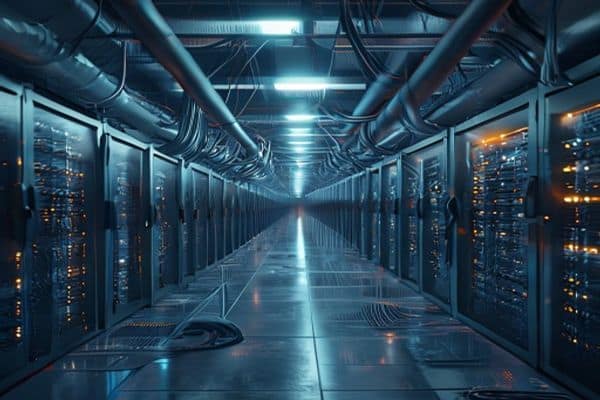
The EIA's forecast marks a dramatic reversal. For roughly two decades, US electricity growth barely budged, thanks to gains in efficiency and the offshoring of heavy industry. Now, data centers packed with power-hungry GPUs are multiplying across Virginia, Texas, Oregon, and beyond. Each new AI training cluster demands as much electricity as a small town, and tech companies are building them at a pace the grid has not experienced since the postwar boom.
According to a report from Reuters on the EIA projections, US power consumption is expected to climb roughly 2% annually through 2027, reaching levels never before recorded. To put that in perspective, annual growth between 2010 and 2020 averaged less than 0.5%. The delta between those two figures represents hundreds of billions of kilowatt-hours, and most of that增量 flows directly into the cooling systems and compute racks of AI facilities.
The industrial sector, which includes data centers, is leading the charge. Tech giants like Microsoft, Amazon, Google, and Meta have collectively committed tens of billions of dollars to data center expansion over the next several years. Microsoft alone has signaled plans to spend around $80 billion on AI infrastructure in its current fiscal year. These are not abstract intentions. Construction permits for data center campuses in Loudoun County, Virginia, the densest data center corridor on the planet, have surged to the point where local officials are actively worried about water and power constraints.
The Grid Conundrum
Here is where it gets uncomfortable. America's electrical grid was not designed for this kind of sudden, concentrated demand growth. Transmission lines take years to permit and build. New natural gas plants face regulatory hurdles in some states. Nuclear energy, long favored by tech companies for its steady, carbon-free output, remains expensive and slow to bring online. Small modular reactors, frequently cited as a potential savior, remain years away from commercial deployment at scale.
In the short term, that means renewable energy paired with battery storage will carry a significant portion of the load. Solar and wind installations continue to accelerate across the Southwest and Midwest. But renewables alone cannot solve the baseload problem, which is the steady, around-the-clock power that AI training runs require. Georgia, for example, recently saw projections for new industrial electricity demand jump by a factor of seventeen within a single planning cycle, largely driven by data center projects. State regulators there are now scrambling to figure out how to keep the lights on without massive rate increases for residents.
What It Means for Startups and Investors
The energy implications of AI are no longer a niche infrastructure story. They are a mainstream business story with real consequences. Startups building AI applications should factor energy costs and availability into their scaling plans, especially if they rely on third-party cloud providers who will inevitably pass rising electricity costs downstream to customers. Companies working on grid management software, energy storage, demand response systems, and cooling technology are operating in what may become one of the defining growth markets of the next decade.
Investors, meanwhile, are watching a convergence that rarely happens: a single technology forcing function colliding with the physical limits of critical infrastructure. The companies that solve pieces of this puzzle, whether through more efficient chips, better cooling systems, or novel approaches to power generation and distribution, stand to capture enormous value.
What Comes Next
The EIA's projections are based on current trends, but trends in AI adoption have a habit of accelerating faster than anyone predicts. If AI inference becomes as embedded in daily software as search and streaming are today, the 2026 and 2027 demand figures could look conservative within a few quarters. Policymakers, utilities, and technology companies will need to move fast, and move together, to avoid a future where the promise of AI is limited not by compute power or algorithmic breakthroughs, but by the simple ability to keep the power on.