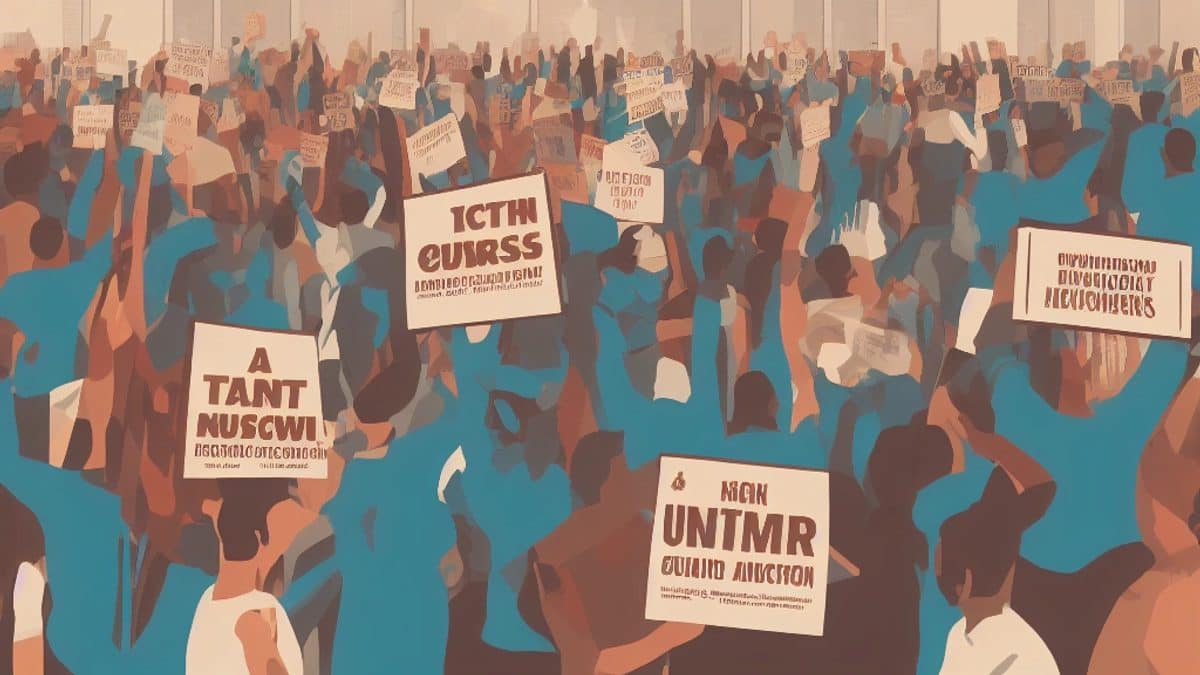
More than 70 international labor unions representing 140 million workers have joined forces to resist AI-driven job displacement, calling for new legislation that would tax companies using autonomous systems to replace human labor.
The pushback against generative AI has been building for months, but today it crystallized into something with real institutional weight. On the same day the International Labour Organization released its landmark report on AI and the future of work, a newly formed coalition called the Human Work Alliance announced its existence at the Global Labour Summit in Geneva, with a message that was blunt and deliberate: "We believe in human beings."
The coalition brings together unions from the technology, manufacturing, and creative sectors across North America and Europe, including the AFL-CIO under president Liz Shuler, Unite the Union led by general secretary Sharon Graham, the Writers Guild of America, and SAG-AFTRA. For the WGA and SAG-AFTRA, this represents an evolution of earlier battles fought during Hollywood's high-profile strikes. Those disputes were about immediate contract terms; this one is about permanent policy.
The catalyst is not hard to identify. The late-2025 release of GPT-4.5 Omni and comparable advanced models demonstrated capabilities that analysts described as crossing the "Turing Threshold" for routine white-collar tasks, meaning AI could now perform cognitive work at a level indistinguishable from a competent human employee across a wide range of office functions. The response from workers was immediate. White-collar unionization in the tech sector surged 250% year-over-year as employees who had previously considered themselves insulated from automation found themselves reconsidering that assumption.
The numbers filed with labor boards tell the same story. Complaints related to algorithmic management and job displacement rose 40% in the first quarter of 2026 alone, suggesting the anxiety is not theoretical but rooted in documented, on-the-ground experiences across industries.
The legislative push
The Human Work Alliance is not stopping at public statements. The coalition has announced coordinated lobbying campaigns in both Brussels and Washington D.C. aimed at passing what they are calling the Algorithmic Accountability Act. The proposed legislation would require a human decision-maker to remain in the loop for all critical business processes, and would introduce a productivity tax on companies that deploy fully autonomous AI systems to perform work previously done by people. The dual-track approach, targeting both the European Union and the United States simultaneously, is a deliberate attempt to close the regulatory arbitrage gap that has allowed companies to shift operations toward more permissive jurisdictions.
Enterprise strategists and financial analysts are already adjusting their models in response. Productivity forecasts for the service sector are being revised downward under scenarios where stricter AI regulation passes, though some economists argue that preserving employment levels would support consumer purchasing power in ways that offset efficiency losses over a longer horizon. That trade-off is now a live policy debate rather than an academic one.
What this means for the market
For companies that have built growth projections around aggressive AI deployment, the Human Work Alliance represents a material risk factor that needs to be priced in. A productivity tax on autonomous AI systems would directly alter the return-on-investment calculus for enterprise automation. A mandatory human-in-the-loop requirement would add friction and cost to workflows that were designed to eliminate both.
The ILO report released today adds institutional credibility to arguments that labor movements have been making from a position of relative weakness. Having the UN's labor agency frame AI displacement as a systemic concern rather than a localized grievance changes the political environment for legislators who have been cautious about regulating technology that voters associate with economic progress. The question now is whether the lobbying effort in Brussels and Washington translates into legislative momentum before the next wave of AI capability releases further accelerates the displacement dynamic the coalition is already struggling to contain.
Also read: OpenAI cuts three top executives and shelves side projects as Sam Altman bets everything on AGI • Elon Musk says government checks replacing wages is the only rational response to AI wiping out jobs • AI is making companies richer and workers poorer and the math on who buys anything next does not add up