Masayoshi Son is not buying Elon Musk's orbital data center pitch as a near-term AI strategy. His bet is simpler and more urgent: build compute on Earth before the next few years decide the market.
The most revealing moments in technology don't always come from a product launch. Sometimes they come from one billionaire being asked about another billionaire's grand theory, then saying no in public.
At SoftBank's annual shareholder meeting on June 23, Masayoshi Son was asked whether SoftBank had plans that looked anything like Elon Musk's orbital data center ambitions. His answer was a flat rejection. Bloomberg reported from the meeting that Son said electricity is only a small part of data center costs, and that the next few years in AI matter more than what might work a decade from now. That is the whole argument. You can talk about sunlight in orbit all you want, but Son is putting real capital into machines, land, chips and power connections that can be used before the decade is over.
He didn't turn it into a personal attack. Son called Musk a remarkable agent of change, which is about as far from a dismissal of Musk as you can get. But admiration is not investment discipline. SoftBank is not short of appetite for risk, and Son has never been shy about making large, strange bets. Here, though, he is drawing a line around timing.
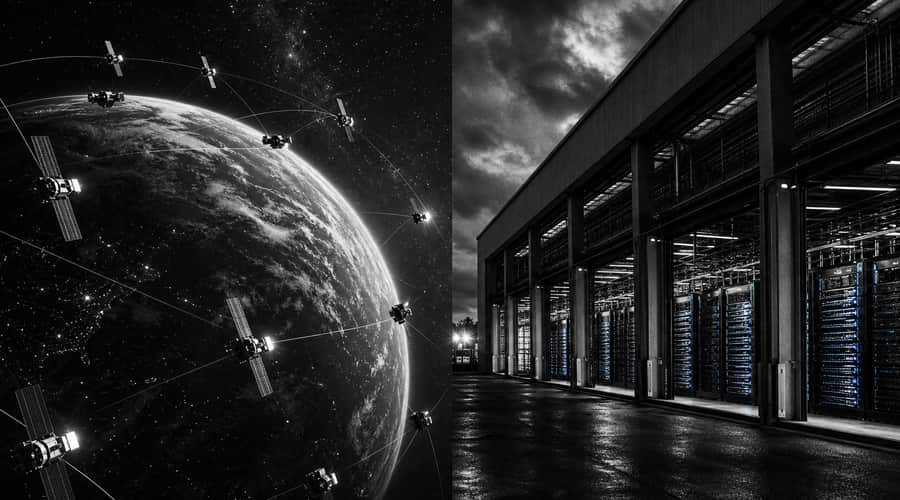
Musk's case for orbital compute rests on a clean idea: in space, solar power is constant and the grid does not get in your way. Look, that is not nonsense. Power has become one of the hardest constraints in AI infrastructure, and Musk recently told an audience with Dwarkesh Patel and Stripe co-founder John Collison that building AI data centers outside China is difficult because electricity supply is not keeping up with chip demand. If you are trying to train larger models, the ground is becoming crowded, expensive and politically slow.
But space doesn't make the rest of the bill disappear. SpaceX's disclosed AI1 satellite design, covered last week by Tom's Hardware, spans about 70 meters, slightly wider than a Boeing 747-8, and carries an interchangeable compute payload averaging 120 kilowatts, with a 150 kilowatt peak. That is impressive engineering. It is also one rack's worth of compute sitting in orbit, where cooling is handled by radiators rather than air or water, maintenance is brutally hard, and every kilogram has to survive launch.
That is where Son's skepticism has force. Deutsche Bank has estimated that orbital data centers will not approach cost parity with ground-based facilities until well into the 2030s. You don't have to hate the concept to see the problem. If the AI race through 2029 is being fought with Nvidia GB300s, Rubin orders, land permits and gigawatts of grid capacity, then a system that gets competitive in the 2030s is not the weapon for this round.
The irony is that Musk is also making the near-term ground bet. The Wall Street Journal reported on June 22 that Reflection AI, an Nvidia-backed open-source AI startup valued at $25 billion, agreed to rent SpaceX data center capacity starting July 1. The deal pays SpaceX $150 million a month through the end of 2029 if it runs its full course, for a total of about $6.3 billion, though either side can terminate it after the first three months with 90 days' notice. Axios also reported the deal, tying it to SpaceXAI's Colossus 2 data center.
That is not a moonshot. That is monthly revenue.
SpaceX has already signed compute arrangements with Anthropic and Google, according to the Journal's reporting on the Reflection deal. You can see the shape of Musk's strategy clearly enough: sell terrestrial compute now, use the cash and customer relationships to keep the orbital option alive later. It is a much more practical plan than the loudest version of the space pitch suggests.
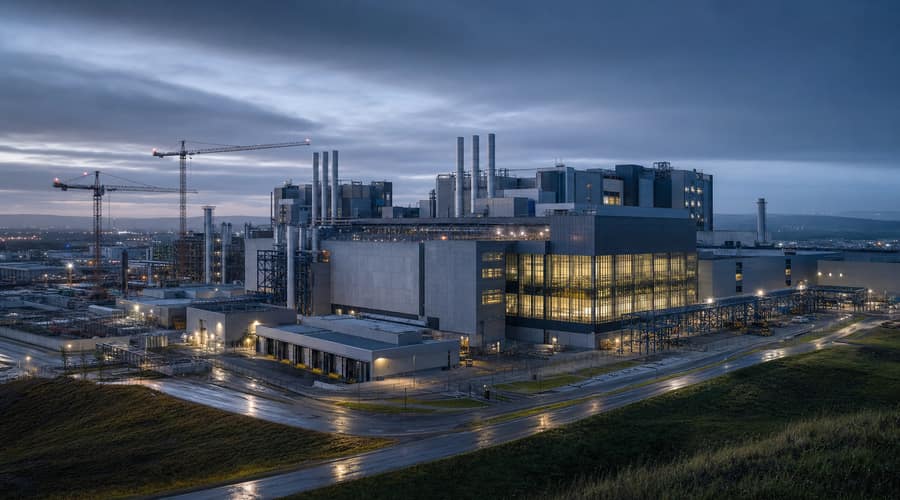
Son's answer to that is France, not low Earth orbit. SoftBank announced plans in May to invest up to €75 billion, about $87 billion, in AI data centers in France. Tom's Hardware, citing the project details, said the first €45 billion phase is aimed at delivering 3.1 gigawatts of capacity by 2031 across sites in northern France including Loon-Plage, Bosquel and Bouchain. The appeal is not glamorous. France has nuclear power, industrial sites and a government that wants the investment. That is what usable AI infrastructure looks like: boring advantages stacked in one place.
SoftBank is already tied deeply into the same race through OpenAI and Stargate. Son chairs the Stargate project, the US-based AI infrastructure venture announced with OpenAI, Oracle and MGX, with a stated plan to invest up to $500 billion. SoftBank has also built its AI story around Arm, OpenAI exposure and data center capacity. After years of Vision Fund scars, Son is trying to make SoftBank look less like a collector of startup lottery tickets and more like an owner of the rails beneath AI.
Frankly, that is the right frame for this dispute. The question is not whether orbital data centers will ever work. They may. Google has explored space-based compute through Project Suncatcher, China has moved to coordinate its own space computing initiative, and SpaceX is better placed than almost anyone to make launch economics less absurd. The question is whether orbital compute can matter before the next major AI platforms are built, trained and locked into customers.
Son's answer is no. For now, that is the more useful answer for anyone watching the AI infrastructure race. Space may be the bigger story later, but the money being committed today is going into power contracts, chip supply, cooling systems and land in places such as Memphis and Hauts-de-France.
Also read: SpaceX sheds $620 billion in market value within days of its record IPO as investors punish the Cursor deal • California drivers are suing BP, Walmart and Marathon for using an AI tool to fix gas prices • OpenAI's Patch the Planet program takes its security ambitions well beyond the chatbot business