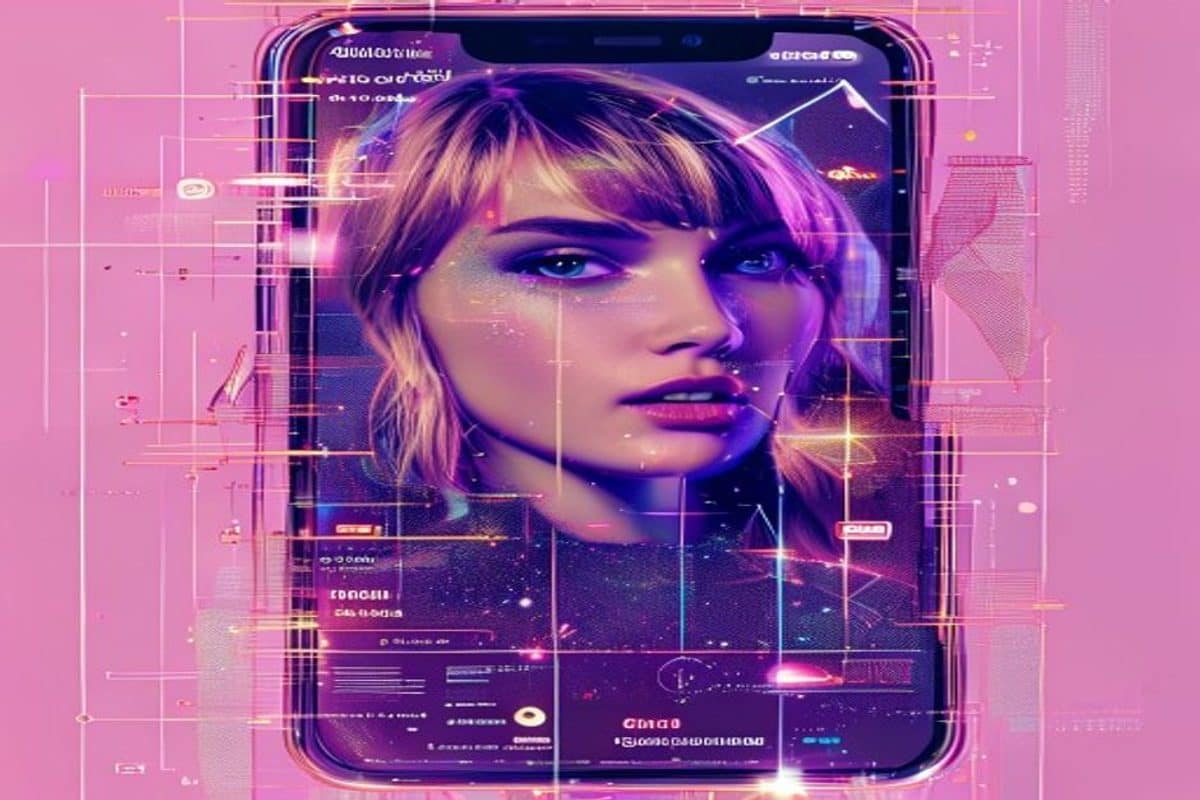
AI-generated Taylor Swift scam ads on TikTok are a sign that deepfakes have moved from viral novelty to paid fraud infrastructure, where celebrity likeness is now just another performance channel for scammers.
The uncomfortable part about these ads is not that they are fake. It is that they are good enough to work. The Verge reported today that scammers are using AI-generated celebrity videos, including Taylor Swift and Rihanna, to push bogus reward programs such as TikTok Pay, then redirecting users to third-party sites that collect personal data. That is a much sharper business model than the old deepfake warning story. It is not just misinformation. It is conversion-driven fraud wrapped in celebrity trust and distributed through paid ads.
This is the point where generative AI stops being a content problem and becomes an acquisition problem. In the old internet, a scammer needed a convincing landing page and maybe a stolen photo. Now they can buy a TikTok ad, generate a synthetic Swift clip that looks and sounds plausible for a few seconds, and funnel people into a site designed to harvest names, emails, phone numbers, and payment information. The scam does not need to be perfect. It only needs to survive long enough to get the user inside the funnel. Once that happens, the economics are already working in the scammer's favor.
That is what makes celebrity deepfakes so commercially dangerous. They collapse the cost of trust. Taylor Swift, Rihanna, and other public figures already carry enormous attention value, which is why their faces and voices are so effective in ads that promise rewards, giveaways, or insider access. AI turns that attention into a cheap asset. A scammer can now test dozens of variations, swap celebrities, tweak scripts, and run paid distribution until one version starts converting. That is a scalable fraud loop, not just a one-off deception.
TikTok is especially vulnerable because the platform is built around short-form video, rapid consumption, and algorithmic discovery. Users do not arrive expecting a full verification process. They arrive expecting entertainment, recommendations, and quick emotional cues. That is exactly the environment in which a polished deepfake can slip through. A celebrity clip does not need to be long. It only needs to create enough recognition to earn a click or a share before the user pauses long enough to question it.
The TikTok Pay branding also matters because it borrows the appearance of platform legitimacy without actually being legitimate. A user who sees a familiar celebrity plus something that looks like a built-in rewards program may assume the ad is endorsed or at least tolerated by the platform. That is the scam's real strength. It does not just imitate Taylor Swift. It imitates institutional trust. The user is not being asked to buy a product so much as to trust a system, and that is a much easier sell when the system appears to come from the platform itself.
That also explains why these scams are so hard to police. A human moderator can often catch an obviously bad fake, but AI is now making it cheap to generate enough variants that some will inevitably make it through. Even if platforms remove one ad, the same script can be repackaged with a different voice clone, a different visual angle, or a slightly altered call to action. Moderation is playing whack-a-mole against software that can produce infinite moles at low cost.
The Celebrity Premium Has Changed
For years, celebrity impersonation scams have existed online, but generative AI changed the unit economics. In the past, using Taylor Swift in a fake ad required editing skills, access to stolen footage, and enough time to make the result look convincing. Today, the core components can be assembled in minutes. A voice clone, a lip-synced clip, a scripted giveaway pitch, and a landing page are enough to create a full-funnel fraud operation. That lowers the barrier to entry for scammers the same way low-cost cloud tools lowered the barrier for legitimate startups. The difference is that the startup is building a product, while the scammer is building a trust exploit.
That matters because celebrity fraud used to be limited by production quality. If the fake looked amateurish, people ignored it. Now the quality floor is high enough that even skeptical users may click before realizing they have been duped. Taylor Swift is especially powerful as a fraud asset because her brand reaches across age groups and media habits. She is famous enough to generate instant recognition, but broad enough that a fake promotion can target fans, casual listeners, and anyone who responds to the idea of a reward from a trusted name.
There is another layer to this too. Celebrities are often the first public face of synthetic media abuse, but they are not the only victims. Once the infrastructure is built and the ad systems are tuned, the same tools can be used to spoof influencers, politicians, founders, and even customer service voices. Swift is the headline because she moves attention. The real problem is that the entire fraud stack is getting reusable.
What Platforms Have To Fix
The easiest response is to say platforms should do better at moderation. That is true, but incomplete. What they actually need is better friction at the point where synthetic identity becomes monetized. If an ad is trying to redirect users to a third-party site collecting data, the platform should be asking more questions long before it serves the video. That means stricter advertiser verification, better detection of manipulated celebrity clips, and faster takedown systems tied to payment and domain reputation signals. Without that, moderation will always lag the fraud.
This is also a product problem for the social platforms themselves. Their business models reward engagement, which means the same recommendation systems that make content feel personal can also amplify fraud if the signal is compelling enough. A fake Swift ad can outperform a boring legitimate ad because the algorithm reads attention, not truth. Until platforms align their ad systems with stricter identity checks, scammers will keep finding a path from cheap synthetic media to real user data.
The bigger story is that AI has now made scam production more like content production. That should worry everyone who runs a platform, an ad network, or a brand with real public recognition. The old warning that deepfakes could undermine trust is still true, but it undersells the commercial threat. The better version is that deepfakes have become a paid distribution tool for fraud. Taylor Swift is just the clearest proof point. If platforms do not put enough friction in front of these ads, scammers will keep treating celebrity likeness as a growth channel.
Also read: Cambricon's latest quarter shows China's Nvidia substitution trade is getting real • MIT and IBM are betting the next AI winners will mix models with quantum hardware • China just turned robotaxi expansion into a regulatory stress test