Bloomberg reports that Nvidia's expanding pitch into robotics, digital twins, and industrial automation is driving meaningful stock moves among its Asian partner companies, signaling that the AI investment thesis is migrating from cloud infrastructure into the physical world.
For the past two years, the Nvidia trade has been relatively easy to describe: build more data centers, buy more GPUs, train bigger models. The supply chain beneficiaries were semiconductor manufacturers, power equipment companies, and cooling infrastructure firms. That story is not over, but it is being joined by a second chapter that Jensen Huang has been building toward for some time. Bloomberg's report that Asian companies tied to robotics hardware, industrial sensors, automation software, and manufacturing systems are seeing their shares move on Nvidia's physical AI momentum is the first clear market signal that investors are taking the factory floor seriously as the next front in the AI buildout.
The companies catching the most attention are concentrated in Japan, South Korea, and Taiwan, where deep manufacturing expertise and existing relationships with global industrial giants make them natural partners for any company trying to connect AI software to real-world machinery. Fanuc, the Japanese robotics firm whose equipment runs in factories from automotive plants to electronics assembly lines, has seen renewed investor interest. So have companies in the sensor and vision systems space that provide the perception layer without which a robot cannot navigate a physical environment. These are not pure-play AI companies. They are industrial stalwarts being re-rated because Nvidia's platform ambitions now extend to the systems they have built over decades.
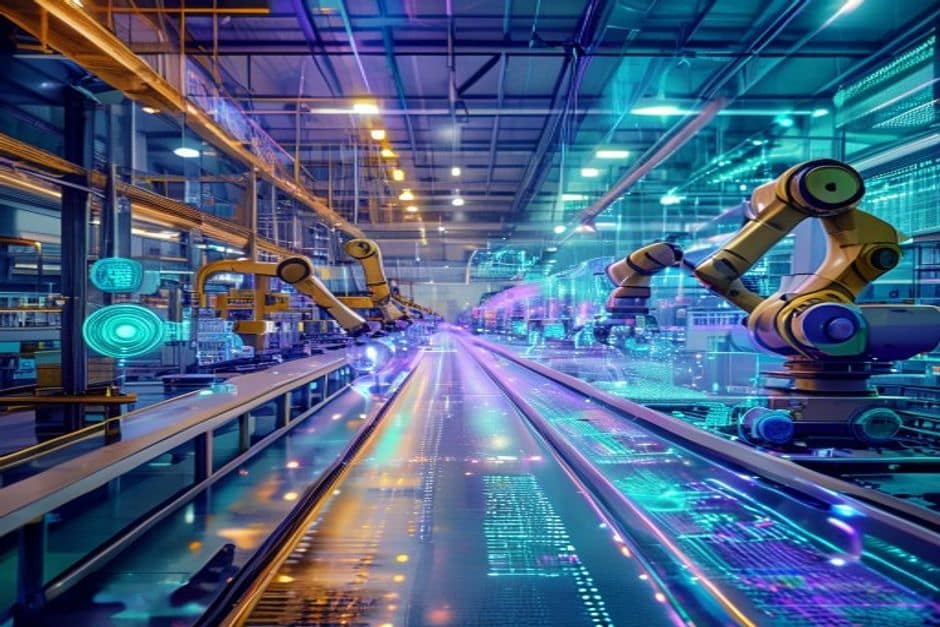
Nvidia's physical AI pitch rests on two pillars. The first is Isaac, its robotics platform that allows manufacturers and automation engineers to train and simulate robotic systems using Nvidia's GPU infrastructure before deploying them in real environments. The second is Omniverse, the digital twin platform that lets companies build physics-accurate virtual replicas of factories, warehouses, and production lines to test and optimize automation workflows without touching the physical equipment. Together, these platforms position Nvidia not as a component supplier to the robotics industry but as the software and simulation layer that the entire industry runs on top of. That is a fundamentally different business model from selling GPUs to cloud hyperscalers, and it implies a very different partner and customer ecosystem.
Whether this constitutes a durable platform shift or a halo trade riding Nvidia's existing momentum is the right question to press on. The honest answer is that it is both, and they are difficult to disentangle right now. Nvidia's brand authority in AI is strong enough that its entry into any adjacent market creates genuine investor enthusiasm that may run ahead of actual revenue. Physical AI is a real phenomenon: the automation of manufacturing, logistics, agriculture, and construction using AI-guided systems is happening and will accelerate. But Nvidia's specific revenue contribution from these markets is still early and modest relative to its data center business. Investors pricing Asian industrial partners as direct physical AI beneficiaries are making a bet on a timeline that has not been proven out in quarterly numbers yet.
Where Startups Fit Into the Physical AI Supply Chain
For startups, Nvidia's industrial push creates both openings and pressure. The openings are in the gaps between what Nvidia's platforms provide and what manufacturers actually need to deploy automation at scale. Nvidia excels at simulation, training infrastructure, and the GPU compute layer. It does not build the sensors, the end-effectors, the specialized vision systems for specific industrial environments, or the workflow integration software that connects robotic systems to existing enterprise resource planning and manufacturing execution systems. Those gaps are where startups can build genuinely differentiated businesses without competing directly against an Nvidia platform.
The pressure comes from the same direction. When a company with Nvidia's partner network and capital position decides to move into your market, the competitive dynamics change even if Nvidia is not building exactly what you build. Customers start asking whether a startup's solution integrates with Isaac and Omniverse. Investors start asking whether the startup's roadmap is defensible if Nvidia expands its platform scope. The companies best positioned to benefit from Nvidia's physical AI push are those that have already built integrations with Isaac or Omniverse and can credibly claim to be extending Nvidia's platform rather than running parallel to it.
The regional market context is also worth understanding separately from the startup angle. Japan and South Korea both have significant government investment programs tied to factory automation and industrial AI as strategic economic priorities. The stock moves Bloomberg is tracking are not purely Nvidia sentiment: they reflect a convergence of Nvidia's platform ambitions with pre-existing national industrial policy tailwinds that make Asian robotics and automation firms structural beneficiaries regardless of which specific AI companies end up winning at the model layer.
The practical takeaway is that the AI investment map is being redrawn. For the past two years, the question was which companies sold into the data center buildout. The next version of that question is which companies sit inside the physical AI supply chain, and the answer spans a much wider geography and industrial base than the GPU trade that preceded it. Founders building at the intersection of AI and physical systems should be watching Nvidia's partner announcements closely. The companies Nvidia chooses to certify and co-sell with will define who the credible players are in this market, and that list is still being written.
Also read: Flock Safety Built an 80,000-Camera Surveillance Network on Police Trust and Now That Trust Is the Problem • Software Engineering Job Postings Have Hit Their Highest Level Since 2023 and the Story Is More Complicated Than It Looks • Apple Was Not Ready for How Many People Wanted an AI MacBook and That Tells You Something Important