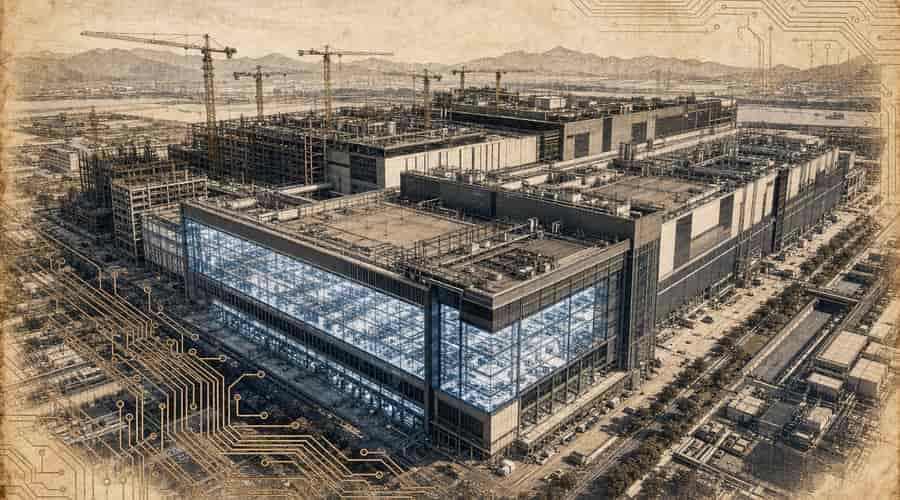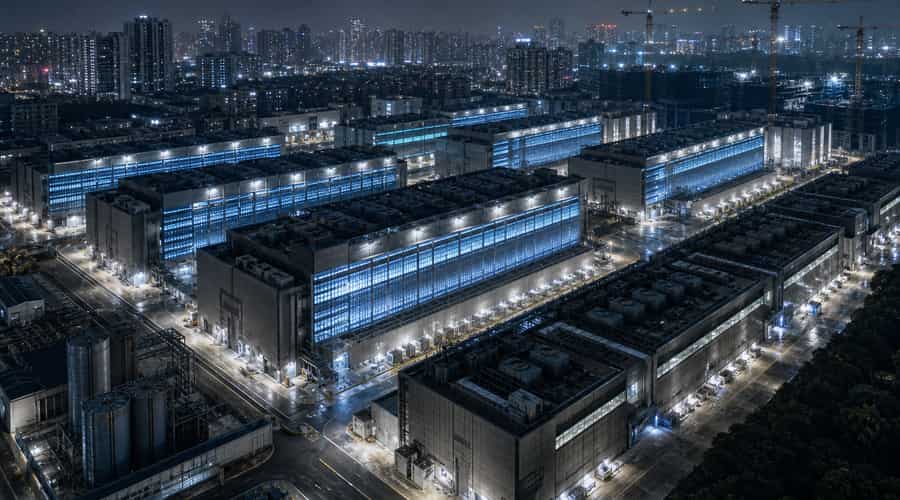
Norway has signed onto a US-led initiative to secure AI supply chains among trusted allied nations, a geopolitical infrastructure alignment that extends the US effort to build a chip-to-cloud-to-data-center network outside the reach of adversarial procurement, and that positions Norway's abundant renewable energy, established subsea cable infrastructure, and growing data center sector as strategic assets in an allied AI industrial base rather than passive inputs to hyperscaler cost optimisation.
The initiative Norway has joined sits within the broader US strategy of using bilateral and multilateral agreements to create trusted AI infrastructure corridors among allied democracies. The framework, which involves coordination between the US Department of Commerce, the State Department, and their counterpart ministries in partner countries, is designed to address a supply chain vulnerability that became acutely visible during the semiconductor shortages of 2021 through 2023 and has since expanded in scope: the AI capability of a nation or alliance depends not just on the models its researchers build but on reliable, trusted access to advanced chips, cloud infrastructure, power generation capacity, data center real estate, cooling systems, and the critical minerals that go into GPU production. Securing any one of those layers while leaving others exposed creates the same bottleneck. The alliance approach attempts to map the full stack from raw materials to deployed inference capacity and ensure that each layer has redundant, politically trusted sources within the allied network.
Norway's specific contribution to that stack is more substantial than its population size suggests. The country generates approximately 90 percent of its electricity from hydropower, producing roughly 150 terawatt-hours annually, much of it at prices and carbon intensity levels that make it among the cheapest and cleanest grid power available anywhere in Europe. Data centers are power-hungry infrastructure, and the economics of AI compute at scale are increasingly driven by the cost and reliability of electricity rather than real estate or labor. Norway's power structure gives it a durable comparative advantage as AI training and inference workloads expand: a hyperscaler or sovereign AI operator that builds capacity in Norway is locking in a power cost structure that will remain competitive through commodity price cycles that affect gas and coal-powered grids. The country's northern climate also reduces cooling costs materially, since ambient temperatures reduce the mechanical cooling load that constitutes a meaningful fraction of data center operating expenditure in warmer geographies. Microsoft has already built a major data center campus in Norway. Meta has its Prineville-equivalent Nordic facility operating there. The supply chain agreement formalises what was already becoming apparent in private hyperscaler capital allocation: Norway is a preferred AI infrastructure site.
The export control dimension of this alliance membership matters for understanding what Norway has agreed to and what it gains in return. The US has progressively tightened export controls on advanced AI chips, specifically Nvidia's H100, H200, and B200 series, restricting their sale to non-allied destinations and requiring licensing for sales to a tiered list of countries. Allied nations that join trusted AI supply chain frameworks receive preferential treatment in that licensing regime, meaning Norwegian data centers, research institutions, and companies can procure advanced compute hardware without the compliance friction and lead-time uncertainty that non-allied buyers face. In practice, that means a Norwegian AI startup or a sovereign compute facility operated by the Norwegian government can acquire Nvidia hardware through normal commercial channels while a competitor in a non-allied country faces export license queues or outright denial. That asymmetry in procurement access is a genuine competitive advantage that compounds over time as hardware generations advance and the gap between available and denied compute capability widens.
The strategic node framing is the concept that matters most for founders and investors considering Nordic AI infrastructure opportunities. The conventional model of small country AI participation has been to train researchers locally, send the best ones to US or UK frontier labs, import AI products built on American or European cloud infrastructure, and occasionally provide local language fine-tuning for consumer applications. Norway's supply chain agreement shifts that model toward active infrastructure participation: the country becomes a site of AI compute capacity within a trusted network, which attracts data center investment, creates demand for Norwegian energy and cooling infrastructure, generates high-value construction and operational employment, and builds local technical expertise in infrastructure operation that is distinct from model research but increasingly valuable as deployed AI capacity becomes a national strategic asset. Iceland, Sweden, Denmark, and Finland have similar renewable energy and climate advantages, and they are watching Norway's formalised alliance membership as a template for their own positioning within the same framework.
For AI startups building anywhere in the allied network, the supply chain bloc dynamic creates two practical implications that deserve attention now rather than when procurement cycles force them to engage. The first is compliance. Allied supply chain agreements increasingly shape the procurement rules of government and enterprise customers in member countries. A startup selling AI infrastructure products, security software, or data center tooling to Norwegian or US government buyers will find that supply chain provenance questions, specifically whether components, software, or cloud services have trusted-nation origins, are becoming standard due diligence items in procurement evaluations. Building with this in mind from the start is substantially cheaper than retrofitting compliance documentation after a government RFP requires it. The second implication is investor diligence. Venture investors with exposure to both US and European markets are beginning to apply allied supply chain criteria to portfolio construction, particularly in hardware, infrastructure software, and data center services. A Nordic startup with hardware or software positioned within the trusted supply chain framework carries lower geopolitical risk in investor diligence than a comparable company with dependencies on non-allied chip foundries, cloud providers, or software components. That risk differential does not yet systematically affect valuations, but it is visible in the questions sophisticated investors ask during technical diligence, and the gap between how allied and non-allied supply chains are perceived is widening rather than narrowing as the geopolitical competition over AI capability intensifies.
The deeper opportunity the Norway deal signals is that the definition of who participates meaningfully in the AI economy is broadening beyond model labs and hyperscalers to include countries and companies that control the physical infrastructure AI depends on. Power, cooling, secure data center operations, subsea connectivity, and critical minerals are not peripheral to AI capability. They are the foundation it runs on. A country that provides trusted, cost-competitive versions of those inputs earns a seat at the table where AI infrastructure decisions are made, and that seat comes with economic benefits that accrue across the entire value chain from construction contracts to long-term cloud capacity leases to the startup ecosystem that grows around available compute. Norway has just claimed that seat formally. The startups that build for the infrastructure requirements it creates are positioning early in a category that will attract significant capital over the next decade.
Also read: DeepSeek V4 Pro Matched GPT-5.2 on a Real-World Agentic Benchmark and Costs 17 Times Less Which Is the Only Number That Matters for AI Startup Economics • Google DeepMind Workers Just Voted to Unionize Over a Pentagon Deal and the Implications Extend Well Beyond One AI Lab • Foxconn's 30 Percent Revenue Jump Is the Manufacturing Economy of AI Infrastructure Showing Up Before the Software Economics Do