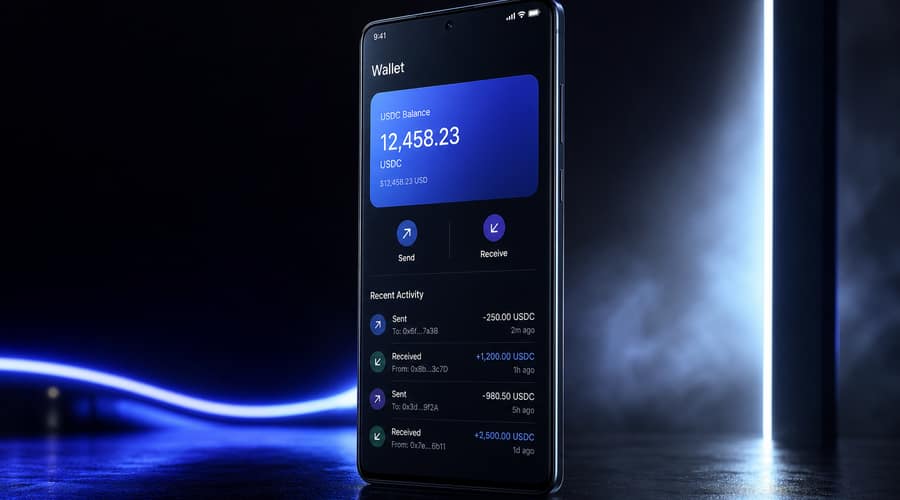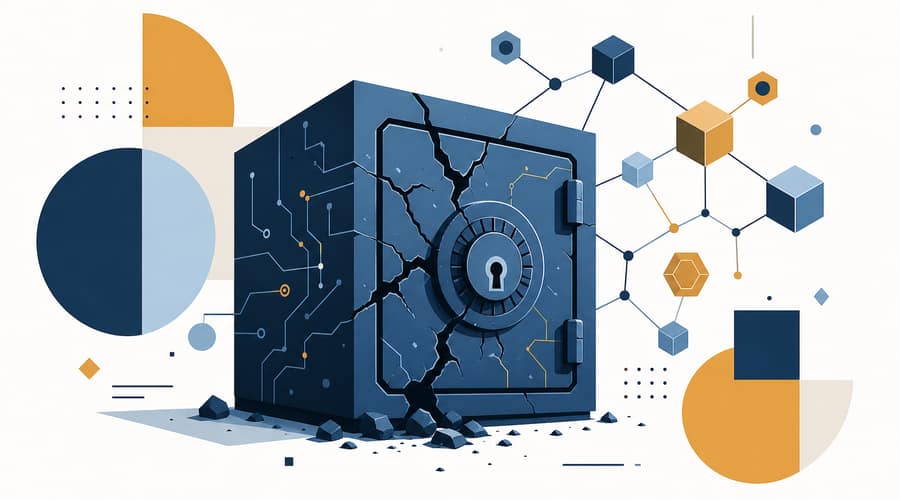
Aave suffered the largest DeFi exploit of 2026 today, losing $292 million to a smart contract attack. The response -- a cross-protocol coalition called DeFi United -- may matter more to the industry's future than the hack itself.
The attack hit Aave's v3 deployment on a scaling network sometime in the early hours of April 24, with on-chain forensics pointing to a logic error that let attackers drain stablecoins and tokenized assets before anyone could trigger a pause. By the time the scope was clear, $292 million was gone -- the single largest exploit of the year, and a gut-punch to a sector that has spent years arguing its infrastructure is mature enough to handle serious money.
What happened next was the more surprising story. Within hours, the core teams behind Uniswap, MakerDAO, and Polygon announced they were forming DeFi United, a coordinated rescue operation that has no real precedent at this scale. The coalition is deploying a two-track strategy: whitelisted 'hunter-killer' smart contracts designed to intercept and impede the attacker's ability to move stolen funds through decentralized exchanges, paired with a liquidity backstop to prevent Aave's lending pools from tipping into insolvency. Uniswap's lead developer and MakerDAO's governance facilitator issued a joint statement framing the intervention as a necessity given the contagion risk to a DeFi ecosystem they estimated at $50 billion in total value.
AAVE dropped more than 35% in intraday trading as the news spread, pulling the CoinDesk DeFi Index down 12% alongside it. Aave's total value locked fell roughly 40% from pre-attack levels to around $8 billion -- a figure that reflects not just capital flight but a loss of confidence that audits and formal verification alone cannot fully restore. Users who had nothing to do with the exploited contracts withdrew anyway, which is exactly the contagion dynamic DeFi United was stood up to contain.
The 'buyback and cover' framing is deliberate. Rather than simply lobbying for an Aave governance vote or waiting for insurance protocols to respond, DeFi United is committing pooled liquidity from multiple treasuries to backstop the affected pools. It is centralized-like coordination operating through decentralized tooling -- a distinction that matters philosophically even if the practical effect looks similar to what a traditional financial regulator might do in a banking crisis.
The ideology shift hiding inside the rescue operation
For years, 'code is law' served as both a technical principle and a political identity for DeFi. The argument was that immutability and neutrality were features, not bugs -- that removing human discretion from financial infrastructure was precisely the point. Today's intervention challenges that position directly. When dominant protocols pool resources and governance power to actively manage an exploit's fallout, they are making a collective judgment call about which outcomes the ecosystem can and cannot absorb. That is not 'code is law.' That is protocol diplomacy.
Analysts watching the regulatory space will note the timing. Scrutiny of DeFi insurance mechanisms and cross-chain bridge security has been building for months, and a $292 million exploit with a visible, coordinated response hands policymakers a ready-made narrative on both sides: here is the risk, and here is the industry trying to self-regulate. Whether regulators read DeFi United as reassuring maturity or as evidence that decentralization was always a fiction will depend on the politics of whoever is doing the reading.
The practical question over the next 72 hours is whether the hunter-killer contracts can actually slow the attacker down enough for the liquidity backstop to hold. If it works, DeFi United becomes a template. If the attacker successfully launders through bridges and mixers before the coalition can act, the $292 million loss becomes a permanent mark on the sector's credibility -- and the conversation shifts entirely to whether DeFi can self-insure at scale or needs external guarantees to survive incidents of this magnitude. Watch Aave's TVL recovery rate and any on-chain movement from the attacker's identified wallets. Those two signals will tell the real story of whether coordination arrived in time.
Also read: Bitcoin whales are loading up aggressively but ARK Invest thinks the real bottom is still ahead • Cardano's three founding entities want $48 million from the community treasury to chase Bitcoin DeFi dominance by 2030 • OKX becomes the first centralized exchange to enable direct USDT0 deposits on the Tempo blockchain