The U.S.-Iran ceasefire signed April 7 sent oil prices tumbling in the biggest single-day drop since 2020, but five days later, the Strait of Hormuz remains closed to commercial traffic and roughly 20 million barrels of daily supply sit stranded.
When the ceasefire announcement hit wires on April 7, traders bought the headline. Crude prices cratered. It looked, for a moment, like the worst energy shock in years was unwinding. It wasn't. The Strait of Hormuz is still effectively shut, the tankers haven't moved, and what markets priced as a resolution was really just a hope trade. The gap between diplomacy and logistics has never been wider, and the world is about to learn what an L-shaped energy recovery actually feels like.
The Biden administration dispatched U.S. warships on April 11 to establish a secure transit corridor, a credible show of force on paper. But the central problem isn't military, it's actuarial. Since hostilities began in March, underwriters at Lloyd's of London and other major hubs have systematically canceled war risk coverage for vessels transiting the Strait. No insurance means no movement, full stop. A Navy destroyer escort addresses the physical threat but does nothing to override a commercial underwriter's liability calculus. If a supertanker goes down in a military-escorted convoy, the Navy doesn't cover the cargo, the vessel, or the environmental cleanup. Until insurers reinstate coverage, the tankers sit idle regardless of what's sailing alongside them.
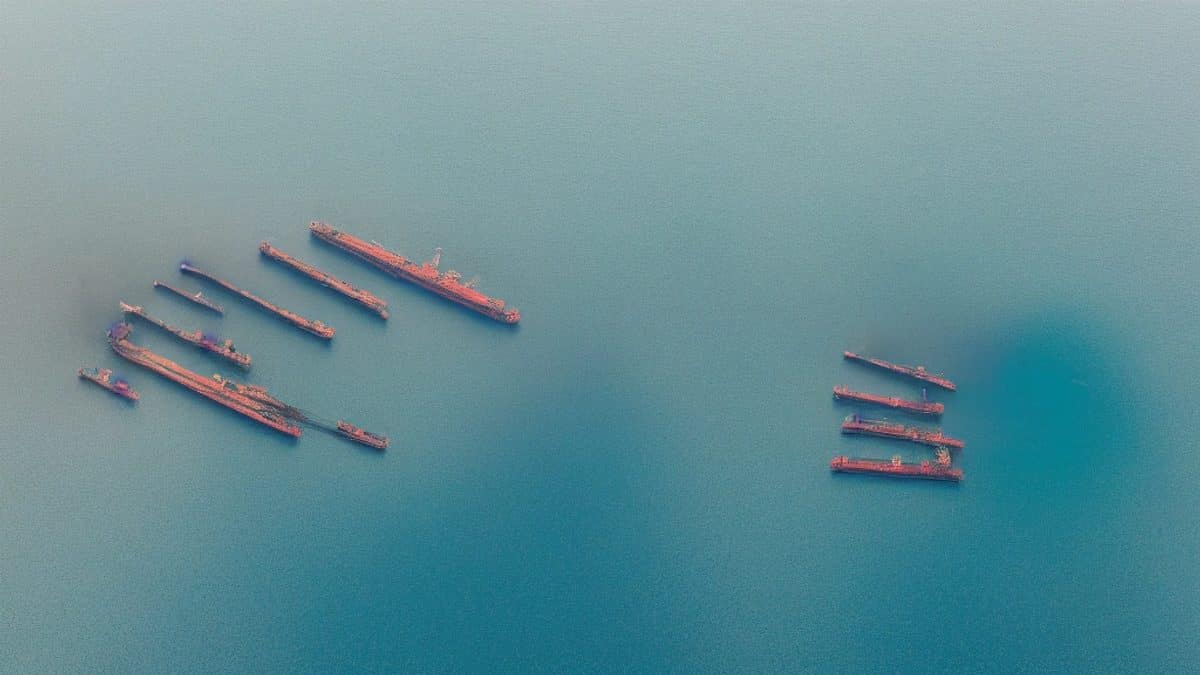
Even if the insurance market moved tomorrow, the physical backlog is staggering. Estimates place somewhere between 800 and 2,000 vessels stranded or diverted in the region. The Strait itself is 21 nautical miles wide at its narrowest, a chokepoint that cannot handle simultaneous heavy two-way traffic. Clearing the outbound tankers trapped in the Persian Gulf requires a one-way flow, which delays the empty inbound vessels needed to load waiting crude. Meanwhile, container ships and LNG carriers that diverted around the Cape of Good Hope weeks ago have scrambled global port schedules. Destination berths in Europe and Asia are occupied by redirected traffic. Getting back to normal isn't a switch you flip; it's a sequencing problem that plays out over weeks at minimum.
The disruption has also punched well beyond crude oil. Nine other commodity supply chains are in serious distress. LNG and petrochemical flows have tightened, squeezing plastics and manufacturing inputs. Aluminium and steel producers dependent on energy from the region are curtailing output. Urea shipments critical to global fertilizer supply are delayed, a slow-moving threat to food security that doesn't make headlines yet but will. Perhaps most quietly alarming: helium supplies, essential for hospital MRI machines and semiconductor fabrication, are tightening. A geopolitical standoff in the Gulf is now a factor in chip production timelines. That's the compounding nature of a chokepoint crisis , the second and third-order effects keep arriving after the original shock.
The April 7 price drop was a sentiment move, not a supply move. Prices have since clawed back as traders absorbed the reality that a ceasefire agreement and a functioning transit corridor are two entirely different things. Analysts are now framing the recovery outlook as L-shaped: prices stabilize at a structurally higher level rather than snapping back to pre-crisis baselines. War risk premiums won't vanish overnight even after coverage resumes; insurers will reprice the region's risk profile for months, keeping shipping rates elevated long after the first tankers clear the Strait.
For businesses running energy-sensitive operations, this means the planning assumption needs to change. The crisis isn't over when the Strait reopens. It's over when the backlog clears, insurance normalizes, port schedules rebalance, and the commodity cascades work through the system. That's a process measured in months, not days. The companies that move now to lock in supply contracts, hedge freight costs, and audit their exposure to the nine affected commodity chains will be in a materially better position than those waiting for a V-shaped recovery that isn't coming.