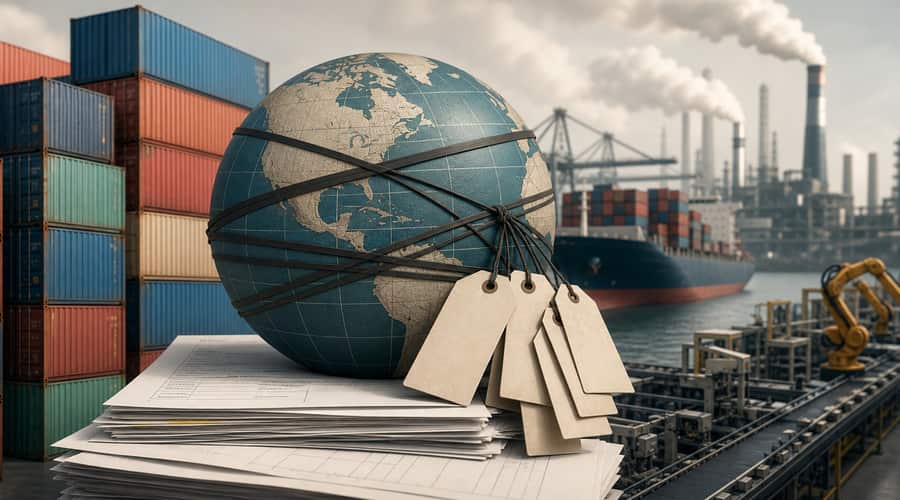
Washington's proposed 12.5% tariff on Indian imports is not final yet, but founders should treat it as a live cost risk. The bigger story is how quickly trade policy can rewrite the math for hardware, apparel and consumer product startups.
The Trump administration has opened a new tariff front, and India is in the higher-risk bracket. The Office of the U.S. Trade Representative has proposed an additional 12.5% duty on imports from India and dozens of other economies after a Section 301 investigation found they had not done enough to block goods made with forced labor from entering their own markets.
That sounds like a trade law story. For founders, it is more practical than that. If you import electronics, components, packaging, textiles, machinery, accessories or finished consumer devices, a 12.5% surcharge can move a product from profitable to fragile before it even reaches a warehouse.
According to the Associated Press, the proposal covers 60 economies and would impose either 10% or 12.5% additional duties depending on how USTR judges each economy's forced labor import controls. India, China, Japan, South Korea, Brazil and Switzerland are among those facing the proposed 12.5% rate. Canada, Mexico, Taiwan and the United Kingdom are among those listed at 10%.
This is not final policy. Written comments are due July 6, 2026, and public hearings are scheduled to begin July 7. That distinction matters because founders still have a window to model exposure, talk to brokers, push suppliers for documentation and decide whether planned inventory should move now, later or through a different sourcing structure.
Forced labor enforcement is a serious issue, and the global scale is not small. USTR cited the International Labour Organization's estimate that 27.6 million people were in forced labor as of 2021. The problem for importers is that the remedy being proposed is broad. It does not only hit one factory, one product line or one named supplier. It adds country-level pressure across major trading partners.
That is where the startup impact becomes obvious. Larger companies can sometimes absorb a tariff shock, renegotiate freight, delay launches or shift production across multiple countries. Smaller companies usually do not have that luxury. A founder ordering 8,000 units of a connected device from an Indian contract manufacturer may have already priced retail, paid tooling costs and promised delivery windows to retailers or customers.
A 12.5% duty does not arrive alone either. It lands on top of existing tariffs, freight costs, customs fees, insurance, quality checks, warehousing and return allowances. If the product contains chips, sensors, batteries, displays or specialty materials, the cost stack is already under pressure from AI infrastructure demand and tight component markets. Even a small change in landed cost can force a hard choice between raising prices, lowering margins or cutting marketing spend.
Textiles deserve special attention. USTR has floated a textile mechanism that would allow certain volumes of apparel and textile imports from some economies to enter at a reduced Section 301 tariff rate. That may sound like relief, but it also creates uncertainty. Apparel founders would need to know whether their goods qualify, how quota access is handled and whether suppliers can produce the paperwork before goods ship.
Section 301 gives Washington a sturdier route
The legal structure matters because this proposal appears to be part of a broader move toward tariff tools that can survive court fights. Earlier emergency tariff efforts ran into legal limits, and Section 301 is a more familiar trade enforcement channel. It gives USTR a process: investigation, findings, proposed action, comments, hearings and then a final decision.
That process does not make the business risk disappear. It may make it more durable. Section 301 has already been used in major trade disputes, most famously against China, and companies learned that once duties become embedded in sourcing models, they can last far longer than the initial political headline suggests.
For founders, the smartest response is not panic buying. It is boring discipline. Map every SKU by country of origin, supplier, tariff classification and gross margin. Ask customs counsel or a broker how the proposed duty would apply to your products if adopted. Push suppliers for forced labor compliance records, not vague assurances. Review whether purchase orders allow price adjustments if duties change after goods are ordered but before entry into the United States.
There is also a customer question. If a startup has built its value proposition around affordable hardware, fast fashion, home goods or imported accessories, it needs to know how much price elasticity it really has. A product that can tolerate a 5% increase may not tolerate 15%. A wholesale channel may reject changes that direct-to-consumer buyers would accept.
India remains an important sourcing alternative for companies looking beyond China, especially in electronics assembly, pharmaceuticals, textiles, jewelry, industrial goods and consumer products. That is exactly why this proposal matters. It complicates the simple narrative that companies can solve tariff exposure by moving from one country to another.
The next date to watch is July 6, when comments are due. After that, hearings beginning July 7 will show which industries push back hardest and whether USTR narrows the measure before making a final decision. Until then, founders should treat the proposal as a warning light. Global sourcing is still useful, but the margin of error is getting smaller.
Also read: Cigna is making GLP-1 coverage a harder sell for employers • Coinbase brings stablecoins closer to everyday checkout • Developers are testing life after GitHub Copilot changes its billing