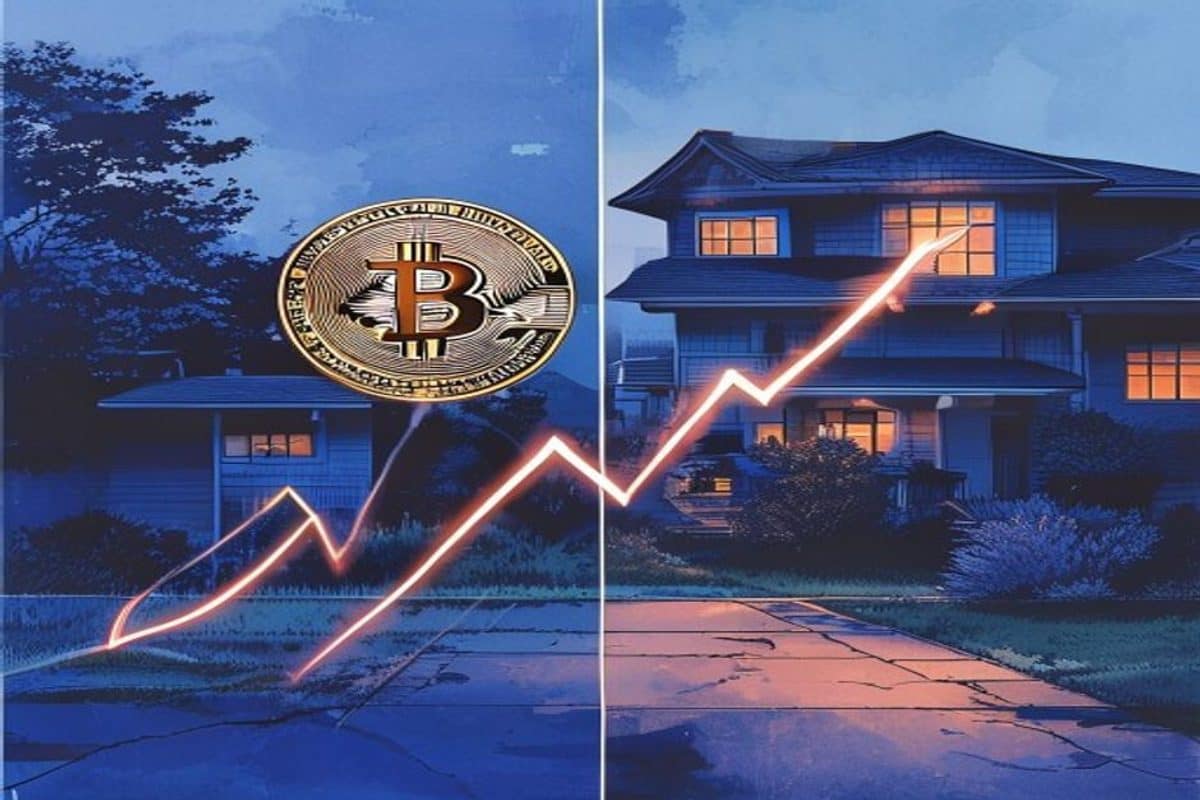
A $30,000 investment in Bitcoin made in April 2016 has dramatically outpaced an equivalent leveraged rental property position, according to a comparative analysis that has gone viral across Reddit and X, reigniting the debate over where retail investors should be parking long-term capital.
The math is blunt. Put $30,000 into Bitcoin a decade ago and held it through every crash, every regulatory panic, and every cycle of media obituaries, and that position is worth somewhere between $150,000 and $250,000 today depending on your exact entry date. Put the same $30,000 into a 20% down payment on a $150,000 rental property, and the gross appreciation story looks respectable , national averages of 3 to 4 percent annually push that property's market value toward $200,000 to $220,000. But strip out a decade of mortgage interest, maintenance bills, property taxes, insurance, and vacancy costs, and the net equity figure starts looking a lot less impressive than the headline number.
What made the original post catch fire wasn't just the numbers. It was the framing. The author leaned into the "not what I expected" angle because most people anticipated the property to win once leverage and rental income were factored in. The rental income stream is real, and for many investors it covered most carrying costs. But liquidity changes the calculus significantly. The Bitcoin holder can exit in minutes with no agent commissions, no closing costs, and no inspection contingencies. The landlord is sitting on illiquid equity that requires a full transaction to access.
This analysis would have generated less heat five years ago. What gives it traction now is the broader context: mortgage rates that spent much of the early 2020s punishing leveraged buyers, a residential real estate market in many U.S. cities that has plateaued or corrected from its 2022 peaks, and a Bitcoin that survived multiple 70-percent drawdowns and still compounded aggressively over the full decade. The survivorship narrative that crypto critics lean on , that most people panic-sold somewhere along the way , is genuinely valid, but it applies equally to landlords who sold during the 2020 uncertainty or couldn't sustain negative cash flow when rates rose.
There is also a generational dimension here that institutional analysts are starting to take seriously. Younger retail investors, particularly those who came of financial age watching friends grind through tenant disputes, surprise HVAC replacements, and municipal rent control battles, are considerably more receptive to the zero-maintenance pitch of a digital asset. The cultural cachet of being a landlord has eroded. The cultural cachet of having called Bitcoin early has not.
What the Spreadsheet Gets Wrong
The model has real weaknesses, and the comment sections on Reddit made sure to surface them. It assumes a single buy-and-hold Bitcoin position with perfect emotional discipline across a period that included an 84 percent drawdown in 2018 and a 77 percent collapse in 2022. Very few retail investors maintained that discipline without averaging down, taking partial profits, or abandoning the position entirely. The property scenario, meanwhile, assumes average appreciation in a market that could have been Detroit or San Francisco , two cities that would produce wildly different outcomes. The analysis is a useful provocation, not a universal prescription.
Tax treatment also complicates the clean comparison. Long-term capital gains on Bitcoin are taxable events at sale, and depending on your bracket and holding period, that erodes the terminal value meaningfully. Real estate offers depreciation deductions along the way and 1031 exchange options that can defer gains indefinitely. For a sophisticated investor, the after-tax picture is more competitive than the raw spreadsheet suggests.
None of that changes the headline insight, though: the narrative that real estate is the reliably superior long-term wealth vehicle for ordinary investors has a ten-year dataset pushing back hard against it. That doesn't mean Bitcoin wins every decade going forward, or that leverage on residential property is a losing strategy. It means the assumption deserves scrutiny rather than deference.
The more interesting question for 2026 is whether institutional adoption of Bitcoin , through ETFs, corporate treasury allocations, and sovereign wealth positioning , compresses the volatility that made holding so psychologically brutal in prior cycles. If the asset matures into something closer to digital gold in terms of drawdown behavior, the accessibility and liquidity advantages start looking even more compelling against the operational friction of direct real estate ownership. Watch how retail allocation data shifts over the next twelve months. The spreadsheet went viral because it confirmed something a lot of younger investors already suspected. Markets tend to reprice around confirmed suspicions eventually.
Also read: Bitcoin investors are revisiting the hard truth about the lifespan of fiat currency as the digital asset supply tightens • A viral social media movement is telling people to stop buying status symbols and put that money into Bitcoin instead • Strategy overtakes BlackRock to become the world's largest corporate Bitcoin holder with 815,061 BTC