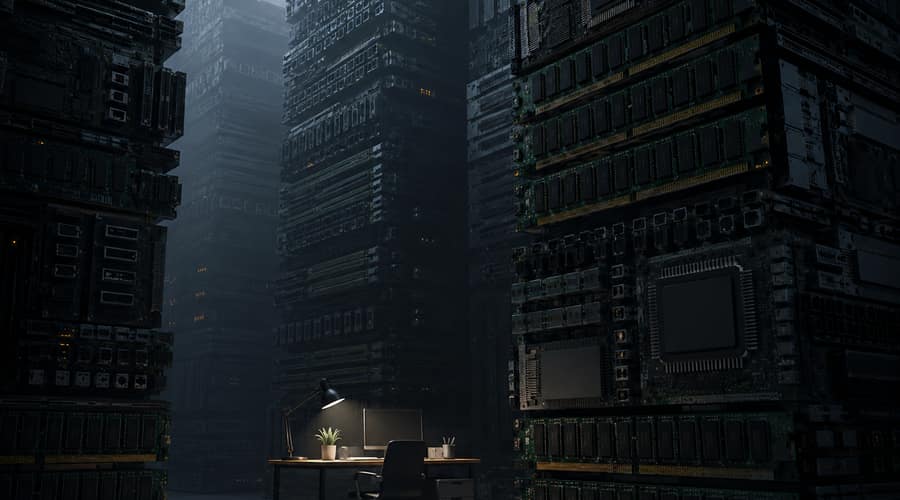
AI is not just reshaping data centers, it is also reshaping who gets to buy a decent PC.
A new Tom's Hardware survey shows that 60% of PC gamers have no plans to build a new desktop in the next two years, and the reason is not apathy. It is cost, with AI buildouts soaking up memory supply and pushing retail pricing far beyond what many buyers can justify. Tom's Hardware said the survey drew more than 1,500 responses in May, and the result lands in the middle of a broader memory crunch that is already changing how the PC market works.
The important part is not the number alone. It is the direction of travel. When a majority of enthusiast buyers step away from upgrades, that is usually a sign that the market has crossed from inconvenience into structural strain. Reuters reported in January that AI infrastructure demand from companies such as OpenAI, Google and Microsoft has consumed a significant portion of global memory supply, while TrendForce later told Reuters that conventional DRAM contract prices were set to jump 90% to 95% in the first quarter of 2026 compared with the previous quarter.
That is why the story matters beyond gaming. The old assumption was that consumer PC hardware provided the cheapest route to serious local compute. A strong desktop with plenty of RAM was the startup founder's workaround, the indie developer's lab bench, and the hobbyist's private AI sandbox. When RAM gets expensive enough that builders sit out for years, that grassroots stack stops being a casual purchase and starts looking like a luxury item.
The supply side is not giving consumers much comfort. Reuters also reported that memory manufacturers are prioritizing higher-margin data center and AI products, which leaves less capacity for the consumer market and keeps pressure on prices. That is already visible in product decisions, including Micron's move to exit its Crucial consumer memory business and focus more on enterprise and AI demand, a shift it linked to the same market conditions.
For buyers, the result is predictable. They pay more for less, or they wait. Tom's Hardware said 32GB of RAM had climbed to around $360 in its survey coverage, while other reports have shown SSDs and graphics cards being pulled into the same inflationary pattern. IDC has also cut its 2026 PC shipment forecast sharply, citing memory shortages and pricing pressure, which suggests this is not a one-quarter problem that disappears with the next product cycle.
For startups, the real issue is planning. If a hardware-heavy team used to budget around consumer-grade machines for local testing, model prototyping or on-device inference, those budgets now need a buffer. The cheapest answer may no longer be a better DIY build, but a more deliberate compute mix that leans on cloud bursts, shared lab machines, refurbished enterprise boxes, or thinner local workflows that reserve the heavy lifting for rented infrastructure.
That does not mean every alternative is clean or cheap. Enterprise gear can be noisy, power-hungry and awkward to fit into small offices. Cloud use can become expensive if teams treat it like an infinite pantry. But scarcity changes the comparison. Once a fresh desktop build stops looking affordable, a used workstation with ECC memory or a modest laptop paired with remote compute can look a lot more rational than it did two years ago.
What founders can do now
The practical move is to think less about ownership and more about access. Founders should separate day-to-day development from burst workloads, then price those two needs differently. Not every engineer needs a high-spec tower on the desk when code can be edited locally, tested remotely, and deployed against shared infrastructure. The same logic applies to indie developers building local AI tools, where the workstation may matter less than the pipeline around it.
Secondary markets will probably get more attention because they always do when new hardware gets expensive, but they are not a perfect fix. They offer relief, not abundance. Repurposed enterprise machines can buy time, especially for teams that need memory capacity more than gaming-class GPUs, yet they also come with trade-offs in warranty, power draw and upgrade paths. Alternative architectures may help at the margins, but they do not erase the fact that the consumer supply chain is being pushed aside by better-paying buyers.
That is the deeper shift. This is no longer just about gamers delaying a hobby purchase. It is about AI demand reaching into the basic hardware assumptions that small companies have relied on for years. If consumer PC building stays paralyzed, the immediate victims are enthusiasts. The second-order effect is that early-stage builders lose one of the cheapest ways to experiment locally, and that is a quiet but meaningful change in how software gets made.
So the Tom's Hardware survey is less a mood check than a warning flare. A market in which 60% of gamers are not planning a new desktop for two years is a market where consumer hardware is being repriced around industrial demand. For startups and developers, the lesson is simple: budget for scarcity, design for flexibility, and assume the old bargain between consumer parts and serious local compute is gone for now.
Also read: AI data centers are quietly pricing out garage-stage startups and PC builders • OpenAI stays cautious on bank data while MCP agents push into live finance • AI's compute boom is choking PC builders and the startups that rely on them