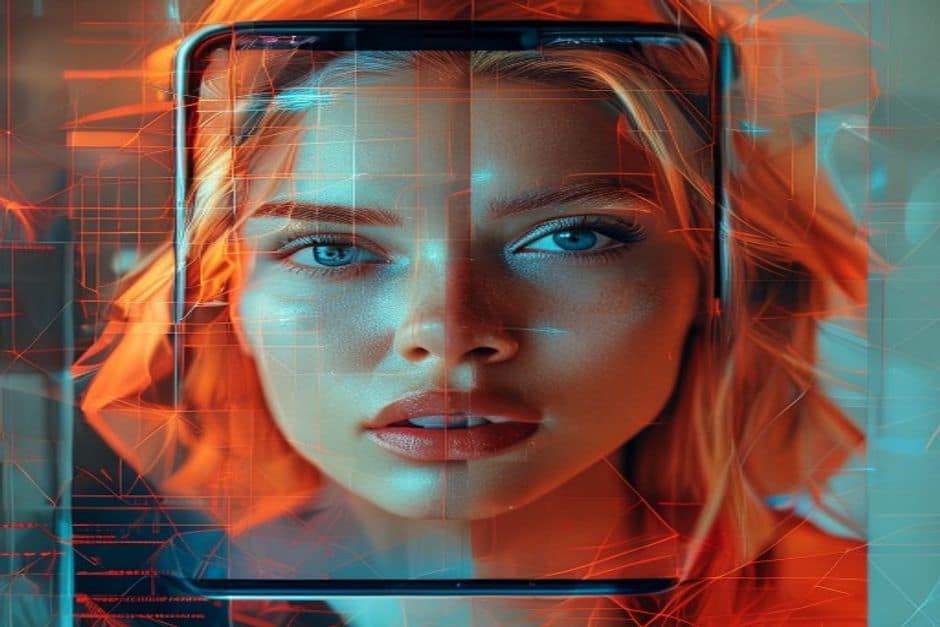
Reddit users are increasingly being deceived by AI-generated influencer accounts, and the discovery moment, when a community realizes the person they have been engaging with does not exist, is becoming a recurring trust crisis for social platforms, advertisers, and the startups trying to build legitimate businesses in synthetic media.
The pattern has become familiar enough to have its own arc. An account appears on Instagram, TikTok, or Reddit with a consistent visual identity, a backstory, and a posting cadence that signals genuine human presence. Followers accumulate. Comments fill with the kind of parasocial warmth that influencer culture runs on. Then someone notices an anatomical impossibility in one image, or a background that repeats with suspicious precision, or a reverse image search that returns nothing. The thread that follows, equal parts fascination and betrayal, gets screenshotted and posted to r/Artificial or r/InternetIsBeautiful, where it generates thousands of upvotes from people who cannot quite decide whether they feel impressed or deceived. Usually both.
What makes the current wave different from earlier iterations of fake online identity is the quality ceiling. Tools like Midjourney, Stable Diffusion, and a growing number of consumer-facing avatar generators have raised the visual standard of synthetic personas to a point where the tells that used to give them away, wrong finger counts, uncanny skin texture, text that dissolves into nonsense on closer inspection, are no longer reliably present. The accounts now generating the most viral exposure-and-outrage cycles are ones that maintained the illusion for months, accumulated tens of thousands of followers, and in several documented cases, successfully negotiated brand partnership deals before the disclosure question was forced.
The commercial logic of AI influencer accounts is straightforward enough to explain why they keep appearing despite the reputational risk of eventual exposure. Creating and operating a synthetic persona requires no talent recruitment, no scheduling coordination, no contract negotiation with a human whose mood, health, or public behavior can derail a campaign. The content production cost is a fraction of what a comparable human influencer arrangement would require, and the persona can be tuned precisely to whatever demographic and aesthetic profile an advertiser wants to reach. For a certain category of performance-focused media operator, it looks less like a fraud scheme and more like an efficiency play, at least until the account gets exposed or the platform removes it.
Several companies have attempted to build disclosed AI influencer businesses on exactly this premise. Lil Miquela, the synthetically generated influencer managed by Brud, was an early and relatively transparent example that attracted genuine brand partnerships with Calvin Klein, Samsung, and Prada while maintaining an openly fictional persona. The model worked commercially precisely because the disclosure was part of the brand identity rather than a liability. The accounts generating current controversy are operating on a different model: the synthetic nature is concealed rather than disclosed, which shifts the practice from creative fiction into something closer to audience manipulation and, depending on the jurisdiction and the commercial relationships involved, potentially false advertising.
Platform disclosure policies have been moving in the direction of requiring AI content labeling, but the implementation has been inconsistent and enforcement reactive rather than proactive. Meta introduced AI content labels for Instagram and Facebook in 2024, applying them to detected synthetic imagery in politically sensitive contexts. TikTok has disclosure requirements for AI-generated content in its community guidelines. Neither platform has demonstrated the ability to catch synthetic personas before they accumulate significant followings, and both rely heavily on user reporting to surface violations rather than automated detection at upload. The gap between the policy and the enforcement is wide enough that operators of undisclosed AI accounts face meaningful but not prohibitive risk.
What this means for advertisers and the startups caught in between
Brand safety is the advertiser's way of describing the risk of their product appearing in a context that damages rather than enhances their reputation. AI influencer accounts that are later exposed as synthetic create exactly this risk for brands that partnered with them without adequate due diligence, because the story that gets written is not about clever AI marketing but about the brand paying to reach an audience that was being deceived. Several documented cases from the past twelve months involved fashion, beauty, and wellness brands whose partnerships with undisclosed AI accounts became public at the same moment the accounts were exposed, creating a secondary news cycle that no brand communications team wanted to manage.
The legitimate AI influencer startups, companies like Synthesia, Hour One, and a growing field of avatar-based content platforms that build disclosed synthetic personas for enterprise clients, have a real business that the fraud-adjacent operators are making harder to sell. When the category is primarily visible through exposure stories about deceptive accounts, procurement conversations that should be about production efficiency and content scalability instead become conversations about disclosure risk and brand association. That externality is not fair to the companies trying to build above-board businesses in the space, and it will not resolve itself without either more aggressive platform enforcement or clearer regulatory frameworks that distinguish disclosed synthetic content from undisclosed impersonation.
The regulatory momentum is building, if slowly. The EU's AI Act includes provisions that require disclosure of AI-generated content in certain contexts, and the FTC in the United States has been updating its influencer marketing guidelines to address synthetic personas, though the specific enforcement posture on AI-generated accounts remains undeveloped. The practical question for founders building in synthetic media is not whether disclosure requirements are coming but whether their product and business model can survive them intact. The ones built on transparency already can. The ones built on concealment are operating on borrowed time, and the exposure cycle on social media is shortening as users become more attuned to the tells and more motivated to surface them.
Also read: A deepfake Buffett opened Berkshire's shareholder meeting and every public company just got a governance problem • Big Tech Is Spending $725 Billion on AI This Year While Cutting the People Who Built It • ElevenLabs is moving from voice generation into voice labor and the call center industry has not fully priced that in