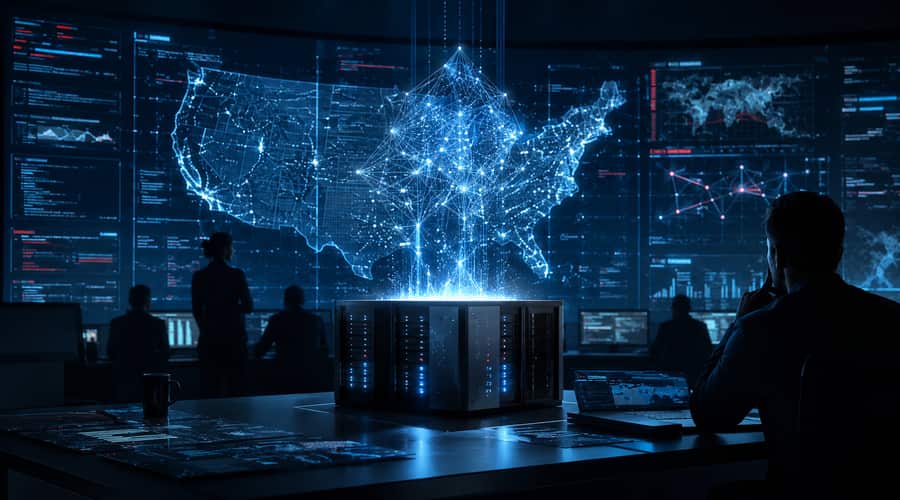
Anthropic's fight with Washington is turning into a working relationship, and the intelligence community may be the first real test.
The Trump administration has finalized a classified arrangement that gives U.S. intelligence agencies access to Anthropic's AI models, according to a new SignalPlus report, with the National Security Agency expected to sit near the center of the rollout. That is a sharp turn for a company that only recently was being pushed out of defense work over the limits it wanted to place on military use.
The immediate story is not just that another frontier AI lab is selling tools to government. That part was always coming. The more important point is that the U.S. intelligence community appears to be moving from experimentation to operational reliance, using commercial AI systems for work that can involve classified networks, cyber defense, and sensitive data handling.
Axios reported in April that the NSA was already using Anthropic's Mythos Preview despite the Defense Department having labeled the company a supply chain risk. TechCrunch separately reported that Mythos was built into a restricted cybersecurity push to scan software environments for exploitable vulnerabilities, while Bloomberg reported that the Treasury Department's technology team was seeking access to the model for vulnerability hunting. The new contract, if described accurately, formalizes what had already become clear: some parts of the government want Anthropic's tools badly enough to work through the political fight.
The reported restriction is the key detail. The systems cannot be used on data pertaining to U.S. citizens, according to SignalPlus, which described the agreement as a classified contract involving spy agencies led by the NSA. That carve-out sounds narrow, but it goes straight to the disagreement that caused the earlier rupture.
Anthropic had resisted giving the Pentagon unrestricted use of Claude for domestic surveillance or autonomous weapons development. The Pentagon wanted the ability to use the model for lawful purposes without a vendor placing its own limits on the chain of command. That difference was not a paperwork dispute. It was a fight over whether a private AI company can write meaningful boundaries around national security use once its systems become useful enough.
For Anthropic, the deal offers a path back into the federal market without abandoning the public argument that some use cases need hard limits. For the government, it keeps access to a model that officials appear to see as valuable for cybersecurity. Both sides get something. Neither side gets everything.
That is usually how infrastructure becomes permanent.
Frontier AI is becoming a national security layer
Mythos is not a normal chatbot product. Anthropic has treated it as a restricted cybersecurity model, making it available only to a limited group of organizations because of concerns that it could help find and exploit vulnerabilities at scale. That is exactly why intelligence agencies want it, and exactly why the arrangement will draw scrutiny.
The same capability can defend a network or sharpen an attack. A model that helps an agency find weaknesses in government software could also help an adversary move faster if access controls fail. This is the uncomfortable reality sitting behind every frontier AI procurement deal. The value and the risk often come from the same feature.
It also explains why Washington's posture has looked inconsistent. In February and March, the administration pressed Anthropic over Pentagon access and the Defense Department's supply chain risk designation. By April, Axios reported that senior officials were still discussing ways to use Mythos inside government, even as the dispute continued. In May, Axios reported that the administration was defending the designation in court while still looking for ways to adopt the model for cyber threats.
That sequence looks messy, but it reflects a real policy problem. The government wants American AI companies to move fast enough to beat rivals, but it also wants early access, security review, and influence over systems that could change cyber operations. Those goals do not sit neatly together.
Anthropic is now competing for the state
This also changes the competitive map. OpenAI, Google, Microsoft, xAI, Amazon Web Services, and other major players are all trying to become default providers for public sector AI. Government contracts bring money, credibility, and distribution into agencies that can shape technical requirements for years.
For a frontier lab, intelligence adoption is more than revenue. It can steer product priorities. Models built for classified cyber work may need stronger audit trails, controlled deployment environments, compartmentalized access, and a different safety culture than consumer assistants or office agents. The companies that learn those requirements first may have an advantage across defense, critical infrastructure, and regulated enterprise markets.
There is a reputational cost too. Anthropic has built much of its brand around safety. Working with spy agencies will test whether that brand can survive contact with national security use cases that are, by design, hard for the public to inspect. The company can say the guardrails remain in place, but outsiders will have to judge the arrangement by what is disclosed, what is litigated, and what breaks into public view later.
The market implication is simple. Frontier AI is becoming part of government infrastructure faster than the rules around it are settling. Watch the citizen-data restriction, the status of Anthropic's Defense Department dispute, and whether other labs accept similar limits. The next phase of AI competition may be decided as much in classified procurement offices as in product launches.
Also read: Cheap Optane memory is giving local AI builders a new route. • Meituan puts avatar video startups under new pressure • AI has reached its COVID shutdown moment for office work