Claude Code Artifacts are useful, but not because they turn every shared page into a live SaaS dashboard. The real shift is simpler: a coding session can now publish a private page that keeps updating as Claude keeps working.
Anthropic's Claude Code Artifacts are not just prettier terminal output. They turn an active coding session into a browser page your team can open, refresh, and follow without asking you to paste logs into Slack or narrate every step of a pull request.
That sounds small until you've watched a long agent run. A session starts with an incident, a refactor, a cost review, or a stubborn failing test. Claude Code pulls from the repo and the conversation - plus whatever connected tools the session has - then publishes a page with the context a teammate actually needs: the suspect commits, the error chart, the PR walkthrough, the checklist. The page can update at the same link as the session progresses.
That is the product. Not magic. Not a replacement for every internal tool. A shareable working page.
Anthropic announced Claude Code Artifacts on June 18, 2026, and its own blog says the beta is available to Claude Team and Enterprise organizations through the Claude Code CLI and desktop app, with pages viewable in a browser. The company's help center says the same thing more plainly: Artifacts in Claude Code are in beta on Team and Enterprise plans, and those pages are viewable only by members of the organization that published them.
This isn't the same as ordinary Claude artifacts in the web and desktop apps. That distinction matters. Those artifacts support MCP integration on Pro, Max, Team, and Enterprise plans. Claude Code Artifacts, the feature for publishing coding-session output as a private page, are still a Team and Enterprise feature. Mixing those two products together makes the release sound broader than it is.
The page updates because the session updates
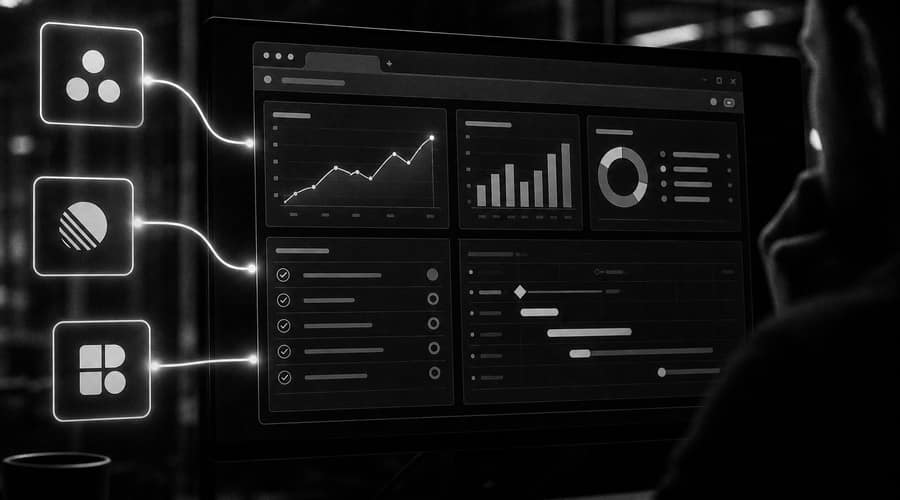
The cleanest way to understand the feature is to ignore the word dashboard for a moment. That word oversells it. Anthropic says Claude Code can publish live visual pages: PR walkthroughs, system explainers, dashboards, release checklists. Those pages refresh in place when Claude Code updates the artifact. Every publish creates a new version at the same link, with version history available if you need to restore an earlier one.
That is different from a page calling Linear, Asana, or Supabase every time a viewer opens it. The source material can include connectors from the coding session. Anthropic's June announcement is explicit: artifacts are built from the session's full context - the codebase, the connectors, the conversation, all of it. But there's a stronger claim floating around, that each viewer triggers fresh connector calls under their own login whenever they open the URL. That's not what Anthropic's Claude Code announcement says.
Here's the thing: the narrower version is still useful. If you're reviewing a PR, you don't need a permanent BI product. You need the reasoning, the diff, what was tested, and what changed while Claude kept working. If you're on call, you need the incident page to grow as the investigation moves, not a static screenshot from 18 minutes ago.
Anthropic's own example is an engineer starting an incident investigation before standup. Claude Code publishes a timeline and an error-rate chart, with the suspect commits laid out alongside, then republishes the artifact as the session progresses. By the time the meeting begins, everyone is looking at the same evolving page instead of asking for a walkthrough.
Enterprise auth is the harder problem
The second piece of the story sits outside Claude Code Artifacts but explains why Anthropic is pushing this now. MCP connectors only become normal workplace infrastructure if companies can govern them. You can't ask every employee to click through separate OAuth prompts forever and then call that enterprise deployment.
Anthropic's help center says enterprise-managed auth lets admins authorize connectors once through an identity provider, with Okta supported at launch. Employees inherit access on first login. The same help page lists the supported connectors: Asana, Atlassian, Canva, Figma, Granola, Linear, Supabase. Slack is coming soon.
Okta's June 18 announcement names the same provider group. Joint customers Ramp, Webflow and HubSpot are part of the beta program. The Model Context Protocol specification also now has a June 18, 2026 authorization section built around OAuth 2.1, protected resource metadata, dynamic client registration, and resource indicators.
Frankly, that standards work is the difference between a neat demo and something an IT department can let into the building.
Cursor and Replit already know how to show you a preview of what an AI coding tool just built. Anthropic is aiming at a slightly different use case: the small internal page that records what an agent is doing while it does it. For a founder or an engineering manager - or whoever's on call - that can be enough. You don't always need another dashboard subscription. Sometimes you just need the working page to keep up with the work.
Also read: Roblox Lets Anyone Build a Game From a Text Prompt on Their Phone • Fora becomes a travel unicorn by turning career switchers into agents • Moonshot Ships Kimi K3 and Dares Anthropic to Justify Its September Price Hike