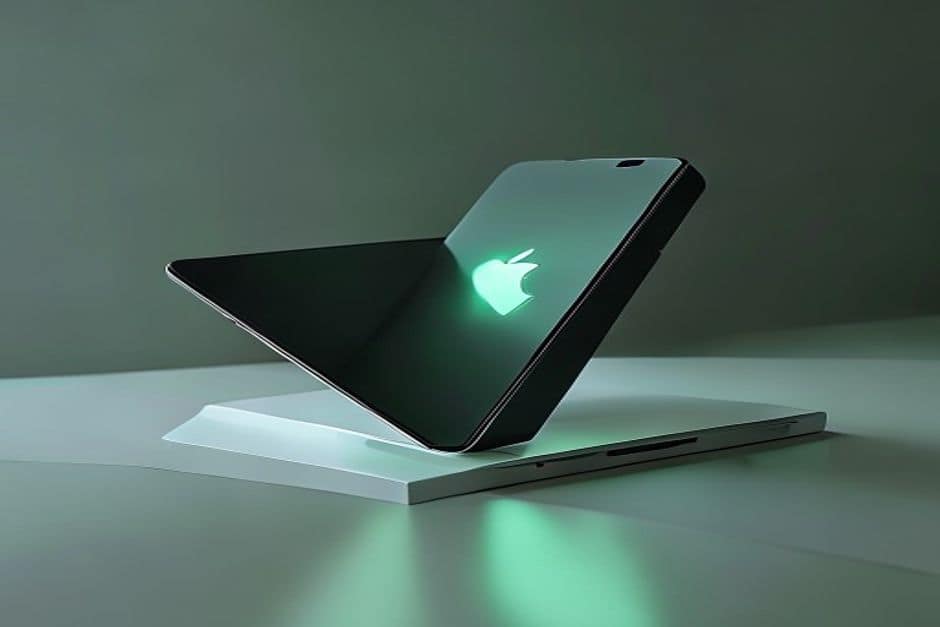
Apple is reportedly preparing its first foldable iPhone, potentially branded as the iPhone Ultra, with leaked details pointing to a remarkably thin 4.5mm design that would set a new physical benchmark for the category.
For years, the foldable smartphone market has been Samsung's arena to define and Huawei's to contest. Apple watched, refined, and stayed quiet. That patience appears to be ending. Reports emerging in early 2026, corroborated by Macworld sources, suggest Apple is not only building a foldable iPhone but attaching the Ultra name to it, a branding decision that carries real weight given what that label already means within the Apple product line.
The Ultra designation is not decorative. Apple introduced it with the M1 Ultra chip in 2022 and has since used it to signal the absolute top of a product family, combining maximum performance with premium positioning. Applying that label to a foldable iPhone tells you something about how Apple intends to bring this device to market. This is not a budget experiment or a cautious first step. If the naming holds, Apple is planning to launch at the top of the category from day one.
The leaked design specification that has drawn the most attention is the reported 4.5mm thickness when unfolded. To put that in context, the current iPhone 16 Pro measures around 8.25mm. Achieving 4.5mm on a device that also incorporates a hinge mechanism, a foldable display, and Apple's standard battery and thermal management expectations would represent a genuine engineering achievement, not just a marketing one.
Samsung's Galaxy Z Fold 6, by comparison, measures approximately 12.1mm when folded and around 5.6mm unfolded. Huawei's Mate XT, which uses a tri-fold design, attracted global attention partly because of its slimness, but Apple's reported figure would undercut even that. A foldable iPhone at 4.5mm unfolded would be thinner than most standard smartphones currently on the market, which reframes the entire product category. It stops being a device you tolerate carrying because of the screen real estate and starts being something people want to carry regardless of the form factor.
The engineering complexity behind hitting that number is considerable. Foldable displays require protective layers that add thickness. Hinge mechanisms need structural integrity to survive hundreds of thousands of open and close cycles. Apple will also need to maintain the water resistance standards its customers expect, something competitors have historically struggled with on early foldable generations. Apple's supply chain relationships, particularly with Samsung Display and LG, give it access to the most advanced flexible panel technology available, but translating access into a shipping product at 4.5mm is a different problem entirely.
The MacBook Ultra and a broader product shift
The foldable iPhone is not the only Ultra product reportedly in development. Macworld's sourcing also points to a MacBook Ultra arriving in the same general timeframe, suggesting Apple is extending the Ultra tier across its hardware lineup more deliberately than it has before. A MacBook Ultra would presumably sit above the existing MacBook Pro with M-series chips, potentially incorporating the next generation of Apple Silicon in a configuration that mirrors the Mac Pro's chip architecture at a laptop form factor.
Taken together, the iPhone Ultra and MacBook Ultra announcements, if they materialize, represent Apple reinforcing a clear product hierarchy. Entry level, mid-range, Pro, and now Ultra as the ceiling. That structure gives Apple room to charge significantly above its existing price points while anchoring the premium on specifications and materials that justify the gap, rather than on branding alone.
The competitive context for the iPhone Ultra is worth keeping in mind. Samsung has sold foldables since 2019 and has had years to work through the early reliability and software optimization problems that plagued the first generation. Google entered the foldable market with the Pixel Fold in 2023 and has iterated since. Apple is arriving later than either, but the pattern from previous Apple category entries, the original iPhone, the iPad, the Apple Watch, suggests that being second or third to market has rarely been a handicap when the execution is genuinely differentiated.
Pricing remains unconfirmed, but analysts tracking Apple's supply chain have suggested a starting price in the range of $1,800 to $2,000, which would make the iPhone Ultra the most expensive iPhone Apple has ever shipped. That number will either validate the Ultra positioning or become the headline that limits adoption in the first year. Everything depends on whether the physical experience of using the device, its hinge feel, its display quality, its software adaptation for the larger unfolded canvas, matches what the name and the price are promising.
The foldable market has been waiting for Apple to show up. Now that it apparently is, the more interesting question is whether Apple's entry accelerates mainstream adoption of the form factor or simply creates a very expensive product that a narrow slice of early adopters buys. The answer will arrive whenever Apple decides to make this official, and at this point, that moment does not feel far off.
Also read: Nebius acquires Eigen AI for $643 million as the inference bottleneck becomes the new GPU war • Retail traders are handing their portfolios to AI agents and the early results are as mixed as you would expect • Synaps raised €3 million to take on AutoCAD with an AI-native architectural platform and the bet is bigger than it looks