Tempus AI bought the cancer-monitoring asset it already knew well, and investors still marked down both sides of the deal.
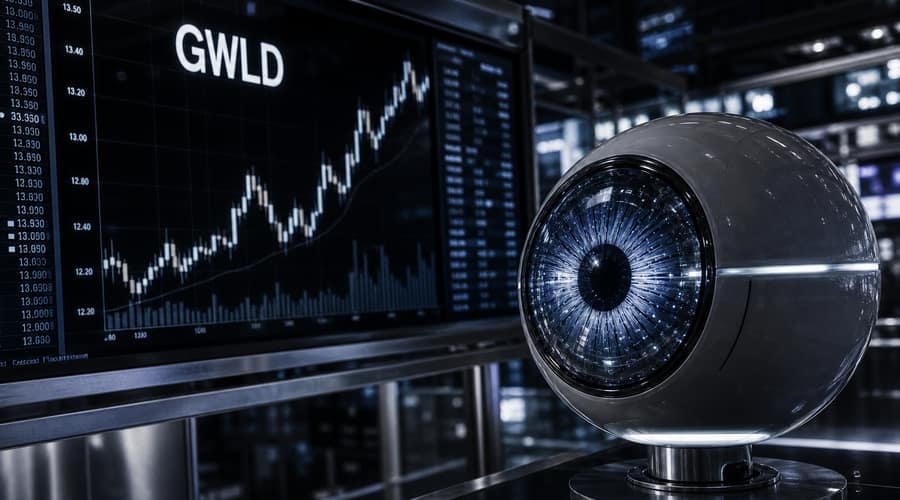
On July 20, 2026, Tempus AI announced a definitive agreement to acquire Personalis for about $1.5 billion, with Personalis shareholders due to receive $16.25 a share. That headline sounds like the clean part. It wasn't. Reuters reported that Tempus shares fell nearly 9% in morning trading while Personalis dropped 12%, and MarketBeat showed Personalis closing down 13.32% at $13.34 after the announcement. Tempus closed down 7.74% at $48.41, according to Investing.com.
The reaction came from the price and the paper being used to pay it. Tempus said the offer represented a 6% premium to Personalis's Friday close and a 28% premium to the unaffected 30-day volume-weighted average price. That smaller premium is easier to understand once you remember what happened before the announcement: Investor's Business Daily reported that Personalis had jumped 55% from June 23 through takeover speculation tied to Tempus, Merck and other possible buyers. A lot of the deal had already moved into the stock.
Tempus holders had their own problem. The agreement starts as a stock transaction, with Tempus retaining the option to pay up to 50% of the value in cash. That's dilution risk. You don't have to overthink it. The company is asking its shareholders to absorb a large genomics acquisition, wait for a close expected in late 2026 or early 2027, and trust that the long-term oncology story will outrun the near-term share count.
The strategic case is stronger than the tape
The deal still has a real strategic spine. Personalis and Tempus entered a November 2023 commercialization and reference laboratory agreement around NeXT Personal Dx, Personalis's tumor-informed molecular residual disease test. In its filing at the time, Personalis said Tempus would market the assay in the United States while Personalis worked on validation in breast cancer, lung cancer and immuno-oncology monitoring. This isn't a blind acquisition. Tempus is buying a company whose test was already moving through its commercial channel.
NeXT Personal is the asset investors are arguing over. The test is built to find tiny traces of cancer DNA in blood after treatment, the kind of signal that can help doctors monitor recurrence earlier than standard imaging or symptoms. Tempus's own announcement described MRD as a $20 billion opportunity. Investor's Business Daily reported that Personalis had guided to second-quarter revenue of $22.4 million and 33% sequential growth in test volume, which explains why bulls can look past the messy trading day.
Morgan Stanley, according to The Fly, said the strategic rationale makes sense even though the current financials are harder to digest. The firm also noted that roughly 80% of Personalis's clinical volumes were already being driven through Tempus sales channels. That's an important detail. Integration risk doesn't disappear, but it looks different when the companies have already been working together for years.
Jefferies is where the pushback gets sharper. Investing.com reported that the firm kept its Underperform rating and $35 target after the announcement, while raising concern that the deal could be meant to offset a slowing core diagnostics business. That's the uncomfortable question. If Tempus is using stock to buy growth, shareholders need to know whether it's strengthening the platform or covering weakness in the business they already own.
Wall Street is not close to agreement
The analyst spread tells you almost everything. Jefferies sits at $35. Canaccord reiterated a Buy rating and $80 target after the deal, according to Investing.com. Needham remained at Buy with a $75 target, and Guggenheim recently moved its target to $65, MarketBeat data showed. Freedom Capital initiated at Hold with a $59 target earlier this month. Pick the number and you get a different version of Tempus.
That's not consensus. It's a fight over identity.
If Tempus is mainly a fast-growing precision oncology platform with an AI and data layer that can make diagnostics more valuable, then buying Personalis looks like pulling a critical test inside the house. If Tempus is still a diagnostics company with losses, reimbursement risk and a stock price doing too much work, then the same deal looks expensive before the ink is dry.
Cathie Wood's ARK Invest is still on the first side of that argument. Barron's reported that ARK kept buying Tempus despite the stock slide, and ARK Trade Timing listed ARKK buying 122,700 Tempus shares on July 20, plus 66,100 shares in ARKG. ARKK holding trackers put Tempus at about 5.4% of the flagship fund around the announcement. Wood is averaging into the pain.
Frankly, that is the story now. The acquisition is not obviously foolish, and the selloff is not obviously irrational. Tempus is buying a cancer-monitoring company with a test it already helped commercialize, in a market management says can be worth $20 billion. That much is real. It is also paying mostly with stock. Investors are already nervous about valuation and execution.
The deal is expected to close in late 2026 or early 2027, pending the usual approvals. Until then, the $35 bear case and the $80 bull case are not just price targets. They are two different bets on Tempus. One is that it can turn Personalis from a promising partner into a useful part of its own platform. The other is that it can't.
Also read: Cursor Doubles Usage Limits Across Every Paid Plan as Rivals Close In • Alibaba Says Qwen3.8-Max Beats Fable 5 on Price, but Skips the Benchmark • Microsoft Commits Billions More to Mistral's European GPU Buildout