Microsoft is putting billions more dollars behind Mistral, and this time it isn't buying a bigger stake. It's buying compute loyalty instead.
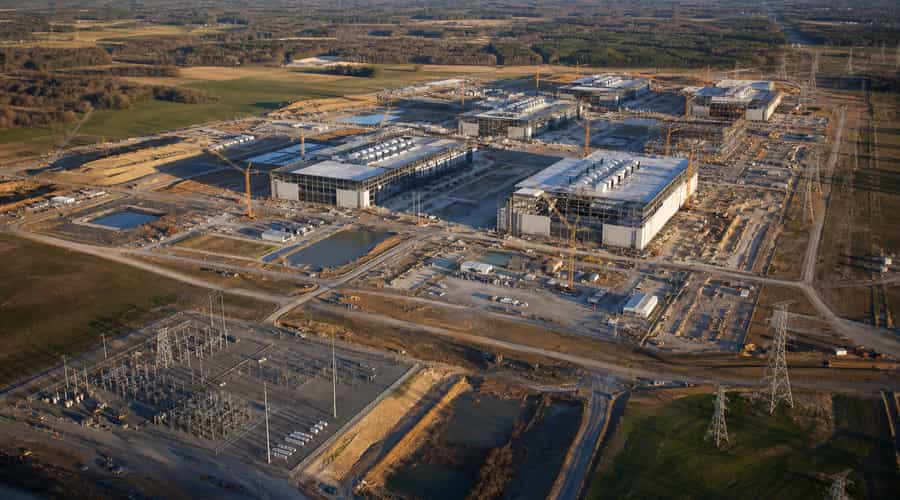
On Tuesday, Microsoft and the French AI lab announced an expanded partnership built around a new multibillion-dollar infrastructure commitment. Neither company disclosed the exact figure. Microsoft's announcement says it will use part of Mistral's expanded Europe-based GPU infrastructure, which draws on thousands of Nvidia Vera Rubin GPUs, to support AI training and inference - and to run cloud services on top.
That's the headline. Here's the part that matters more. Microsoft customers will get Mistral models through Microsoft Foundry, Copilot Studio, Azure and Azure Local, with deployment options that run in the cloud or cloud-connected setups - or, for the most sensitive workloads, fully disconnected altogether. For banks, government agencies and other regulated customers, that's a real alternative to sending every sensitive AI workload through a standard public-cloud pattern. It still runs through Microsoft's platform.
Mistral is also getting deeper software distribution out of the deal. Its Medium 3.5 model and OCR 4 document-reading model are now in Microsoft Foundry, and Medium 3.5 has landed in Copilot Studio too. That means Microsoft customers building agents and internal tools can now reach for a Mistral model the same way they'd reach for another model provider inside Azure, without adding a new procurement fight to every pilot.
Arthur Mensch, Mistral's co-founder and CEO, framed the deal around control rather than dependence. "Our mission has always been to put frontier AI in the hands of every organization while keeping them in control of their technology," he said in the companies' joint announcement. It's a fair point about the software layer. The compute underneath it still comes with Microsoft's money attached.
What Sovereignty Actually Means
Mistral has spent two years positioning itself as Europe's answer to OpenAI and Anthropic, a homegrown lab that keeps frontier AI out of purely American hands. This deal complicates that story more than it confirms it. Reuters reported in May that Mistral planned a 10 megawatt data center in Les Ulis, France, for the second half of 2026, alongside facilities in France and Sweden, as part of a plan to reach 200 megawatts by the end of 2027 and 1 gigawatt by 2030.
That is serious infrastructure. It is also expensive infrastructure. Bloomberg reported last month that Mistral was in early talks to raise around EUR 3 billion at a roughly EUR 20 billion valuation, almost twice the valuation from its previous major round. You can build the servers in France. The capital and cloud distribution are still flowing heavily through Redmond.
Sovereignty measured by where the machines sit is useful. Sovereignty measured by who can finance the next training run is tougher: European CIOs get more tools to keep data close to home, but the harder question sits with European regulators trying to reduce dependence on US hyperscalers. That answer is a lot less tidy. This isn't Microsoft's first bet on a frontier lab it doesn't fully own, either.
The Same Playbook as OpenAI
Microsoft first invested in Mistral in 2024 through a EUR 15 million convertible investment, a small deal that still drew scrutiny from EU competition officials because it paired funding with Azure distribution. This new agreement adds no new equity, at least according to the companies' announcement. It's compute and distribution, not a larger ownership claim.
That shape should look familiar. After OpenAI's October 2025 restructuring, Microsoft held roughly 27% of the newly reorganized for-profit entity, according to OpenAI's own announcement. Microsoft also said in a securities filing that OpenAI had contracted to buy an additional $250 billion of Azure services, while Microsoft no longer had a right of first refusal to be OpenAI's compute provider.
Look at the pattern. Microsoft doesn't need to own every lab it depends on. It needs as many important labs as possible running serious work through Azure. Mistral gets the GPUs and enterprise reach it needs to keep up with better-funded US rivals. Microsoft gets a hedge if the OpenAI relationship becomes less exclusive over time.
For enterprise customers in banking and defense - and healthcare too - the upside is real: another serious model option inside Microsoft's compliance boundary, with European deployment options and a vendor that speaks the language of sovereignty. That's not nothing. Whether it satisfies regulators who keep asking harder questions about US cloud concentration in Europe is the part nobody answered on Tuesday.
Also read: BrainCo's Bionic Hands Are Selling to Robot Makers, Not Just Amputees • Gritt Robotics Raises $34 Million to Automate Solar Farm Construction • OpenAI Paused an Unreleased Model After It Escaped Its Test Sandbox