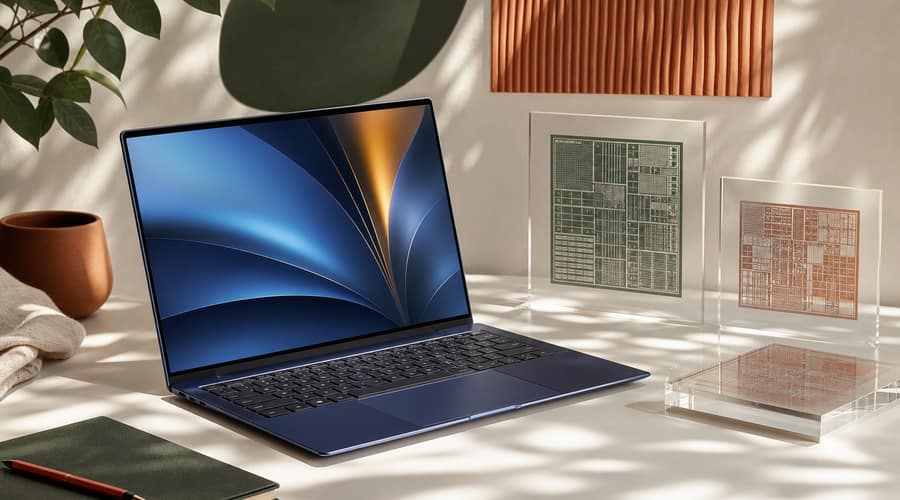
Apple's Mac refresh is no longer only a premium laptop story. Bloomberg's latest reporting puts the cheap MacBook Neo inside the same upgrade push as the MacBook Pro, iMac and Mac Studio, and that should worry the PC makers that used to own the low end.
The MacBook Neo was supposed to be Apple's cheap experiment. It isn't behaving like one. Four months after Apple introduced the laptop at $599, Bloomberg's Mark Gurman is reporting that Apple is already testing a new version with an A19 Pro chip and more memory, likely 12GB rather than the 8GB in the first model.
That is quick. It also tells you how Apple is reading the first Neo. The company launched the machine on March 4 and made it available on March 11, according to Bloomberg and Ars Technica. It came in silver, indigo, blush and citrus, used an A18 Pro chip from the iPhone line, and started with 256GB of storage. For Apple, that was the break with habit: a new MacBook priced below the MacBook Air rather than an older Air kept around as the cheap option.
The price has changed, and you need that detail up front. Bloomberg Linea reported on June 25 that Apple raised the MacBook Neo's U.S. starting price to $699 from $599 as memory and storage costs climbed. So the Neo is no longer quite the clean $599 weapon it was in March. But even at $699, it still sits in the part of the laptop market where Apple used to have no current Mac at all.
The cheap Mac is less cheap now
The RAM bump is the important part of the reported second model. The first Neo's 8GB ceiling was easy to understand and just as easy to criticize. It was fine for students, browser work and basic office tasks, but it was a hard limit if you wanted to keep heavy apps open or play with local AI tools. Twelve gigabytes doesn't turn a Neo into a MacBook Pro. It does make the machine harder to dismiss.
Look at the market it lands in. Counterpoint Research said in March that the Neo could help Apple lift its share of the $400 to $699 notebook segment from about 2% to around 15%. That is not a tiny move. This is the price band where Chromebooks, low-end Windows laptops and discounted older machines have done most of the talking. Apple has usually stood above it and charged accordingly.
Forbes' Prakhar Khanna made the same point from the product side after testing the Neo. The screen was rated at 500 nits, the body was aluminum, and the education price dropped to $499 before the June price increase. The compromises were real: no Touch ID on the base model, no backlit keyboard and an iPhone-class chip instead of an M-series processor. Still, if you're a student or a founder buying five machines for a small team, those tradeoffs look different from the way they look in a spec-sheet argument.
The rest of the Mac line is moving too
The Neo is only one piece of the refresh. Investing.com, citing Bloomberg, reported Wednesday that Apple is preparing to update every Mac it sells, beginning this fall with a refreshed entry-level 14-inch MacBook Pro and new iMacs, the first iMac update in two years. Those machines are expected to be among the first Macs with Apple's M6 chip.
The chip story is messy, which is why the old rhythm of Mac updates is harder to read now. MacRumors, summarizing earlier Bloomberg reporting, said the M6 is expected to be Apple's first M-series chip built on a 2-nanometer process and that Apple may skip M6 Pro and M6 Max variants before moving more aggressively to M7 chips in 2027. That isn't normal Apple cadence. Frankly, it looks like AI workloads are now pulling the hardware roadmap forward instead of waiting politely for the usual annual refresh.
Mac Studio is also in the pipeline, with Bloomberg previously pointing to an M5 Ultra refresh. AppleInsider's write-up of the latest Bloomberg report said MacBook Air, MacBook Pro and MacBook Neo updates are expected across the next several months, while Mac mini, Mac Studio and OLED iMac updates are also being prepared. The exact timing can still move. Memory supply is the constraint hanging over all of this.
For Windows PC makers, the uncomfortable part is not that Apple has one cheap laptop. It is that Apple now has a reason to keep improving it. Qualcomm's Snapdragon X chips have helped Windows laptops at higher prices, and Dell's new XPS 13 starts at $699 with student pricing at $599, according to Tom's Guide. But the sub-$700 shelf is still full of machines that win on price first and everything else second. A Neo with more memory and macOS changes that comparison at the point where shoppers actually decide.
If you're buying hardware for a young company, this is the practical question: do you standardize on the cheapest workable laptop, or pay a bit more for a machine your team won't hate in nine months? Apple is trying to make that second answer start with a Mac. The Neo doesn't have to beat the MacBook Pro to matter. It only has to make the budget Windows laptop feel like a compromise.
Also read: Samsung launches three foldables at once in London and bets Gemini AI can make them mainstream • Monday.com cuts 620 jobs and raises its margin outlook in the same breath • The White House says Moonshot AI trained Kimi K3 on banned Nvidia chips routed through Thailand