OpenAI's compute bill has climbed to $750 billion through 2030, and the important detail isn't only the size. Its own finance chief has reportedly questioned whether the company can grow fast enough to pay for it.
The Wall Street Journal reported on July 22 that OpenAI has lifted its planned cloud and compute spending to $750 billion through 2030, up from about $600 billion earlier this year. That is the story. The warning inside it is sharper: CFO Sarah Friar has reportedly raised concerns that OpenAI may not be able to support future computing contracts if revenue growth doesn't keep up.
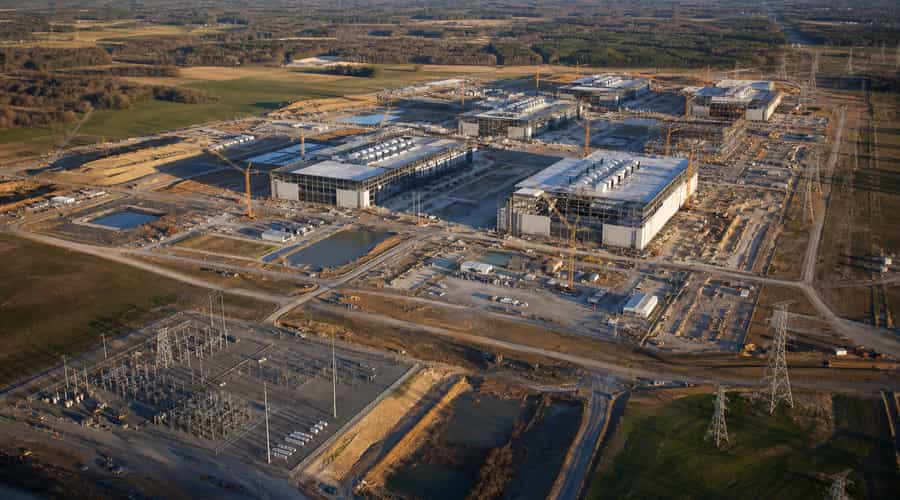
The spending now sits across a web of deals with Microsoft, Oracle, AWS and CoreWeave, plus OpenAI's own Project Camellia in Effingham County, Georgia. OpenAI said on July 22 that the Camellia site will be designed and developed by the company in the Savannah Gateway Industrial Hub, with Georgia Power contracted to deliver 3.2 gigawatts in phases between 2028 and 2032. The county described the campus as part of the 2,600-acre industrial hub developed by The Broe Group. Data Center Dynamics, citing Bloomberg, reported that the Georgia project could eventually cost more than $30 billion.
This is OpenAI moving from renting capacity to behaving like the owner of the machine room. It has hired Brent Mayo, formerly of xAI, to oversee data center construction and delivery, according to the Journal. He reports to Uday Ruddarraju, OpenAI's CTO of computing capacity. You don't make those hires for a side project.
Sacra estimates OpenAI hit a $25 billion annualized revenue run rate in February 2026, up from $20 billion at the end of 2025. That is real money. The problem is that compute commitments are rising faster than even that kind of growth, and contracts are harder than projections. They require cash.
Fortune reported in April that Friar was worried OpenAI was spending too much on data centers and might not generate enough revenue to cover contracts it had already entered into, citing earlier reporting from the Wall Street Journal. Forbes also noted that the Journal had reported OpenAI missed internal revenue and user growth projections. Those are not small caveats. If you're writing checks now for capacity that comes online years later, one missed forecast can echo for a long time.
The cost curve is ugly. Business Insider reported this week that building one gigawatt of AI capacity with common Nvidia systems has risen from about $29 billion to $35 billion, while newer configurations can reach roughly $49 billion. A gigawatt-scale facility can take years to bring online. The math is plain. OpenAI is buying future compute against revenue it still has to prove.
The cloud vendors are making the same bet
Oracle's exposure shows why this is no longer just an OpenAI story. The Wall Street Journal reported last year that OpenAI had agreed to buy $300 billion of Oracle compute over roughly five years beginning in 2027. The Journal's latest reporting says OpenAI also has a $138 billion AWS commitment and a $250 billion Microsoft Azure commitment. These are not normal software contracts with a few extra zeros. They tie the AI boom directly to the balance sheets and buildout schedules of the largest infrastructure companies in the market.
Frankly, markets have been too casual about that dependency. A cloud provider usually sells capacity to customers whose spending sits inside a known business model. OpenAI is different: extraordinary growth, heavy losses, and a valuation that Bloomberg reported reached $852 billion after a completed $122 billion funding round in late March. Amazon agreed to invest $50 billion, while Nvidia and SoftBank each put in $30 billion. That valuation assumes demand keeps arriving before the bills do.
Project Camellia gives founders and investors a useful, concrete measure of the scale involved: 3.2 gigawatts, phased power delivery from 2028 to 2032, and a potential cost above $30 billion. OpenAI says residents won't subsidize the project and that its closed-loop cooling system won't draw water away from local communities. Good. But the harder issue isn't only whether Georgia can host the site. It is whether OpenAI can turn that much infrastructure into durable revenue before the commitments crowd everything else out.
None of this means OpenAI is in immediate trouble. Its revenue base is large, ChatGPT still has enormous reach, and enterprise demand is real. But the Journal's reporting makes clear there is a live scenario where OpenAI has promised to buy more compute than its revenue path can support. The CFO concern is the point. You can admire the ambition and still see the risk.
For investors looking toward an eventual IPO, the question is whether this spending is building a moat or storing up a liability. Right now, the contracts are more certain than the cash flows. That gap is what $750 billion looks like up close.
Also read: Samsung launches three foldables at once in London and bets Gemini AI can make them mainstream • Monday.com cuts 620 jobs and raises its margin outlook in the same breath • Meshy raises nearly $400 million to make AI-generated 3D models a standard production tool