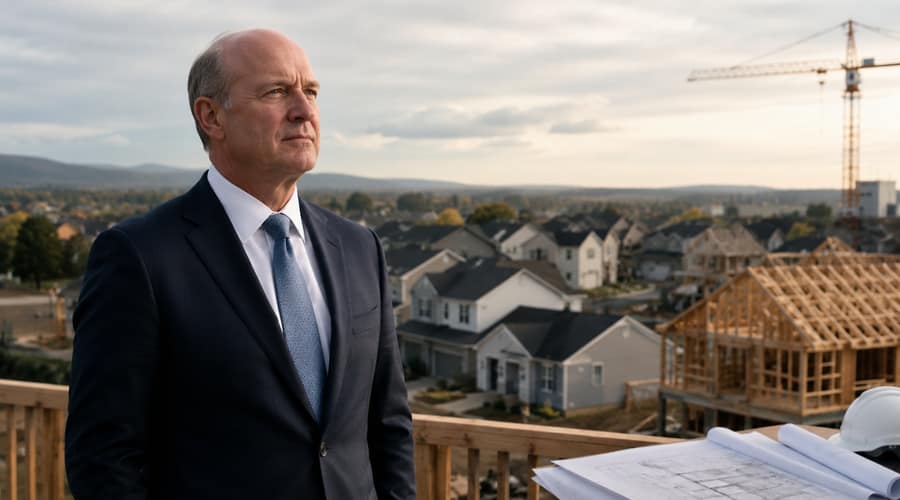
Berkshire Hathaway's $8.5 billion deal for Taylor Morrison is not just another homebuilder acquisition. It is the clearest early signal of how Greg Abel may put Berkshire's cash to work after Warren Buffett.
Berkshire Hathaway has found its first major acquisition of the Abel era in a very old-fashioned place: American housing. The company has agreed to buy Taylor Morrison Home Corporation in an all-cash deal that values the builder at about $8.5 billion including debt, giving Berkshire a much larger hand in one of the most capital-intensive corners of the U.S. economy.
According to the companies' joint announcement, Berkshire will pay $72.50 a share in cash, valuing Taylor Morrison's equity at about $6.8 billion and representing a 24% premium to the company's $58.50 closing price on May 29, 2026. Taylor Morrison will become private once the transaction closes, and the company is expected to keep its existing management team, including chief executive Sheryl Palmer.
That matters because this is not a speculative bet on a housing rebound. Taylor Morrison is a large national builder with more than 350 communities across 21 markets in 12 states. Its brands serve entry-level, move-up, resort lifestyle and rental-community buyers, which gives Berkshire exposure to several parts of the market rather than a single narrow customer base.
Greg Abel did not start his Berkshire tenure by chasing software multiples or trying to make a statement in artificial intelligence. He went into a business Berkshire already knows. The conglomerate owns Clayton Homes, has exposure to real estate brokerage through HomeServices of America, and controls a collection of building-products businesses that touch flooring, insulation, paint, brick, roofing and related materials.
That makes Taylor Morrison more than a bolt-on purchase. It gives Berkshire a larger site-built housing platform at a time when the U.S. still faces a long-running shortage of homes. If mortgage rates ease from recent pressure, public builders with land pipelines, local relationships and purchasing scale could be better positioned than smaller operators that have struggled with financing and affordability constraints.
The more interesting point is not that Abel likes housing. It is that he is willing to use Berkshire's balance sheet to buy an operating company outright. Berkshire recently had one of the largest cash piles in corporate history, with reports placing its cash and Treasury bill position at about $397.4 billion after the first quarter of 2026. An $8.5 billion acquisition does not come close to draining that reserve, but it does show that Abel is prepared to move when the target fits Berkshire's long-term style.
Buffett spent decades teaching investors that patience is a real strategy, especially when markets are expensive and sellers want heroic prices. Abel now has to prove he can apply that discipline without simply becoming a caretaker of Buffett's past decisions. Buying Taylor Morrison suggests a practical answer: keep the Berkshire playbook, but look harder at operating businesses where permanent capital can create an advantage.
Housing is becoming an institutional capital story
Homebuilding has always been cyclical, and that is exactly why it can make sense for Berkshire. Public markets often punish builders when rates rise, orders soften or incentives eat into margins. A private owner with deep capital can take a longer view, especially if it believes demand is being deferred rather than destroyed.
Taylor Morrison's position is useful here. The company is not only selling starter homes to buyers stretched by every change in mortgage rates. Its move-up and lifestyle communities give it access to households with more equity, better credit and more flexibility. That does not make the business immune to a downturn, but it can soften the blow when affordability is tight.
For smaller builders, land, labor and financing are still hard problems. For Berkshire, those problems look different. It can finance patiently, buy materials across a broader network, and tolerate slower cycles without needing to explain every quarter to impatient shareholders of the acquired company. That is not magic. It is simply the advantage of having permanent capital in a market where many competitors do not.
The deal also puts pressure on the rest of the homebuilding sector. If Berkshire sees value in a national builder while rates are still a major concern for buyers, other large pools of capital may start looking again at builders with strong land positions and durable regional brands. Lennar, D.R. Horton, PulteGroup and NVR will not suddenly become easy targets, but the logic behind the Taylor Morrison deal will be studied closely.
For entrepreneurs and operators, the lesson is straightforward. Businesses tied to physical assets can still attract premium buyers when they combine scale, management quality and a clear demand story. The market may prefer lighter, faster-growing companies in good times, but serious capital still cares about durable need. Housing is one of those needs.
The next thing to watch is whether Abel treats Taylor Morrison as a one-off opportunity or the start of a larger housing platform. Berkshire has the cash to keep going. The question is whether the market will give Abel enough reasonably priced chances to prove that his version of Berkshire can be patient and aggressive at the same time.
Also read: Washington is closing an offshore route for Nvidia AI chips • Tesla faces a trust problem inside its own self-driving AI team • Erin Brockovich puts AI data centers on notice.