Box Elder County commissioners unanimously approved a massive data center campus backed by celebrity investor Kevin O'Leary and Utah's Military Installation Development Authority, in a project that could ultimately consume more than twice the electricity used by the entire state of Utah, a figure that moves the AI infrastructure story out of earnings calls and into the zone where power grids, water rights, tax incentives, and local consent determine whether the buildout can actually happen.
The project is called the Stratos campus, and the scale is so large that the usual data center framing no longer works. According to the reporting around Monday's vote, the long-range plan covers 40,000 acres across three swaths of undeveloped land in western Box Elder County, with the first phase expected to draw roughly 3 gigawatts of power and the full buildout projected at 7.5 to 9 gigawatts. For context, Utah's total electricity consumption is less than half that amount. That means the campus is not just big by data center standards. It is functionally a regional energy and industrial project that happens to include data halls. The sponsors say the campus will build its own natural gas generation and closed-loop water systems, which is how they are trying to make the proposal politically possible in a county where residents have spent weeks arguing that the project will strain water supplies, worsen air quality, and complicate the state's broader environmental and Great Salt Lake concerns.
Kevin O'Leary is the public face most people will recognise, and his role matters because celebrity-backed capital is becoming a real pattern in infrastructure development. Data centers used to be financed by REITs, private equity, hyperscalers, and real estate developers speaking in the language of land assemblage and power interconnection. AI demand has changed the marketing pitch. Now, when a project wants to clear public scrutiny, it sometimes arrives with a celebrity investor who can translate industrial-scale ambitions into a political narrative about jobs, national security, and future-facing investment. O'Leary, known to most people from Shark Tank, has been arguing that the campus represents a strategic technology asset rather than simply a data center, and that framing has made the proposal more visible and more polarising. The financing structure is less important than the fact that people who are not traditional infrastructure financiers are now willing to attach their names to projects whose viability depends on gigawatt-level power buildouts and years of permitting friction. That tells you the AI infrastructure trade has become fashionable enough to attract celebrity capital, but not yet normal enough to avoid local backlash.
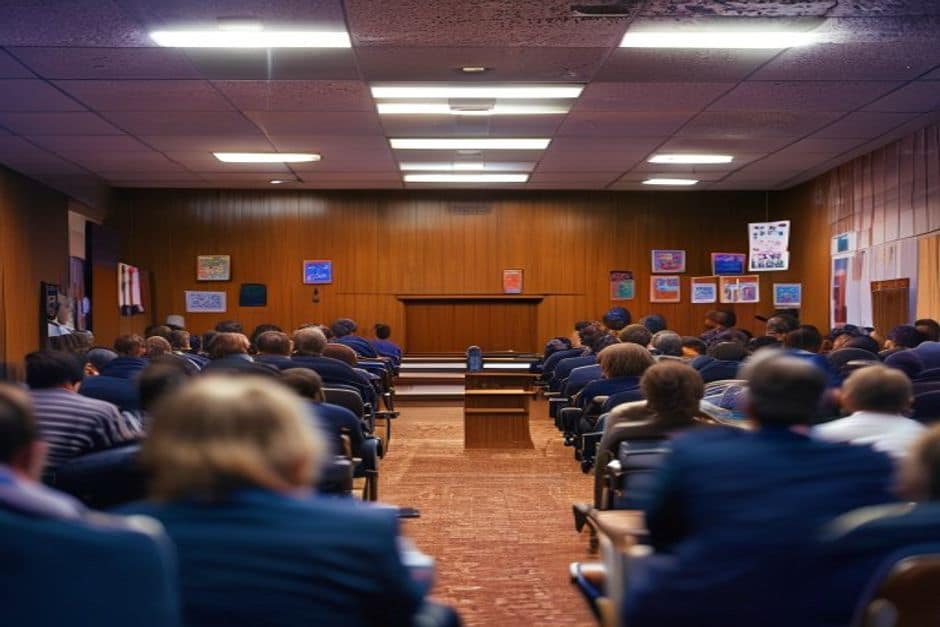
The county vote itself underscores how local politics now sits in the critical path of AI compute. After deferring a decision a week earlier, the three-member Box Elder County Commission voted unanimously to approve two resolutions tied to the project, including an interlocal agreement with MIDA and consent for the project to proceed. The meeting was held at the Box Elder County Fairgrounds in Tremonton because turnout was expected to be large, and it was. Residents protested the plan in the days leading up to the vote, and the meeting itself was marked by shouting and boos. Commissioners framed the decision as one about property rights and guardrails rather than an endorsement of the project in its final form. That distinction matters legally, but not much politically. Once a county agrees to open the door to a project of this scale, it is effectively agreeing to become part of the AI supply chain.
Water was the biggest local issue, which is exactly what you would expect in a state where large industrial projects now compete with agriculture, municipal demand, and Great Salt Lake preservation. Project representatives said the development would use existing water rights attached to the property, along with a closed-loop system and 3,000 acre-feet of on-site water, and they argued that this would not pull directly from Great Salt Lake. Opponents countered that groundwater and aquifer usage still affect the lake's hydrology and that the project would consume an enormous amount of water even if it is not piped straight from the lake. The dispute is a familiar one in infrastructure politics, where developers describe technical mitigations and critics point out that the resource is still the resource, no matter how carefully it is labeled. For AI readers, the lesson is simple. Every new model release, every hyperscaler capex update, every GPU shortage story eventually becomes a local water and land-use argument somewhere in the West.
The tax incentive and economic development layer is also part of why these projects keep moving. MIDA, Utah's Military Installation Development Authority, is backing the campus alongside O'Leary Digital, which gives the project a quasi-public economic development frame that makes it easier to argue for long-term regional benefits. Supporters say the project can bring jobs, investment, and strategic infrastructure. Critics see a massive industrial campus being permitted with public blessing while the environmental and utility costs are being socialised across a rural region that did not ask to become an AI utility zone. Both things can be true at once. The development may create tax revenue and construction activity while also forcing local residents to live with the noise, land use changes, and water politics of an industrial-scale compute campus. That tension is what makes this more than a standard zoning dispute.
For founders and infrastructure investors, Box Elder County is the part of the AI story that should be impossible to ignore. Compute demand is no longer just a cloud revenue line. It is a zoning meeting, a water-rights hearing, a natural gas planning exercise, and a county commission vote. The companies that can secure land, power, financing, and local consent are going to move faster than the ones that cannot, and that creates a new bottleneck that has very little to do with model quality. The AI boom has already stressed GPU supply chains and cloud pricing. Now it is testing whether rural communities will agree to underwrite the physical footprint of the industry through permits, infrastructure, and political compromise. Box Elder County said yes, at least for now. Whether the rest of the country follows that example is going to determine how fast the AI buildout can really scale.
Also read: NPR Could Not Verify Polymarket's Panama Headquarters and That Detail Matters More Than It Sounds for a Platform That Handled Hundreds of Millions in Election Bets • Bullish Is Buying Equiniti for $4.2 Billion to Become the Transfer Agent for Tokenized Securities and the Deal Is the Most Consequential Crypto Infrastructure Acquisition Yet • Banco Sabadell and Bankinter Are Joining a European Stablecoin Consortium and the Move Signals That Banks Have Stopped Watching Tokenized Money and Started Building It