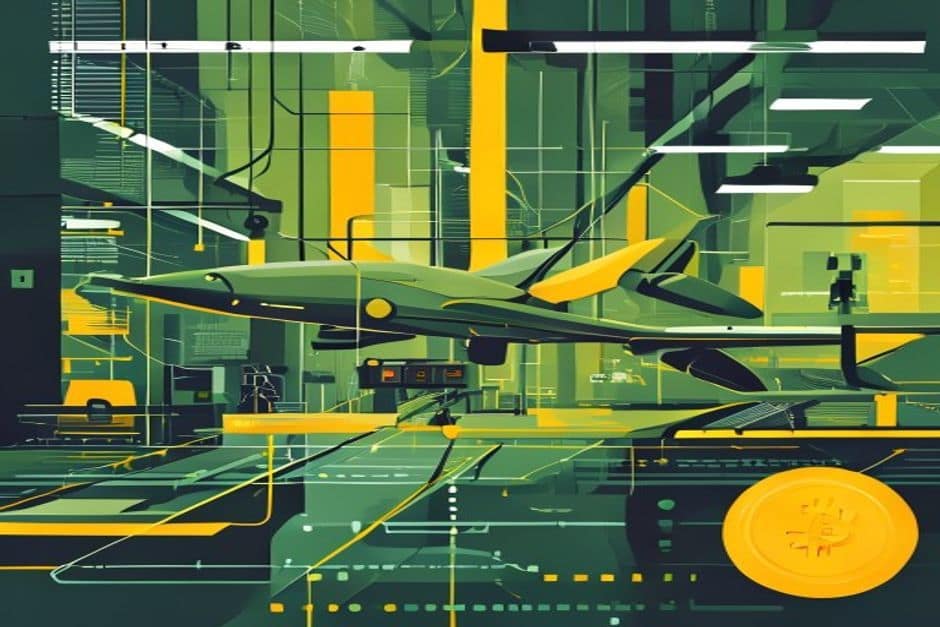
China's newest dark factory is not just a military story. It is a warning that AI is moving from software demos into the hard, expensive work of making complex machines faster.
The most interesting thing about the J-20 stealth fighter story is not the aircraft itself. It is the factory floor behind it. In Chengdu, Aviation Industry Corporation of China's Chengdu Aircraft Industrial Group has built an AI-enabled production system where automated guided vehicles move materials, CNC machine tools cut aircraft structural parts, digital inspection units check quality and unified software keeps the line running with little need for light or constant human supervision.
That matters because the debate around AI has been too narrow. For the past two years, much of the business conversation has been about copilots, chatbots and office productivity. Useful, yes. But the larger economic prize is physical production: fewer idle machines, faster inspection, tighter scheduling, lower scrap and supply chains that respond before a bottleneck becomes a crisis.
According to Science and Technology Daily, which visited the Chengdu facility during an AVIC open day on May 7 and published its report on May 9, the plant produces structural components, including the skeleton of advanced Chinese fighters such as the J-20. Song Ge, who leads the factory's digital manufacturing center, said the system has cut operator labor intensity by more than 80%, lifted production efficiency by nearly 1.5 times and pushed 24-hour equipment utilization as high as more than 90%.
A dark factory sounds futuristic, but the underlying lesson is practical. The breakthrough is not one robot arm doing something clever. It is dozens of machines, transport systems, inspection tools and planning programs speaking the same operational language. Song said the workshop once had machines using different control languages, which made flexible production difficult. The team eventually built a unified shop-floor control system so equipment could be managed remotely and exchange data with other equipment.
That is where industrial startups should pay attention. The next wave of automation will not be won by selling another dashboard that shows a manager what went wrong yesterday. The value is in closing the loop between design, scheduling, machining, logistics, inspection and maintenance. A founder building for factories should ask a simple question: does the product make a machine run longer, a technician move faster, or a production planner trust the schedule more?
The Chinese report also described digital inspection as part of the operating model. In one unit, four structured-light scanning systems and industrial robots can carry out automated measurement and generate inspection reports after a technician issues a program from an office. That does not remove people from manufacturing. It moves them away from repetitive monitoring and toward exception handling, process engineering and quality improvement.
This is a useful correction to the way many companies talk about automation. The point is not darkness for its own sake. Turning off the lights is only a symbol. The real advantage is continuous, consistent production in an environment where machines do not wait for shift changes, manual measurements or a supervisor walking the floor with a clipboard.
The Supply Chain Lesson For The United States
The defense angle cannot be ignored. The J-20 is China's premier fifth-generation stealth fighter, and Chengdu Aircraft Industrial Group sits inside AVIC, the state-owned aerospace group at the center of China's military aviation push. South China Morning Post's May 12 follow-up framed the Chengdu system as more than doubling production efficiency for J-20 components. Even if final aircraft assembly still depends on skilled workers, faster structural-part production changes the tempo of the whole program.
For the United States, this is less about copying one factory and more about understanding where industrial competition now sits. Washington has spent the past several years talking about supply-chain resilience, munitions capacity and the need to bring advanced manufacturing back home. Those are the right topics. But resilience is not just having a second supplier on paper. It is having factories that can surge, inspect, reroute and recover faster than an adversary expects.
That is why the Chengdu example should worry large incumbents as much as it interests startups. Traditional defense manufacturing often struggles with long qualification cycles, aging facilities and fragile lower-tier suppliers. A modernized plant with predictive maintenance, automated material flow and AI-assisted inspection does not solve every problem, but it can compress the time between funding and usable output. In a crisis, that gap matters.
There is also a commercial lesson hiding inside the military story. Aircraft parts sit at the hardest end of manufacturing: high precision, low tolerance for failure, complex materials and constant documentation. If software, sensors and robotics can create measurable efficiency gains there, the same operating logic will move into electric vehicles, grid equipment, medical devices, industrial machinery and space hardware.
China's dark factory is current because it points to where AI adoption is going next. The first phase made office work faster. The next phase will decide who can build physical systems at scale. Watch the companies that understand both software and the shop floor, because that is where the real industrial advantage is likely to appear.
Also read: Byron Allen is turning BuzzFeed into an AI restructuring test • Kickstarter has tightened adult content rules and creators face a funding test • DTCC is bringing Chainlink into the collateral market's plumbing