A tiny open source gadget for Claude Code usage is a small project with a larger message: AI coding is becoming something teams want to measure, display and optimize.
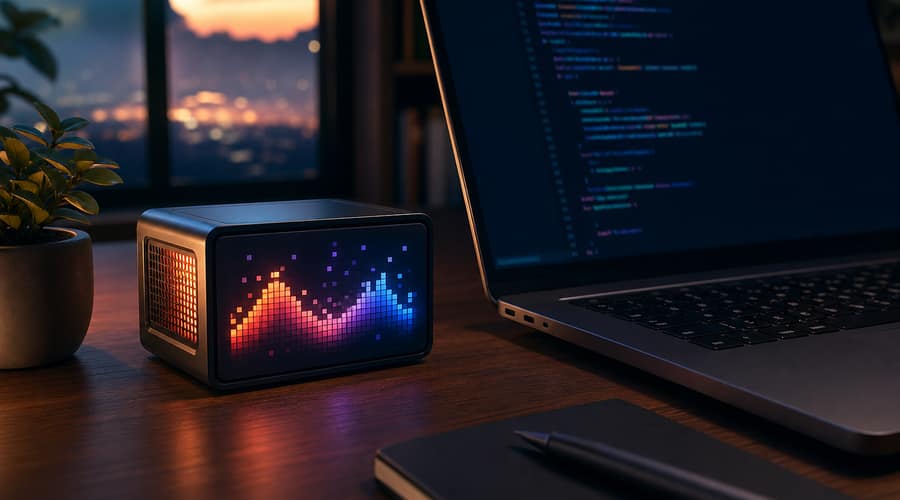
Clawdmeter looks like a desk toy, but that is exactly why it matters. The device turns Claude Code usage into a physical dashboard, complete with session and weekly utilization charts and pixel-art animations that get busier as usage climbs. What started as a weekend-style hardware project now reads like a neat snapshot of where AI coding culture is heading.
According to TechCrunch, the project was built by Reykjavik-based developer Hermann Haraldsson and launched on GitHub on May 10. By May 14, it had passed 800 stars and 50 forks, which is not a massive software movement, but it is enough to show that the idea hit a nerve. Developers are not just using AI coding tools. They are starting to watch themselves use them.
The hardware is intentionally modest. Clawdmeter uses a Waveshare ESP32-S3-Touch-AMOLED-2.16 display, pairs with a laptop over Bluetooth and reads Claude Code usage data from Anthropic response headers. A button cycles from the animated screen to simple utilization charts, while side buttons can send shortcuts for Claude Code voice mode and mode switching. It is practical, but only partly. The charm is that it makes invisible consumption visible.
The interesting part is not that someone built a meter. Developers have built meters for everything, from build times to server health to keyboard activity. The interesting part is what this one is measuring. Claude Code usage has become a signal people want to compare, manage and sometimes show off.
That is where the word tokenmaxxing comes in. It started as a half-serious way to describe engineers trying to make fuller use of AI subscriptions, especially when expensive plans come with usage limits. But jokes tend to reveal real behavior. When a company pays for AI coding tools, managers eventually ask who is using them, how often they are being used and whether that usage is producing anything useful.
Anthropic already offers Claude Code usage analytics for Team and Enterprise plans, including organization-level measures such as activity trends, active users, sessions, accepted lines of code and suggestion accept rate. Its documentation also describes contribution metrics in beta that connect to GitHub and compare pull request and code shipping activity with and without Claude Code. In other words, the official product is already moving toward measurable adoption.
Clawdmeter sits at the opposite end of that spectrum. It is not an admin dashboard. It is personal, physical and a little playful. Still, both point in the same direction. AI coding is leaving the phase where adoption can be judged by anecdotes alone. The next phase is full of meters, exports, heat maps, usage windows and uncomfortable questions about what all that activity is worth.
The cost discipline question
For startups, this can be genuinely useful. AI coding tools can be powerful, but usage can also become blurry. A founder may know the monthly subscription bill, yet have little idea which projects burn the most tokens or whether an agentic workflow is saving engineering time or just creating more review work. A simple usage signal can help teams treat AI consumption more like cloud spend, not office furniture.
That comparison cuts both ways. Cloud cost dashboards helped teams see waste, but they also created a culture where every service could be measured, attributed and argued over. AI coding dashboards may do the same thing for engineering behavior. A high usage number might mean a developer is delegating routine work well. It might also mean they are looping through low-quality prompts, generating churn or using tokens because the organization has started to treat usage as proof of modernity.
This is the risk of turning AI adoption into telemetry. Once a number is visible, people optimize for it. If the number is cost per useful change, that can sharpen discipline. If the number is raw token consumption, it can reward noise. Startups should be especially careful here because small teams copy signals quickly. One visible dashboard can quietly redefine what looks productive.
Clawdmeter avoids that seriousness by being open source and deliberately fun. Its pixel-art animations make the device feel more like an old handheld gadget than a corporate performance monitor. That nostalgia is part of the appeal. A physical object on the desk gives a software habit a shape, and that shape makes the habit easier to talk about.
The bigger market question is whether projects like this become a small category around AI coding subscriptions. There are already command-line tools, desktop apps and usage trackers built around Claude Code and similar products. Some read local logs. Some estimate costs. Some try to make rate limits less surprising. The demand is clear enough: as developers depend more heavily on AI coding agents, they want better visibility into the meter running in the background.
Clawdmeter is unlikely to become the standard way teams monitor AI work. It does not need to. Its value is as a signal. A tiny screen on a desk is telling us that AI coding has moved from novelty to habit, and habits eventually get measured. The next thing to watch is whether those measurements help teams build better software, or simply create a new scoreboard for looking busy.
Also read: InclusionAI brings trillion parameter reasoning closer to startups • SpaceXAI's staff exits are putting Musk's AI strategy under pressure • IBM's MAMMAL model puts open AI drug discovery in sharper focus