DeepL is buying Mixhalo's live audio technology while cutting about 250 jobs, and the pairing says more than any layoff memo could about the new AI company playbook.
DeepL wants you to see two moves at once. This week, the Cologne language AI company said it was adding Mixhalo's team and technology to speed up its Voice AI work. A few weeks earlier, CEO Jarek Kutylowski told staff that about 250 roles would go, roughly a quarter of the company, because AI now changes how much work a smaller team can do.
Read those decisions together and the message is plain. DeepL is still buying the talent it thinks is scarce, but it's cutting the roles it thinks AI can help replace, compress, or route around. That's not a contradiction. It's the operating model more AI companies are inching toward, whether they say it this clearly or not.
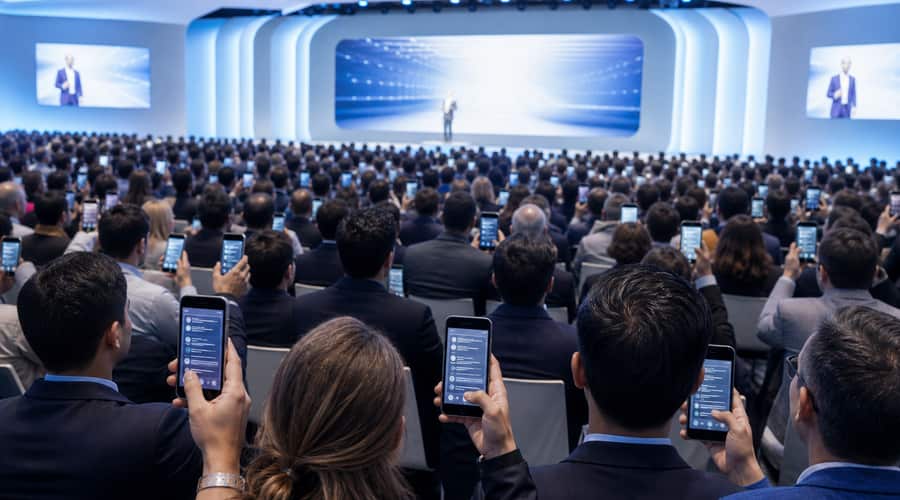
According to DeepL's announcement, the Mixhalo deal brings in a San Francisco-based team of around two dozen engineers focused on ultra-low-latency audio delivery. That is not a small add-on for a translation company. Mixhalo spent years building networking technology that could stream synchronized audio to thousands of phones at once, the kind of work you need at a live event where a delay of even a beat makes the experience feel broken.
Mixhalo had already been used at NASCAR races, NBA and NHL games, MLB All-Star events, and live concerts before it moved further into translation with Mixhalo Translate, which DeepL says covers more than 50 languages. DeepL didn't buy a button for its app. It bought the plumbing underneath real-time voice at crowd scale.
That distinction matters. DeepL Voice, which The Guardian noted launched in April 2026, already put the company into live voice-to-voice translation. DeepL says the product works across more than 40 languages, integrates with Microsoft Teams and Zoom, and supports enterprise workflows through its API. That works for meetings, contact centers, and training rooms. A stadium is a different test.
In a Zoom call, a slight lag is annoying. In a 20,000-seat venue, it can make the translation unusable because your eyes and ears stop matching the speaker in front of you. Mixhalo's entire business was built around that problem. If DeepL wants voice translation to move from conference rooms into arenas, conferences, and live events, it needs that layer to work before the model output even gets judged.
The layoffs sit beside that deal awkwardly, but they don't sit apart from it. Business Insider reported in May that Kutylowski framed the cuts as part of a broader shift toward smaller teams, fewer management layers, more AI inside the company, and what he called founder mode. Welt/dpa also reported that DeepL was cutting about 250 jobs, around every fourth role, while still being valued near $2 billion after its 2024 funding round.
DeepL isn't presenting this as a rescue job. Frankly, that is what makes the move more revealing. A company cutting because revenue collapsed tells you one thing. A company cutting after raising $300 million and then buying a specialist engineering team tells you another: management believes some labor is now leverage and some labor is drag.
You may dislike that calculation. You should still look at it clearly. The people DeepL is keeping through the Mixhalo acquisition are working on something narrow, technical, and hard to fake: live audio infrastructure with latency low enough for public events. The people being cut, according to reporting from Sifted and The Decoder cited around the layoffs, were in functions where DeepL believes AI can let the company run leaner.
That is the part many layoff announcements try to soften with phrases like strategic realignment or sharpened priorities. Kutylowski used the language of an AI-native organization instead. It still lands hard for the 250 people losing jobs, but at least it names the argument. DeepL is not saying the old structure was temporarily expensive. It is saying the old structure no longer matches the company it wants to become.
The San Francisco piece matters too. DeepL's first US engineering hub comes through Mixhalo's home base, and it puts a German AI company closer to the talent market it has to compete in. Google, Microsoft, OpenAI, and a crowded set of voice AI startups are not waiting for Europe to set the pace on speech translation. If DeepL wants enterprise voice to be more than a strong European product, it has to fight where the infrastructure people already are.
The open question is whether DeepL can absorb both moves at once. Buying Mixhalo gets it closer to live voice translation that works at event scale. Cutting a quarter of the workforce gives it a leaner structure, at least on paper. But a company can only call itself AI-native after the work still gets done, the product still improves, and customers don't feel the missing hands behind the screen.
Also read: Uber, Lucid, and Nuro pick Houston as their second robotaxi city and set a mid-2027 launch date • ElevenLabs bets $11 million on Warsaw as voice AI crosses into enterprise-grade territory • Databricks just showed that AI agents are a margin problem as much as a revenue opportunity